
Books
Recommended Historical Reading List. (Temporary list - More books will be added). General World War I World War II Eastern Front: General Accounts Red Army German Army Barbarossa For Stalingrad/Leningrad Kursk …
Recommended Historical Reading List. (Temporary list - More books will be added). General World War I World War II Eastern Front: General Accounts Red Army German Army Barbarossa For Stalingrad/Leningrad Kursk …
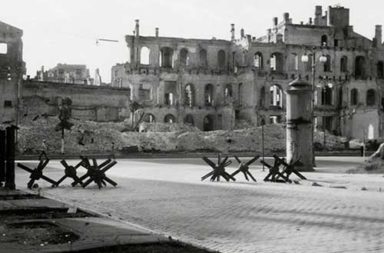
Herbert List was a German photographer, who worked for magazines, including Vogue, Harper's Bazaar, and Life, and was associated with Magnum Photos. He traveled regularly between Greece, Italy, and Paris until the outbreak of World War II, when he settl…

The Reichstag fire came amid “a campaign of unparalleled violence and bitterness” by then-Chancellor Adolf Hitler, in advance of an approaching German election, and it turned a building that was “as famous through Germany as is the dome of the Capitol in W…

Nicolae Ceausescu ruled Romania for 21 years, earning a reputation as a brutal dictator. During his reign, he developed the largest network of spies in Eastern Europe, silenced his opposition with a secret police force known as the Securitate, and eventual…

A picture of the fountain taken by Emmanuil Yevzerikhin on August 23, 1942, conveyed the devastation of the Battle of Stalingrad by juxtaposing a pastoral scene of children dancing around a playful crocodile and the city's bombed-out, burning buildings in …
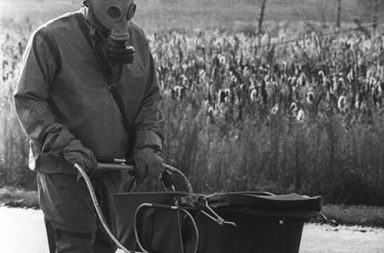
A liquidator, clad in a gas mask and protective clothing, pushes a baby in a carriage who was found during the cleanup of the Chernobyl nuclear accident. The infant had been left in an abandoned house in the village of Tatsenki. The worker found the chi…

Rudolf Hoess (Rudolf Höss) was the architect and commandant of the largest killing center ever created, the death camp Auschwitz, whose name has come to symbolize humanity's ultimate descent into evil. On 1 May 1940, Hoess was appointed commandant of a …
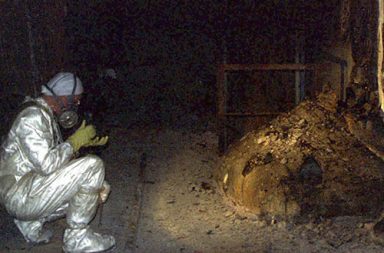
This image might be one of the most impressive photographs of all time. While it might just look like a regular Polaroid of some industrial sludge in a rundown warehouse, you’re looking at the epicenter of the Chernobyl nuclear disaster. Known as “the E…

The Heavy Gustav, was completed towards the end of 1940 and the proof rounds were fired early in 1941 at the Rugenwalde Artillery Range. Both Hitler and Albert Speer, later to be his armaments minister, attended the occasion. Named after the head of the…

Berlin after the War was a post-apocalyptic world. One of the largest and most modern cities in Europe was left a wasteland. There were vast piles of rubble everywhere. Other areas were rows of building walls with collapsed interiors — the skeletons of …
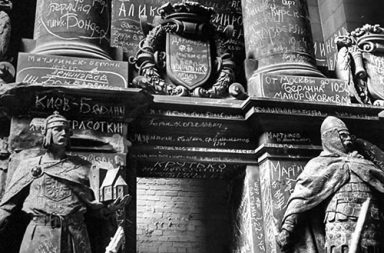
After seizing the Reichstag in May 1945 and raising their flag on its roof, Soviet soldiers left their marks in other ways, writing their names, feelings, thoughts, and hometowns on the walls of the famous building. Written in Cyrillic script, they incl…

By September 1942, a brutal hand-to-hand battle was being waged inside Stalingrad. As they fought from house to house and street to street, the Germans found that all of the tactical advantages they had possessed in fighting across the steppes were lost in…

These photos were taken between May and December 1944, and they show the officers and guards of Auschwitz relaxing and enjoying themselves — as countless people were being murdered and cremated at the nearby death camp. In some of the photos, SS officers c…