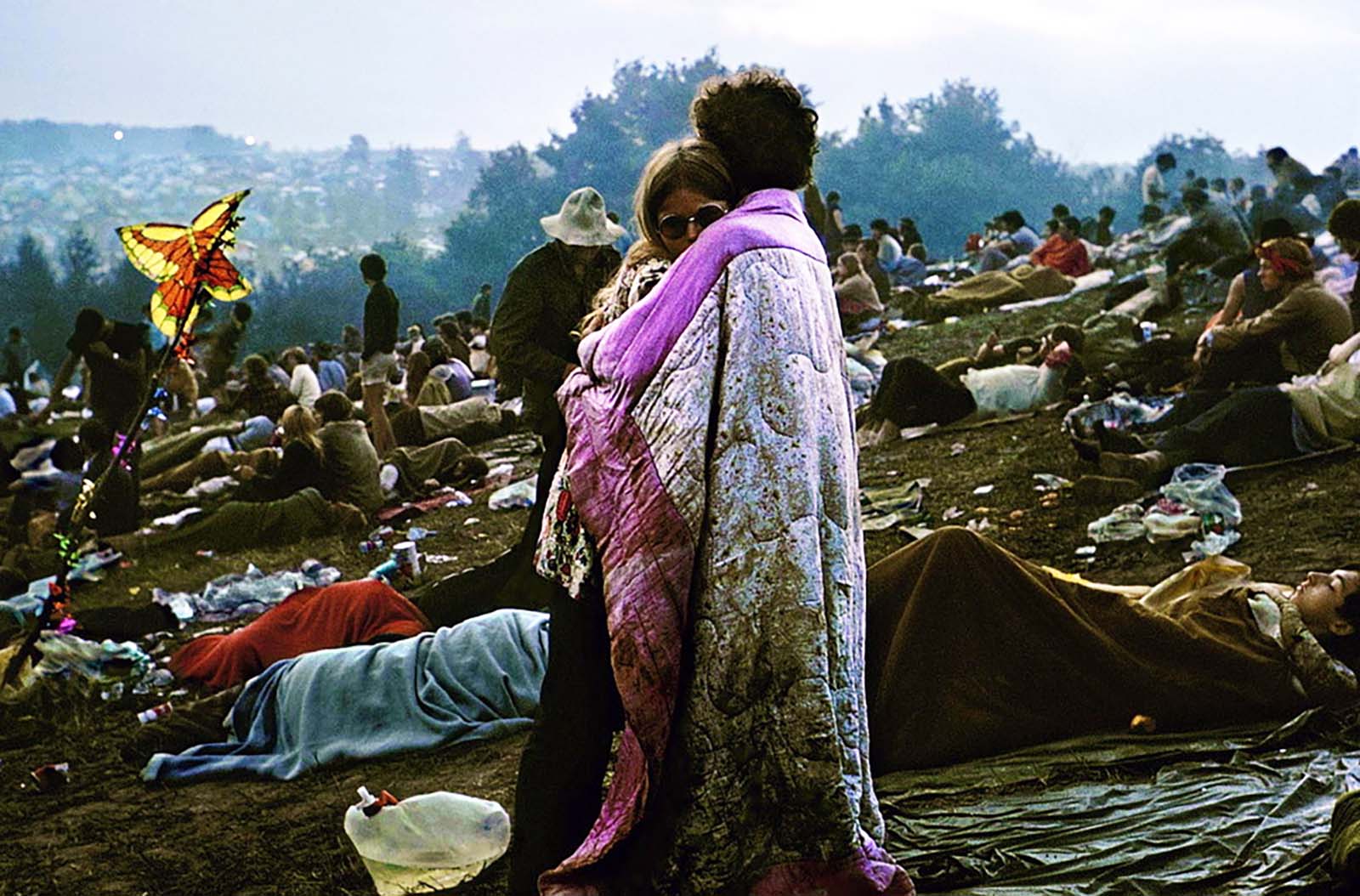
 Fair for a weekend of music. The reality was far bigger and less comfortable than planned.
There were unforgettable performances, but also traffic jams, shortages, rain-soaked fields, and a crowd so large that the festival soon stopped functioning like an ordinary ticketed event.
The photographs from Woodstock preserve both sides of the experience: the excitement of being part of something historic and the everyday realities of living together in a muddy field.
 Billed as “An Aquarian Exposition: 3 Days of Peace & Music,” the festival took place from August 15 to 18, 1969, on Max Yasgur’s 600-acre dairy farm near the hamlet of White Lake in Bethel, Sullivan County, New York.
Although it carried the name of Woodstock, the town was about 43 miles away. The original plan had been to hold the event elsewhere, and the move to Bethel came only weeks before opening day.
Organizers expected a large audience, but nothing close to the numbers that arrived. Estimates commonly put attendance at around 400,000 to 500,000 people, while 32 musical acts performed on the outdoor stage.
 The scale of the crowd quickly overwhelmed the arrangements. Roads leading to Bethel became clogged with cars, and many people abandoned their vehicles and walked the remaining distance.
Others never made it to the site. As the audience pushed beyond the entrances, fences and ticket booths were overrun, and staff could no longer collect tickets or manage admission.
The festival was effectively opened to everyone, turning an already difficult logistical situation into an enormous, unplanned gathering.
 Food, drinking water, toilets, and medical facilities were stretched far beyond what had been prepared.
For those who reached the farm, the experience was a mix of exhilaration and discomfort. The fields were crowded, sleeping space was limited, and supplies became harder to find as the weekend went on.
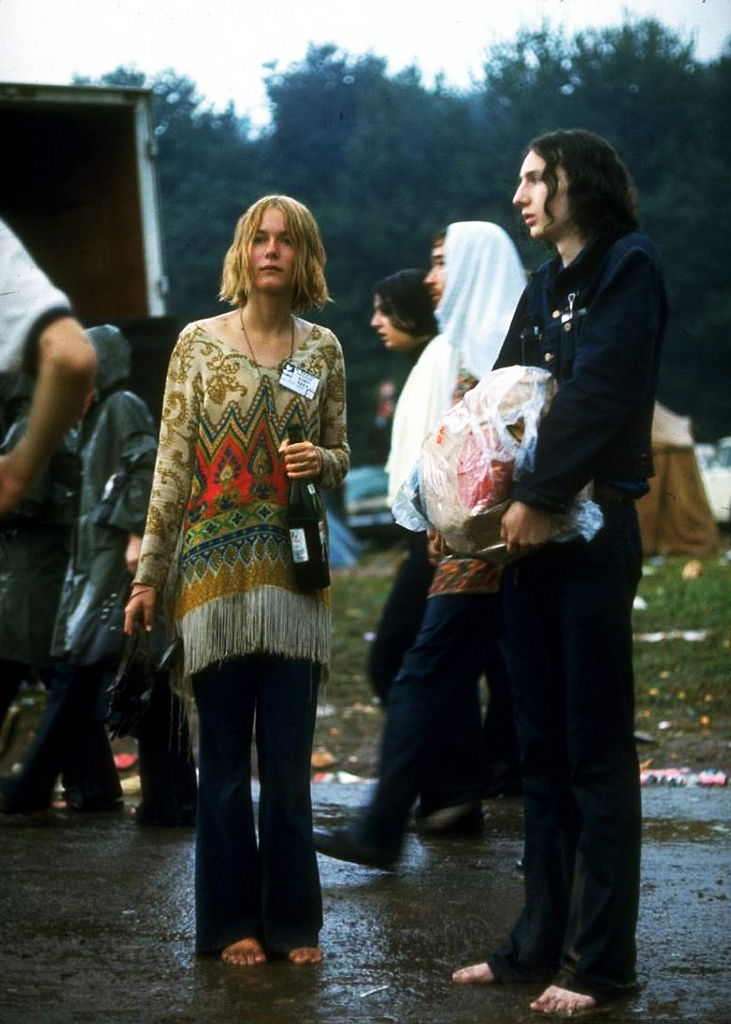
Rain added another challenge. Heavy showers soaked the grounds, transforming sections of the pasture into thick mud.
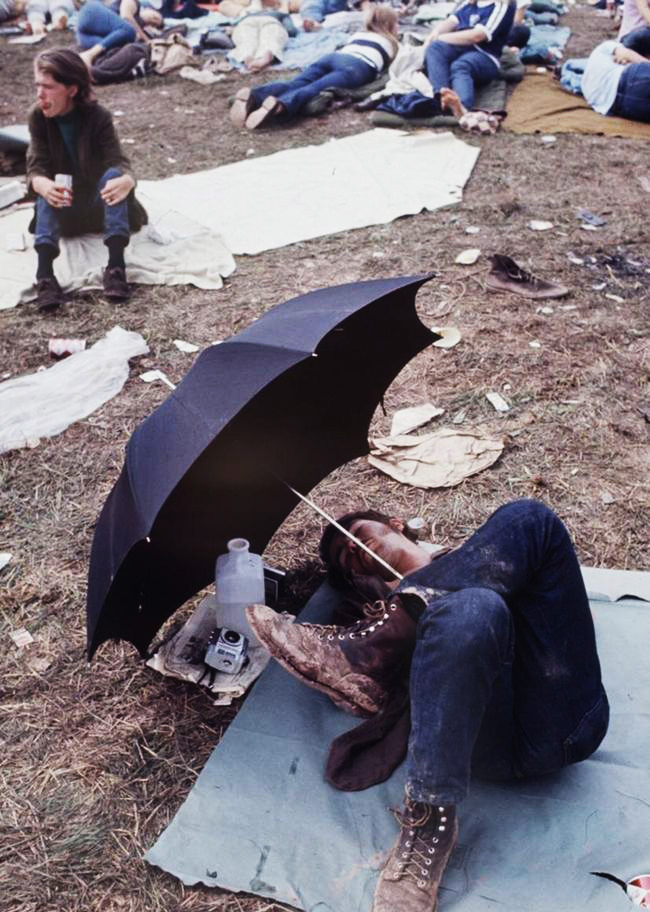
 People covered themselves with plastic sheets, shared whatever shelter they could find, and picked their way through puddles and slippery paths.
Some danced in the mud, while others rested or tried to keep their belongings dry. The weather became part of the festival’s identity, visible in photographs of drenched clothes, makeshift shelters, muddy feet, and smiling faces.
 Yet Woodstock was not remembered only for the difficulties. Amid the confusion, many attendees described a strong sense of togetherness.
Strangers shared food, water, blankets, and shelter. People helped one another through the traffic, rain, and crush of the crowd.
The scale of the gathering made it difficult to move around or find basic necessities, but it also gave many young people a powerful sense that they were not alone.
 For a generation shaped by the Vietnam War, political protest, and rapid social change, seeing so many others gathered around music and ideals of peace had a meaning beyond the performances.
The music remained at the heart of it all. Across the weekend, performers including Richie Havens, Santana, Janis Joplin, The Who, Jefferson Airplane, and Jimi Hendrix took the stage.
Traffic and difficult conditions pushed the schedule far beyond its intended timing, and Hendrix’s final performance took place on Monday morning, after many people had already begun leaving.
 Even so, the festival brought together an extraordinary range of musicians and audiences, creating performances that became part of rock history.
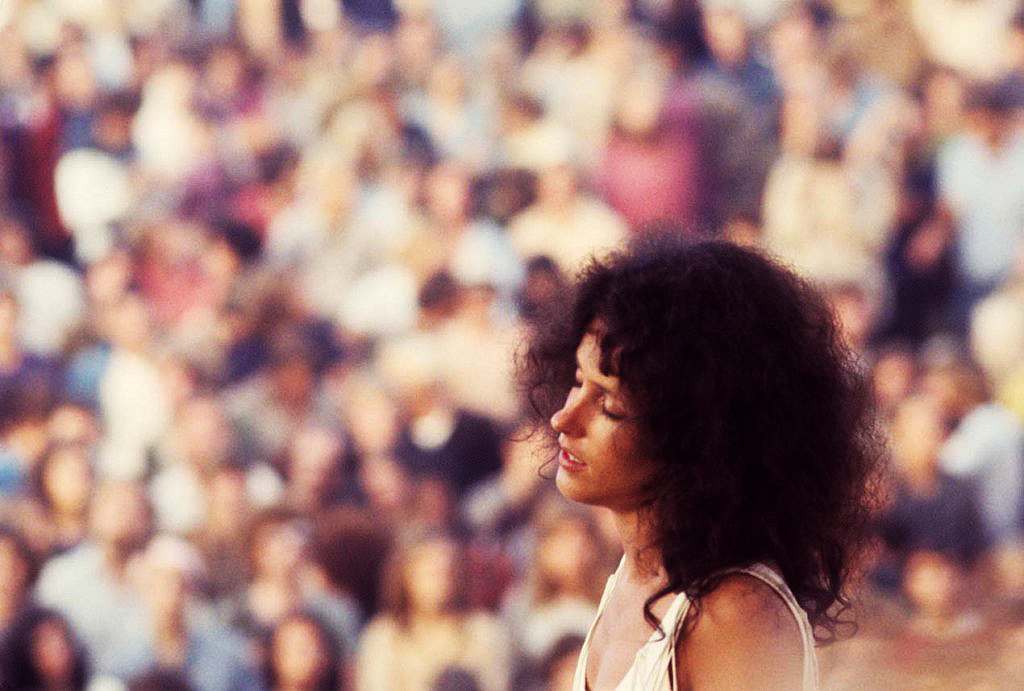
The photographs offer a particularly human record of Woodstock. They show couples embracing, friends laughing, people resting on the grass, crowds listening to the stage, and festivalgoers navigating the mud together.
Some images capture the scale of the event, with people stretching across the hillsides. Others focus on small moments of kindness, affection, exhaustion, and joy. Those quieter scenes help explain why Woodstock became more than a famous concert.
 The festival was far from perfectly organized, and its reputation should not obscure the discomfort and risks people faced.
But its unexpected combination of music, disorder, generosity, and shared experience became a defining image of the late 1960s.
Woodstock came to symbolize a generation’s desire for freedom, connection, and peace.








(Photo credit: Flickr / Pinterest).