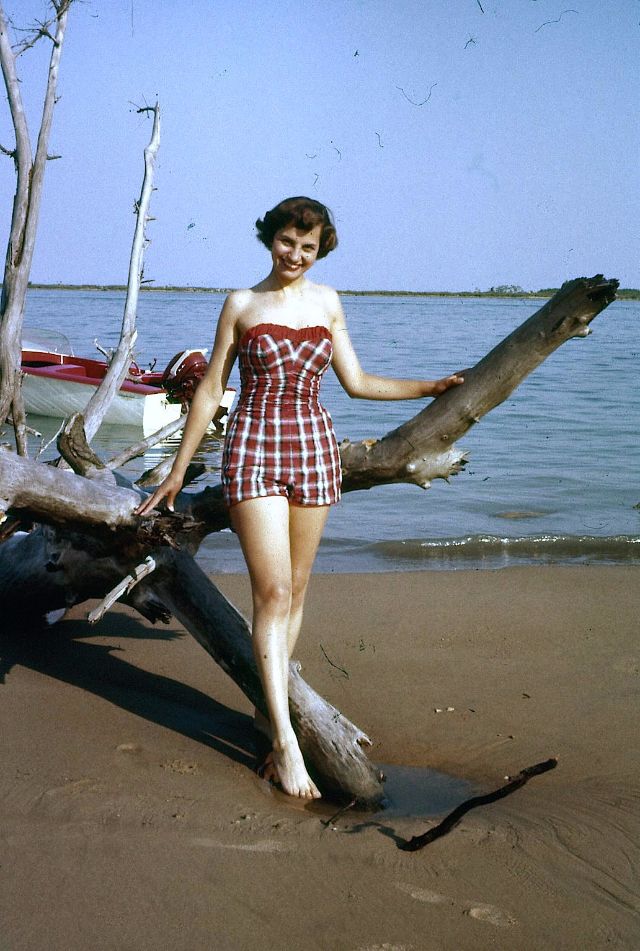
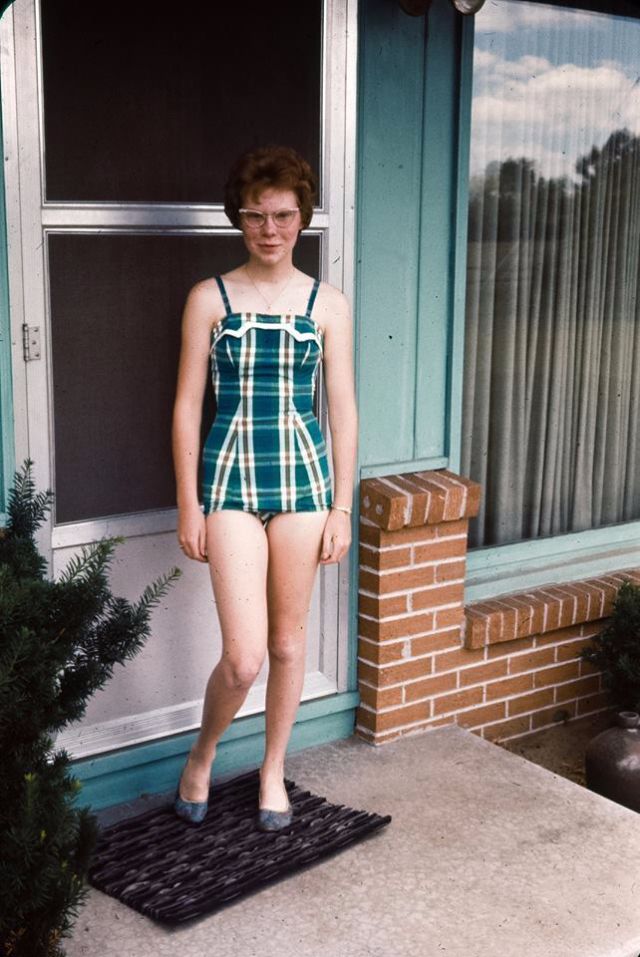
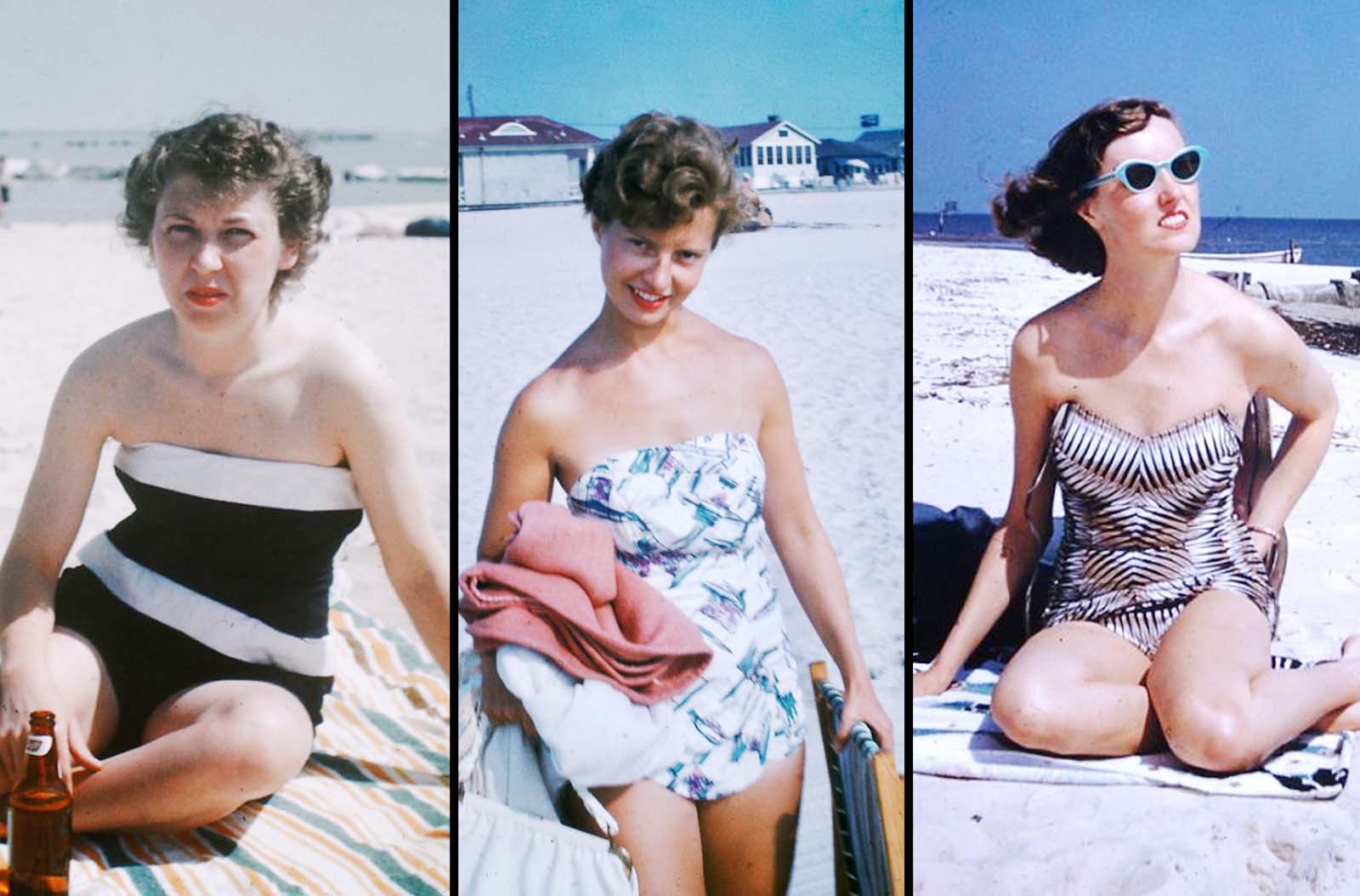
 American swimwear manufacturers entered the 1950s with a design philosophy borrowed directly from the corset makers and eveningwear tailors of the previous decades.
Rather than treating the swimsuit as simple beachwear, companies like Catalina, Cole of California, and Jantzen engineered garments meant to shape and flatter the body with the same precision applied to formal gowns.
The result was a decade defined not by one iconic style, but by a wide and inventive range of swimwear that turned every beach and poolside into a showcase of postwar American design.
 The one-piece suit remained the foundation of most women’s swimwear collections throughout the decade.
Manufacturers built these suits with internal boning, shirred bodices, and structured cups that created a defined waist and supported silhouette, techniques lifted almost directly from foundation garments.
Ruching along the torso helped disguise seams while adding visual texture, and skirted bottoms, often cut in a modest flare, gave the suits a feminine finish that appealed to mainstream tastes.
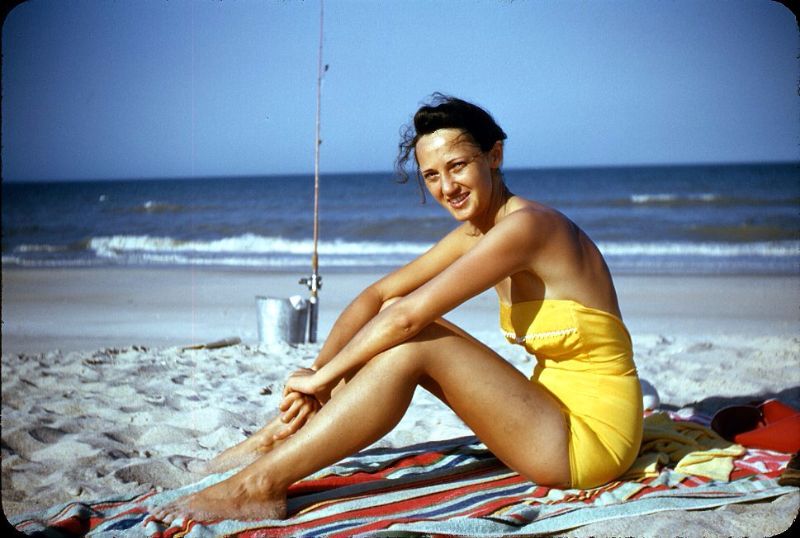 New materials played a significant role in this evolution. Latex, introduced to swimwear in the years following the war, allowed for a smoother, more elastic fit than older cotton and wool blends, while improved rayon fabrics dried faster and held color better under sun exposure.
Beyond the classic one-piece, several other styles competed for popularity.
The halter-neck suit, with its dramatic neckline tied behind the head or neck, drew clear inspiration from Hollywood costume design and offered a more daring alternative for women seeking a fashion-forward look.
 Sarong-style suits, wrapped and draped to mimic Polynesian and Hawaiian textiles, reflected a broader postwar fascination with tropical aesthetics that also fueled the era’s tiki bar and resort culture.
Swim dresses, essentially fitted suits paired with a light attached skirt, offered additional coverage for women who wanted the practicality of a swimsuit with the modesty of daywear.
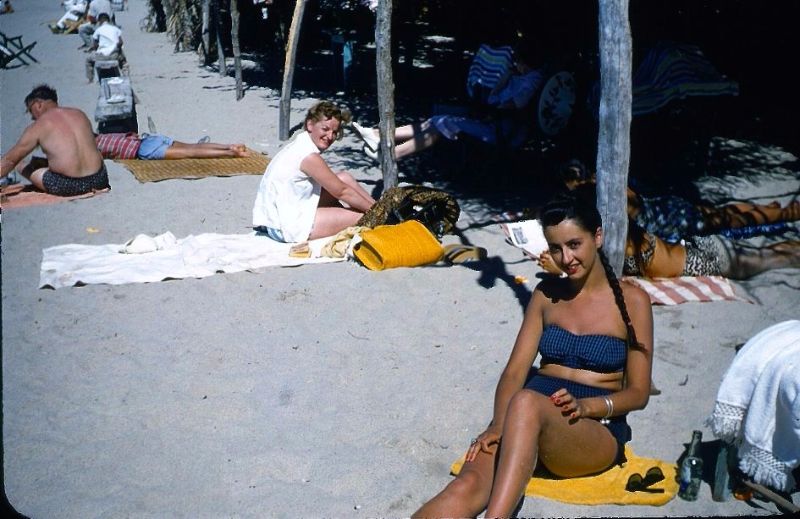 The playsuit also held a firm place in the era’s beach wardrobe, though it was not technically swimwear.
Consisting of fitted shorts or a short skirt matched with a coordinating top, the playsuit became standard attire for the casual portions of beach outings and even factored heavily into beauty pageants of the period, which frequently used it as competition wear before contestants changed into swimsuits for the final rounds.
 Public attitudes toward more revealing options shifted slowly.
Brigitte Bardot’s 1952 appearance in a two-piece suit in Manina, the Girl in the Bikini introduced many audiences to the bikini format, but the garment remained on the fringes of mainstream fashion for years.

Numerous beaches and swimming facilities across the United States and Europe enforced explicit bans on the style, and most retailers were slow to stock it.
As a result, the modest two-piece, cut higher at the waist and less revealing than Réard’s original 1946 design, gained more traction than the true bikini during this period.
 Color photography preserved this diversity of styles with remarkable clarity.
The postwar availability of Kodachrome film allowed photographers to capture swimwear in its actual palette, from coral and turquoise to buttercream yellow, offering a level of detail that black-and-white images from the same era could never provide.