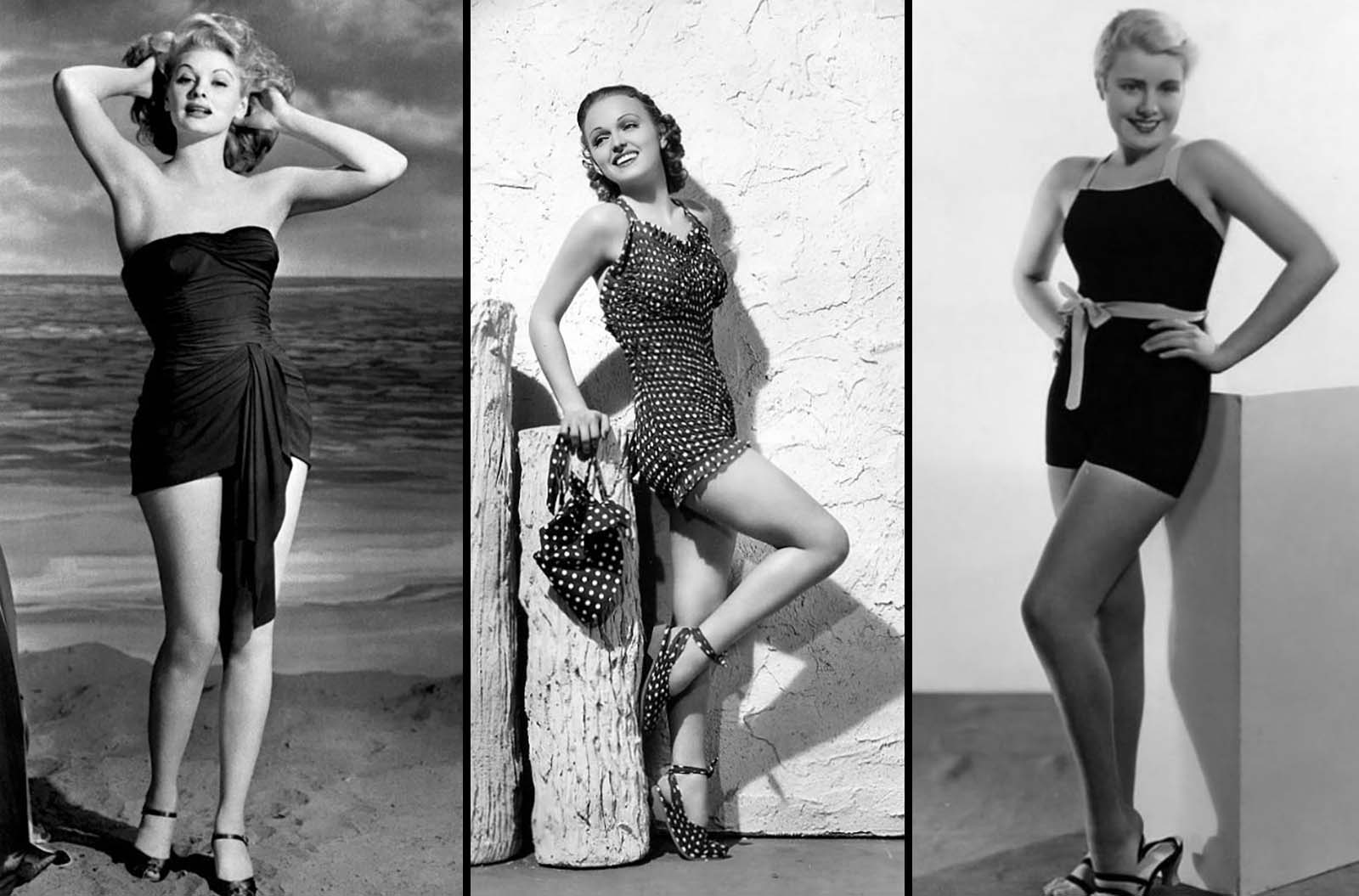
 Sun-drenched shores, tailored wool swimsuits, and a newfound sense of freedom all came together to define one of the most stylish decades in beach history.
The 1930s transformed swimming from a rare luxury into a beloved national pastime, and with that shift came a wave of fashion innovation that still captures attention nearly a century later.
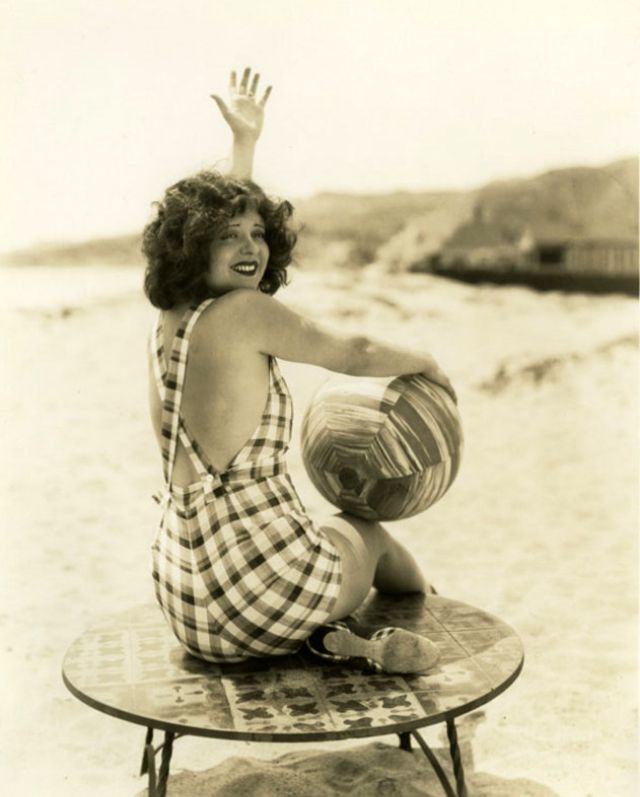
The groundwork was laid in the 1920s, when swimming first emerged as a popular leisure activity among the wealthy and those fortunate enough to live near the coast.
 By the following decade, broader economic and social changes opened the beach to a much wider audience
Public pools, seaside resorts, and organized swim clubs became accessible to everyday families, turning what was once an exclusive pursuit into a shared summer tradition across the country.
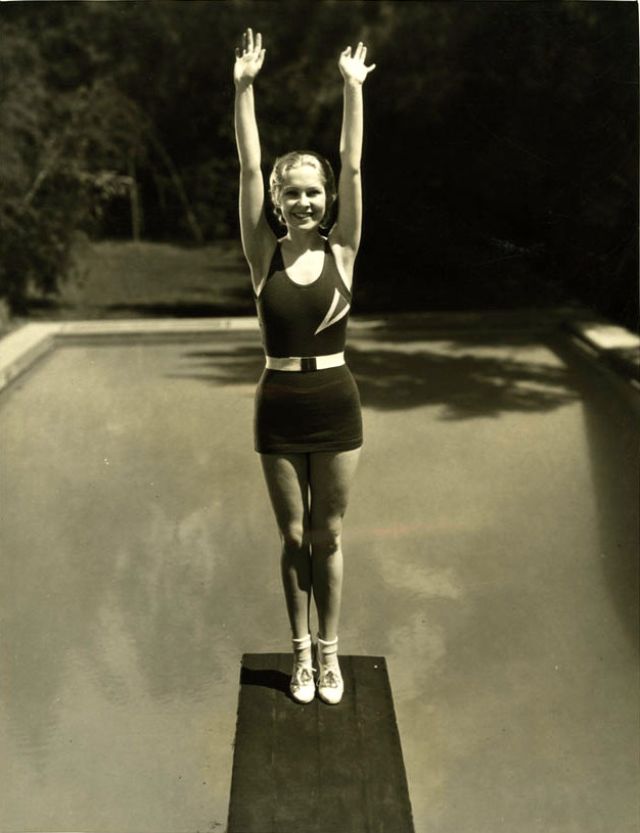
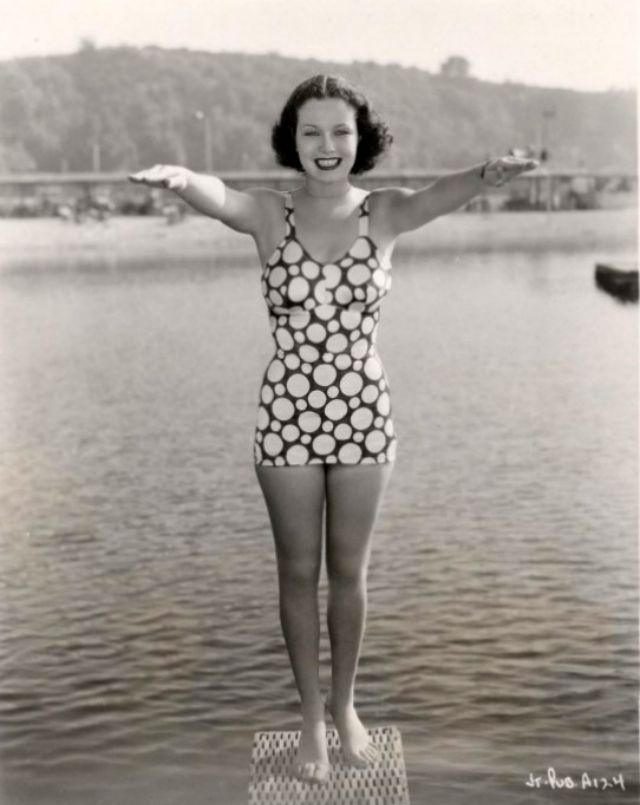
This surge in popularity created fertile ground for swimwear to evolve rapidly. Designers began experimenting with new silhouettes that balanced modesty with movement, and the results were striking.
 Wool jersey remained a popular fabric choice early in the decade, prized for its stretch and durability, though it had the notorious drawback of becoming heavy and saggy once wet.
As the decade progressed, manufacturers turned to lighter blends and even early synthetic materials to solve this problem, giving swimmers more comfort without sacrificing style.
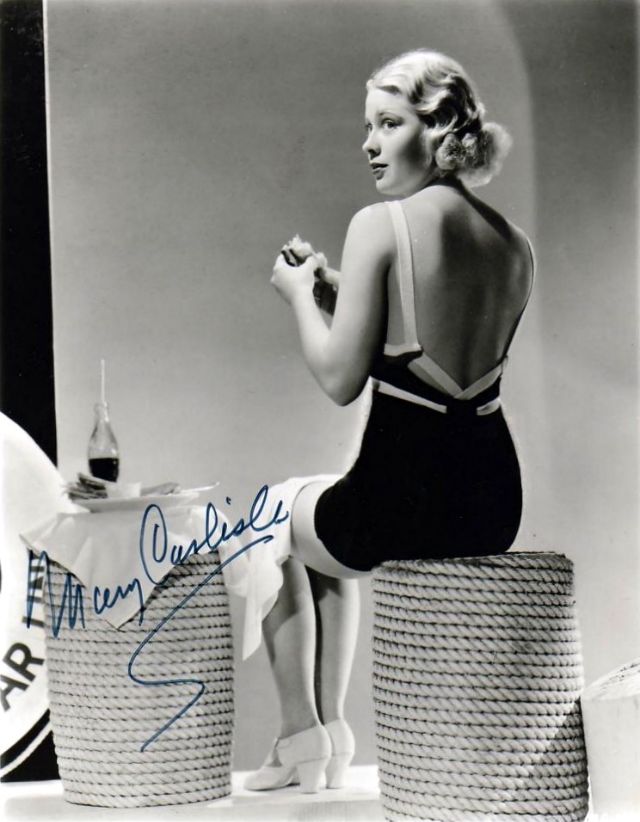
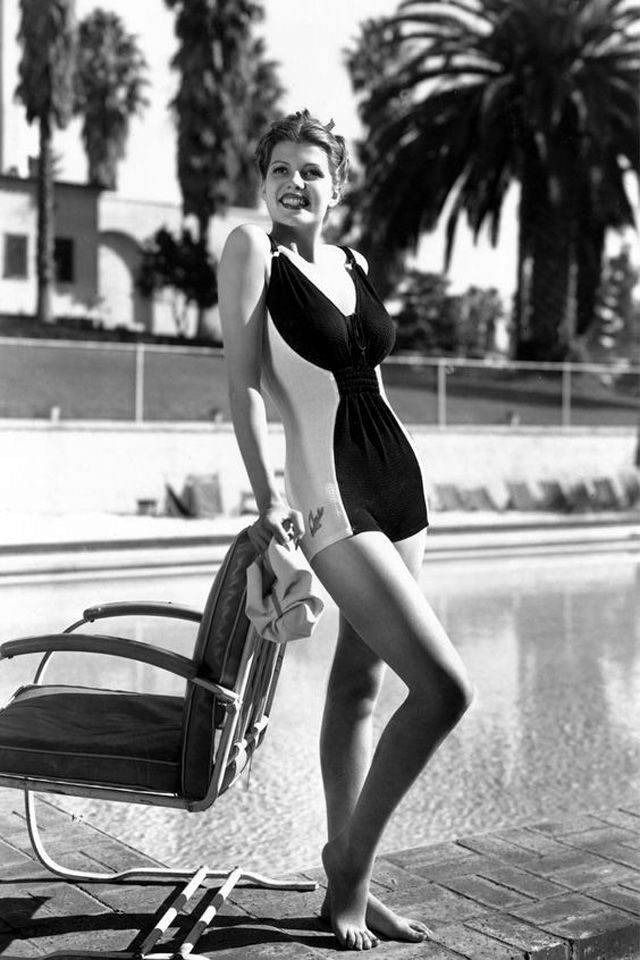
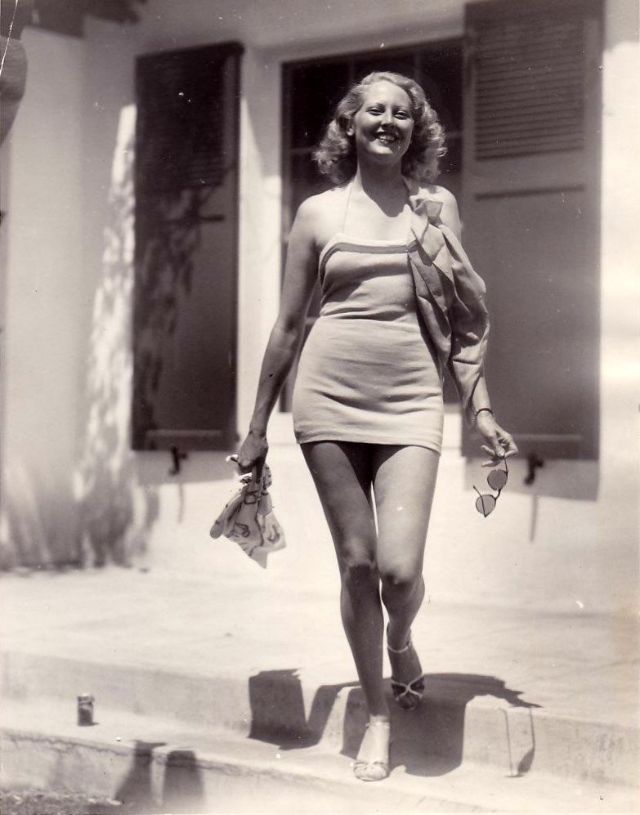
Necklines dropped, backs opened up, and hemlines crept higher than in previous decades, though nothing close to the bikini styles that would eventually follow in the late 1940s.
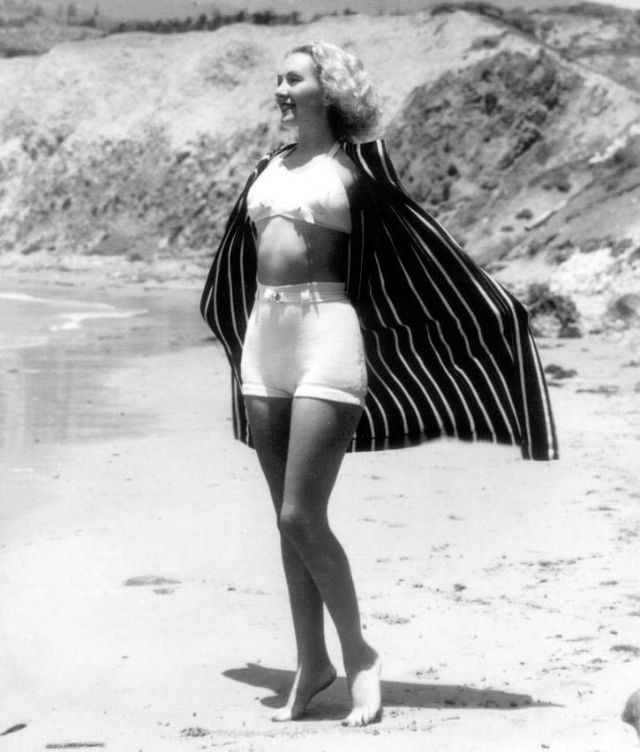
 Two-piece designs began appearing toward the end of the 1930s, pairing high-waisted bottoms with cropped tops that exposed the midriff for the first time in mainstream fashion.
These early two-piece suits were still conservative by modern standards, but they represented a meaningful step toward the more revealing styles that would define beachwear in the decades ahead.
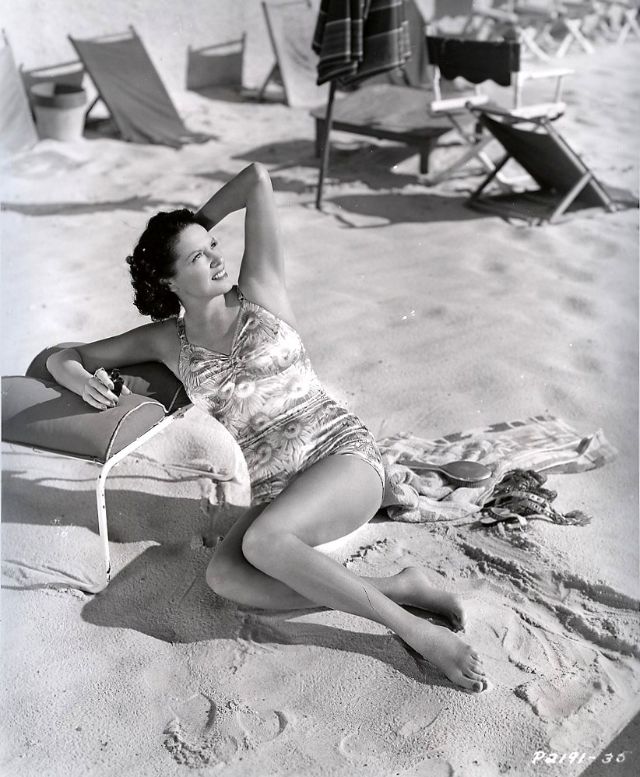
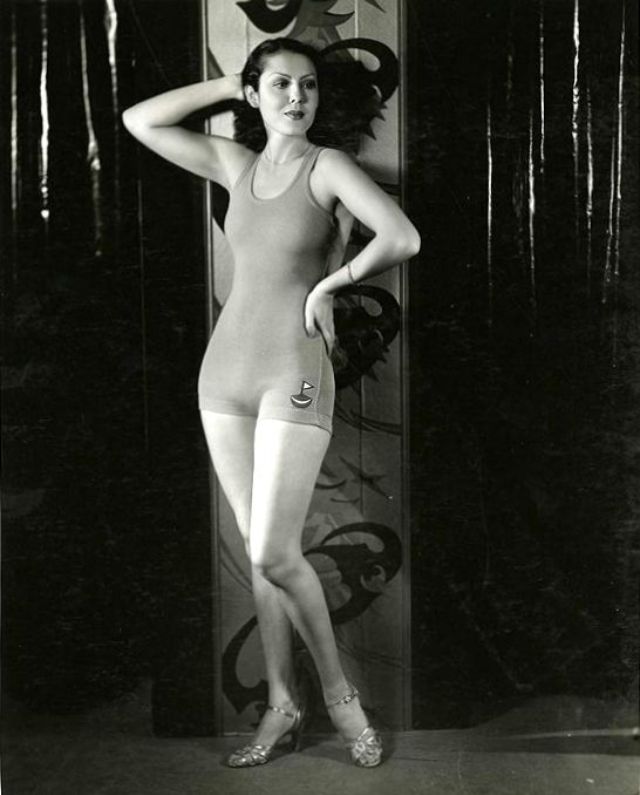
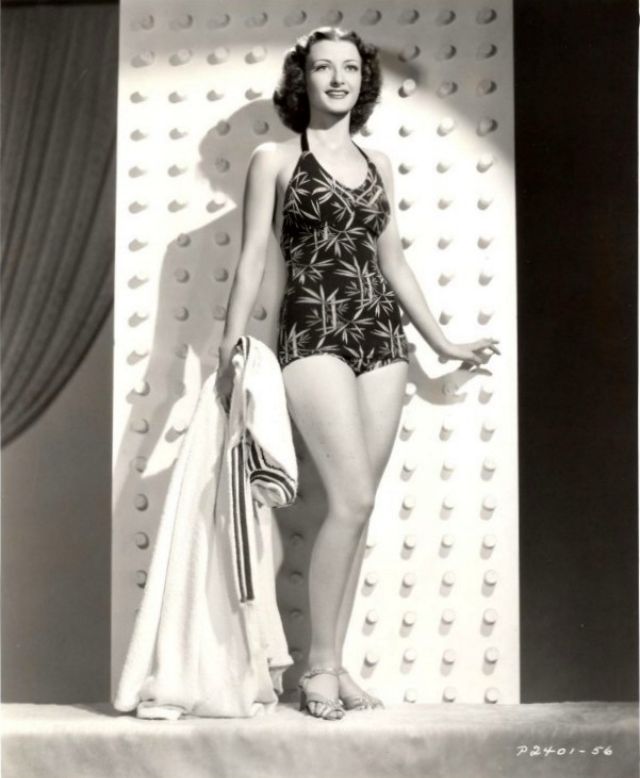
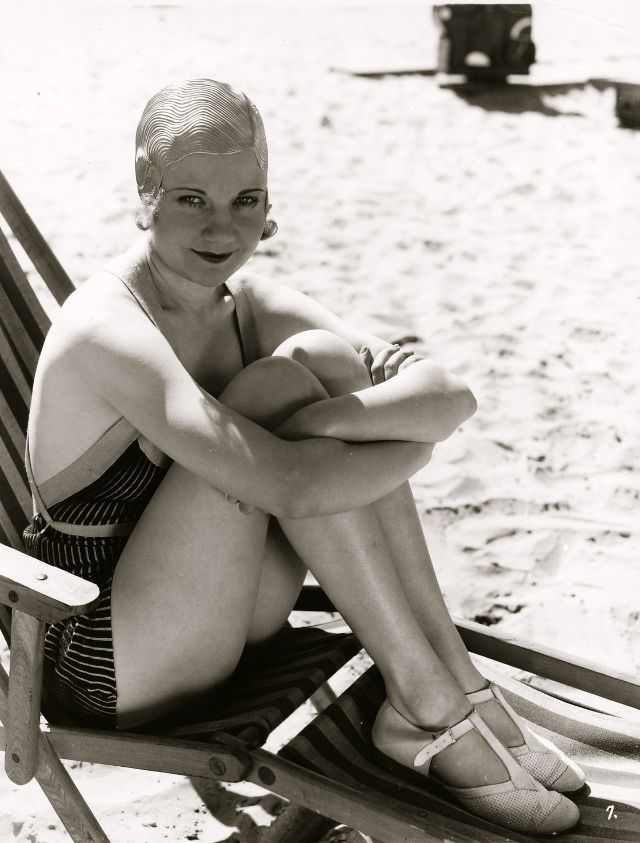
 Color and pattern played a significant role in setting 1930s swimwear apart. Bold horizontal stripes, nautical motifs, and geometric prints reflected the broader Art Deco influence sweeping through fashion and design at the time.
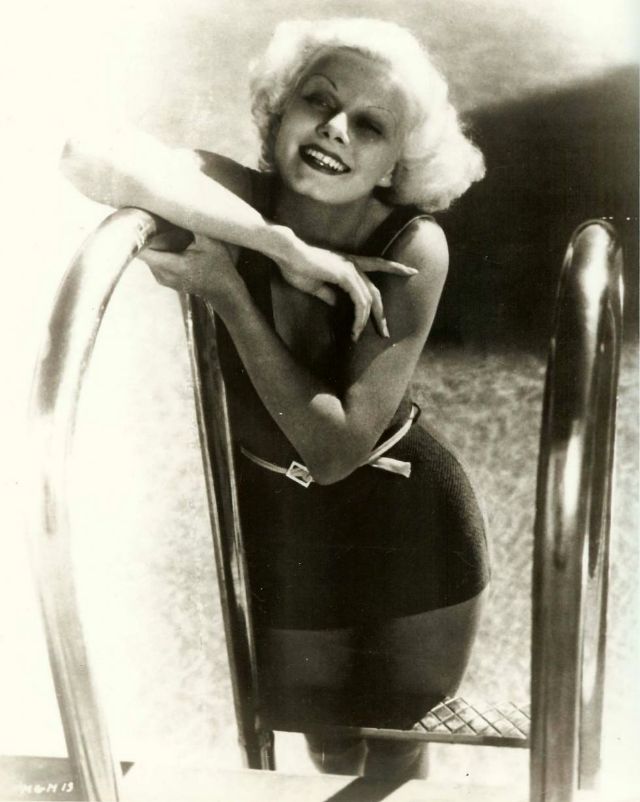
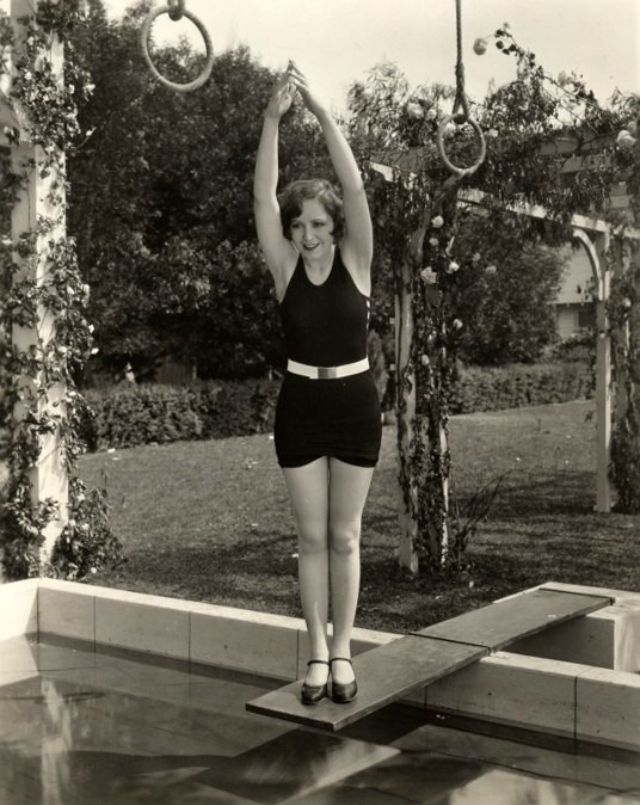
Belts, buckles, and decorative details added structure to suits, while skirted bottoms and modesty panels remained common for women who preferred a more traditional silhouette.
Men’s swimwear underwent its own transformation during this period, moving away from full-body union suits toward fitted trunks paired with, and eventually without, a top.
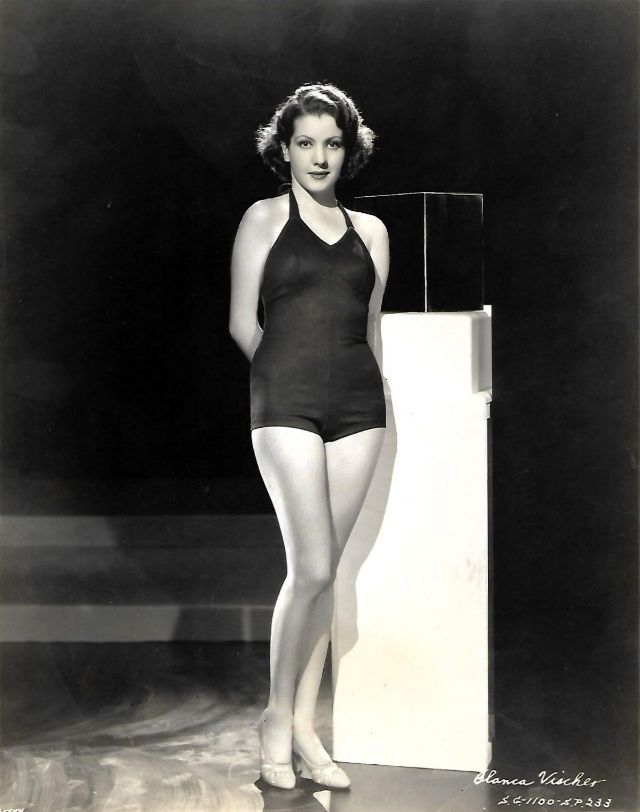
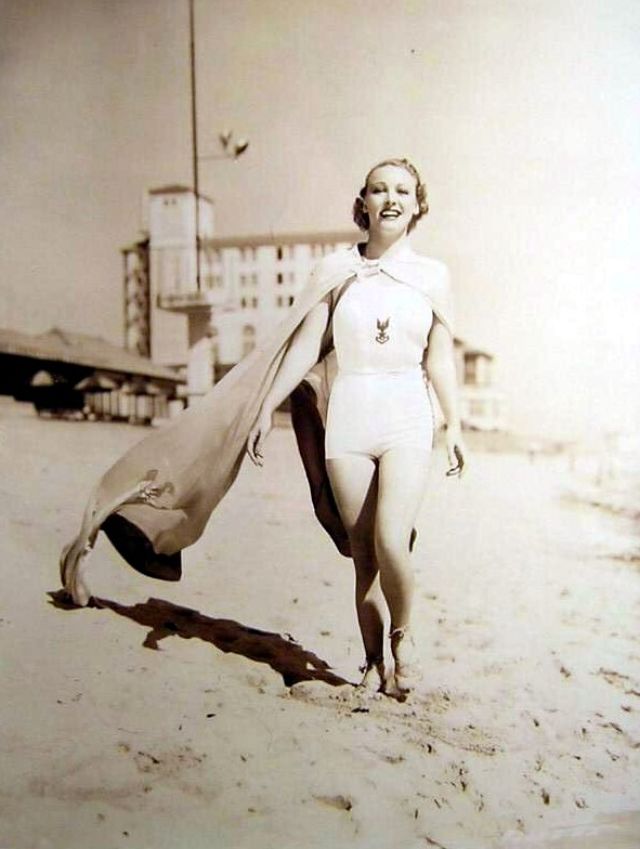 Hollywood had an outsized influence on how the public viewed beach fashion. Film stars photographed at seaside resorts or lounging poolside in glamorous swimsuits helped popularize new styles almost overnight.
Magazines and newsreels spread these images across the country, turning actresses into unofficial style icons and giving everyday women a glimpse of aspirational beach glamour they could try to recreate for themselves.
This connection between celebrity culture and swimwear trends set a pattern that continues to shape fashion marketing today.
 Accessories completed the look for both men and women.
Wide-brimmed sun hats, cat-eye sunglasses, and canvas beach shoes became staples of the seaside wardrobe, while beach robes and capes offered coverage for the walk from cabana to shoreline.
These finishing touches reflected a broader cultural shift toward leisure and self-presentation, as spending a day at the beach became less about necessity and more about enjoying free time in style.
 This same period also marked a quiet but steady push against the boundaries of what was considered acceptable to wear in public.
Each inch of exposed midriff or dropped neckline reflected a broader social shift, one where leisure time and self-expression were becoming available to far more people than ever before.
The tailored elegance, playful prints, and gradually more daring silhouettes of the 1930s laid the groundwork for the swimwear revolution still to come, setting the stage for the bikini that would arrive and reshape the beach entirely within a decade or two.




































(Photo credit: Pinterest / Flickr).