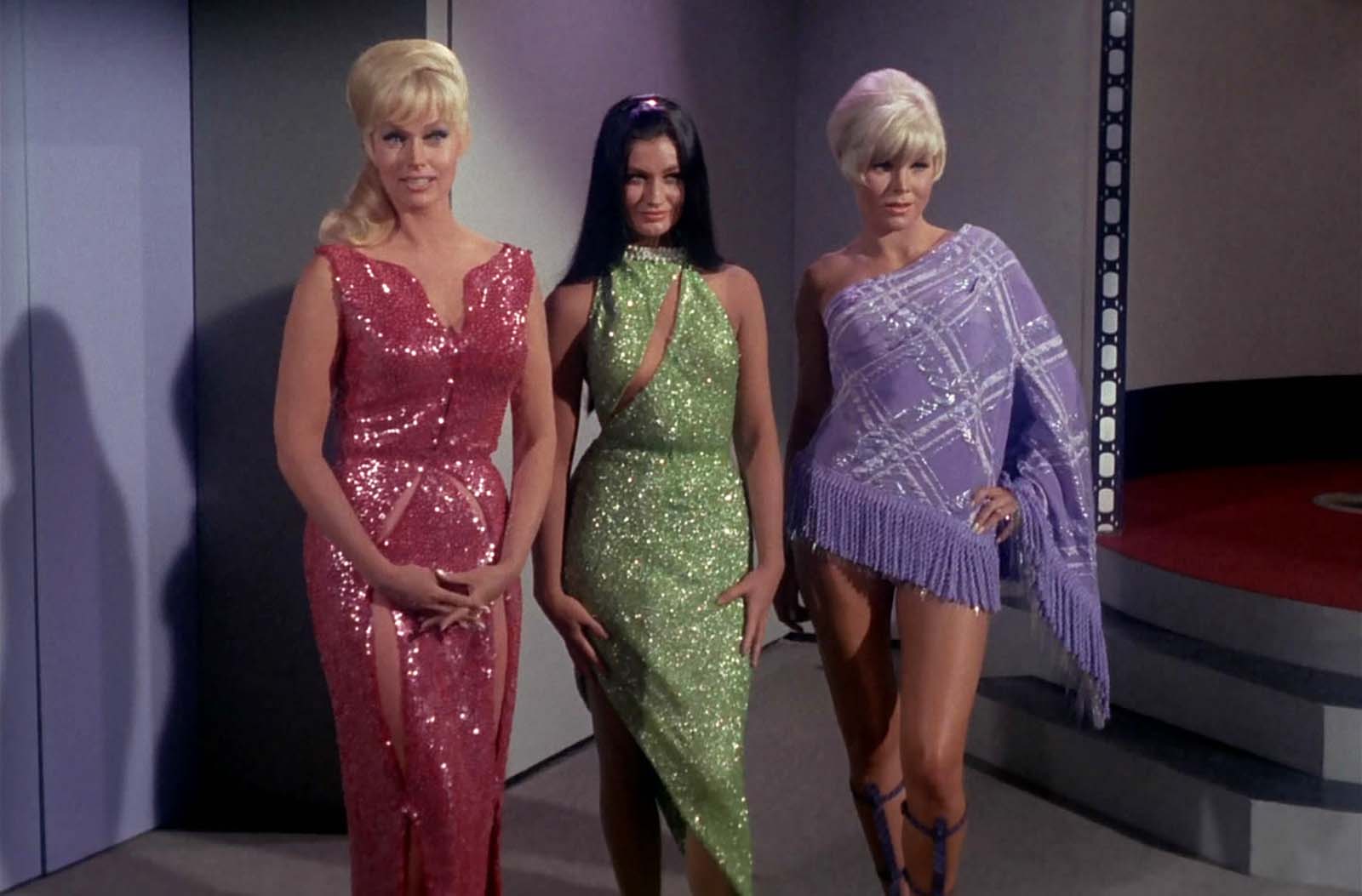
 When Star Trek premiered in 1966, it introduced audiences to a vision of the future filled with advanced technology, distant worlds, and a diverse crew working together aboard the USS Enterprise.
Alongside its groundbreaking ideas about space exploration and human progress, the series also became known for its distinctive visual style, particularly the futuristic uniforms worn by the women of Starfleet.
The short skirts, bold colors, and sleek designs reflected the fashion trends of the 1960s while helping create the unforgettable image of the era’s “space-age” glamour.
.jpg) The look of Star Trek’s female uniforms was closely connected to the changing styles of the decade.
The look of Star Trek’s female uniforms was closely connected to the changing styles of the decade.
In the early 1960s, women’s professional uniforms, including those worn by airline stewardesses, often featured structured jackets, tailored silhouettes, and military-inspired details.
As the decade progressed, fashion became more experimental, with brighter colors, shorter skirts, and more youthful designs becoming increasingly popular.
.jpg) Elements of this changing style, including the front skirt flap and the distinctive checkerboard hairstyle later associated with Yeoman Janice Rand, appeared in LIFE magazine shortly before costume designer William “Bill” Ware Theiss began developing the show’s iconic wardrobe.
Elements of this changing style, including the front skirt flap and the distinctive checkerboard hairstyle later associated with Yeoman Janice Rand, appeared in LIFE magazine shortly before costume designer William “Bill” Ware Theiss began developing the show’s iconic wardrobe.
Theiss, who was early in his career when he joined Star Trek, played a major role in shaping the series’ visual identity.
His designs blended futuristic concepts with contemporary 1960s fashion, creating costumes that looked both familiar and otherworldly.
.jpg) The introduction of the miniskirt was especially notable because it represented one of the most recognizable fashion trends of the era.
The introduction of the miniskirt was especially notable because it represented one of the most recognizable fashion trends of the era.
The style had only recently entered mainstream culture, making its appearance on a prime-time science fiction series a reflection of the changing attitudes toward fashion, individuality, and personal expression.
The idea of incorporating shorter skirts into the women’s Starfleet uniforms is often linked to actress Grace Lee Whitney, who portrayed Yeoman Janice Rand.
.jpg) According to Whitney, she suggested the look after being encouraged to create a subtle romantic tension between her character and Captain James T. Kirk.
According to Whitney, she suggested the look after being encouraged to create a subtle romantic tension between her character and Captain James T. Kirk.
However, the decision also aligned with the studio’s desire to move away from the more conservative costumes seen in the original pilot episodes, where characters wore simple velour tunics and darker trousers.
.jpg) The responsibility of bringing this vision to life fell largely on Theiss, whose designs became famous for combining elegance with a sense of playful fantasy.
The responsibility of bringing this vision to life fell largely on Theiss, whose designs became famous for combining elegance with a sense of playful fantasy.
He developed what later became known as the “Theiss Titillation Theory,” the idea that a costume’s appeal came not simply from how much skin it revealed, but from creating the impression that it was slightly daring or unexpected.
While some of his designs for guest characters embraced this approach more dramatically, the standard women’s Starfleet uniforms remained practical and secure while still reflecting the fashionable spirit of the 1960s.
.jpg) Over the years, the miniskirts worn by the women of Star Trek became a subject of debate, especially as views on gender representation and workplace clothing evolved.
Over the years, the miniskirts worn by the women of Star Trek became a subject of debate, especially as views on gender representation and workplace clothing evolved.
Some critics later interpreted the uniforms as symbols of outdated ideas about women’s roles, arguing that female characters were presented through a more sexualized lens.
However, many of the actresses who wore the costumes viewed them differently, particularly within the cultural context of the 1960s.
.jpg) Nichelle Nichols, who played Lieutenant Nyota Uhura, offered a different perspective in her autobiography.
Nichelle Nichols, who played Lieutenant Nyota Uhura, offered a different perspective in her autobiography.
Nichols explained that when the series was originally produced, the uniforms were not widely viewed as restrictive or degrading.
Instead, the miniskirt represented the fashion of the time and was often associated with confidence, freedom, and changing attitudes toward women’s independence.
.jpg) Nichelle Nichols: “In later years, especially as the women’s movement took hold in the seventies, people began to ask me about my costume.
Nichelle Nichols: “In later years, especially as the women’s movement took hold in the seventies, people began to ask me about my costume.
Some thought it “demeaning” for a woman in the command crew to be dressed so sexily. It always surprised me because I never saw it that way.
After all, the show was created in the age of the miniskirt, and the crew women’s uniforms were very comfortable.
Contrary to what many may think today, no one really saw it as demeaning back then. In fact, the miniskirt was a symbol of sexual liberation.
More to the point, though, in the twenty-third century, you are respected for your abilities regardless of what you do or do not wear.”
.jpg) This idea was central to the show’s futuristic vision. Although the uniforms reflected the trends of the 1960s, the women who wore them were portrayed as skilled professionals, officers, and essential members of the Enterprise crew.
This idea was central to the show’s futuristic vision. Although the uniforms reflected the trends of the 1960s, the women who wore them were portrayed as skilled professionals, officers, and essential members of the Enterprise crew.
Characters like Uhura, Rand, and other female Starfleet officers helped challenge traditional television roles by presenting women as capable figures in science, communication, and exploration.
.jpg)
.jpg)
.jpg)
.jpg)
.jpg)
.jpg)
.jpg)
.jpg)
.jpg)
.jpg)
.jpg)
.jpg)
.jpg)
.jpg)
.jpg)
.jpg)
.jpg)
.jpg)
.jpg)
.jpg)
.jpg)
.jpg)
.jpg)
(Photo credit: Star Trek Archives).