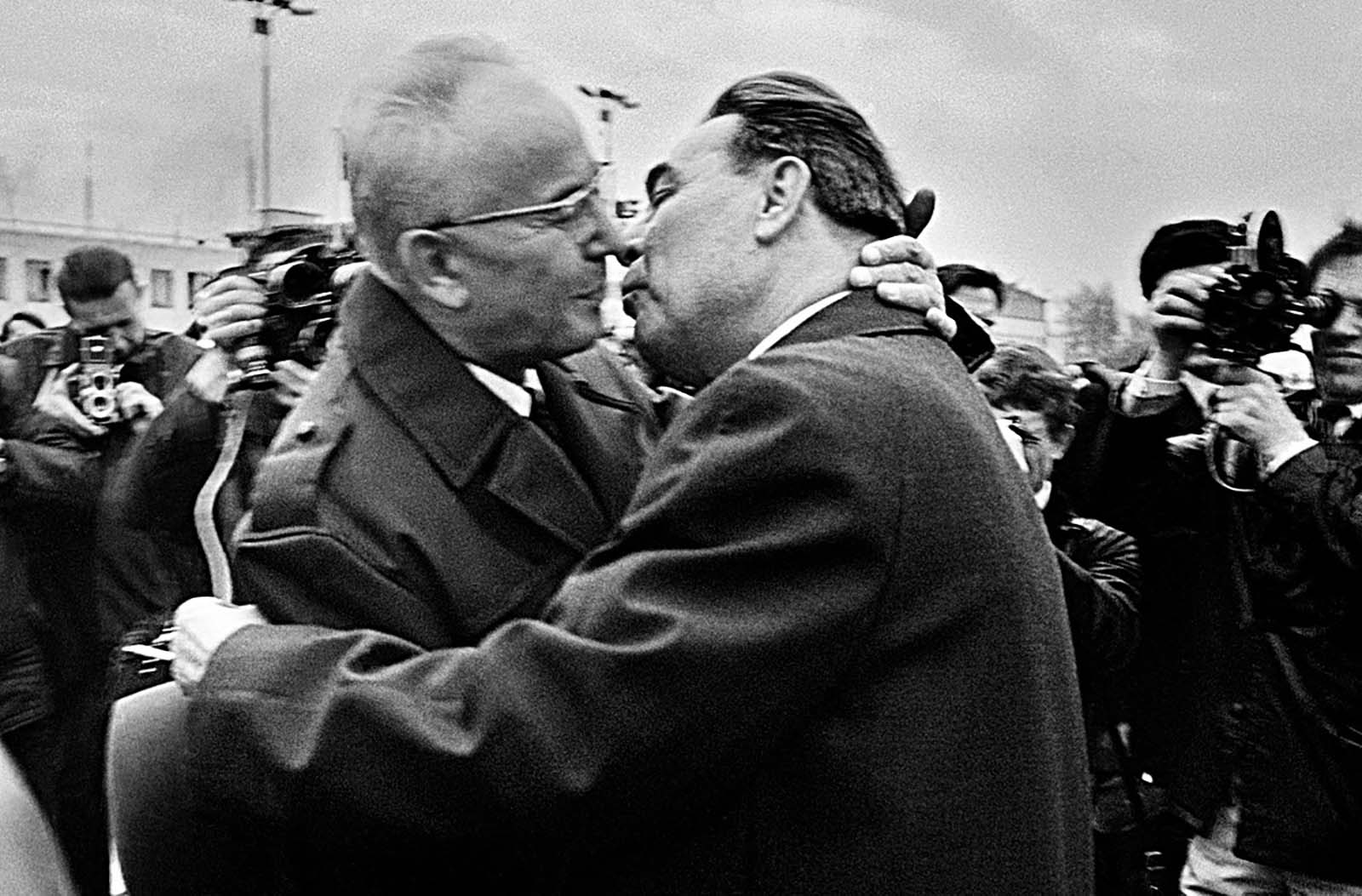
 The Socialist Fraternal Kiss became one of the most recognizable gestures of the communist world during the Cold War.
Photographs of Soviet leaders, military heroes, and foreign dignitaries embracing and kissing on the lips captured a peculiar political tradition that was both a display of friendship and a carefully observed diplomatic ritual.
Behind these striking images was a custom with roots in older European and religious practices, one that eventually took on a meaning of its own as communism spread across Eastern Europe and beyond.
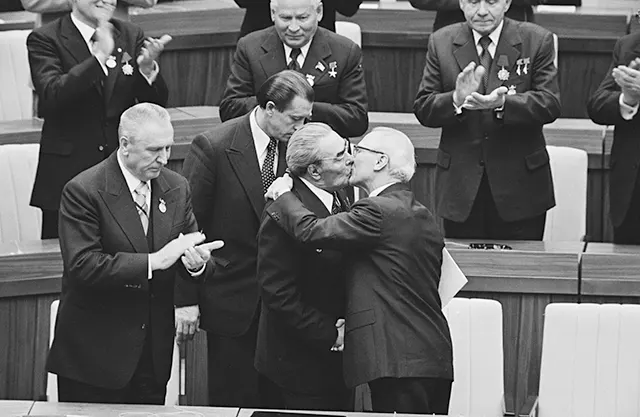
Leonid Brezhnev and Erich Honecker kiss on the occasion of GDR’s 30th anniversary in 1979.
The origins of the gesture can be traced to several traditions. Cheek kissing had long been a familiar greeting among European family members, friends, and political figures, while the Eastern Orthodox Church practiced a ceremonial kiss of peace to express fellowship and shared faith.
Similar greetings were also customary among soldiers and officers in the Russian Empire.
After the Bolshevik Revolution, these established customs gradually acquired a new political meaning, becoming expressions of solidarity among revolutionary comrades.
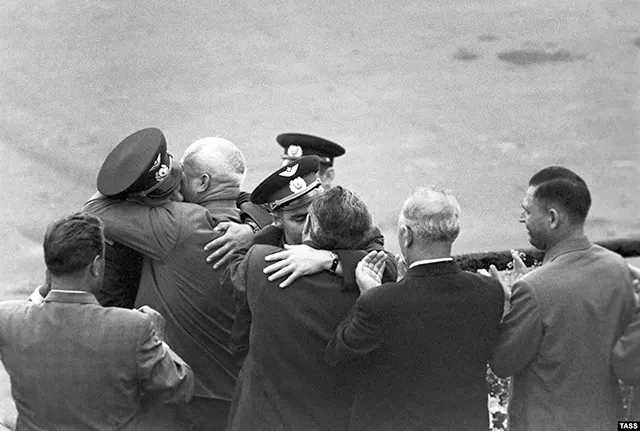
What looks like a last dance is actually a state event to welcome cosmonauts back to Earth led by Soviet leader Nikita Khrushchev (third from left).
In the early Soviet years, the greeting was not yet the formalized political ritual it would later become.
It appeared more spontaneously, particularly at public celebrations and events honoring individuals who had distinguished themselves in service to the state.
Photographs from the 1930s provide some of the earliest well-known examples. In 1936, celebrated Soviet test pilot Valery Chkalov was photographed leaning in to kiss Joseph Stalin.
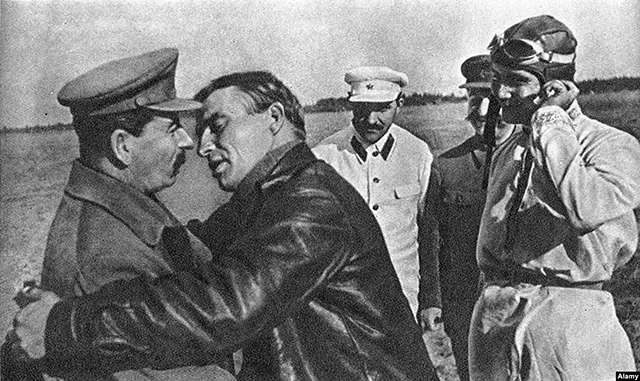
Valery Chkalov, a pilot, tries to kiss Stalin, (1936), Russian SFSR.
The following year, Stalin exchanged a similar greeting with another prominent Soviet aviator, Vasily Molokov.
Such encounters helped establish the image of the Soviet leader as a paternal figure who welcomed national heroes with conspicuous warmth and affection.
The public display of male intimacy carried a striking contradiction in Stalin’s Soviet Union.
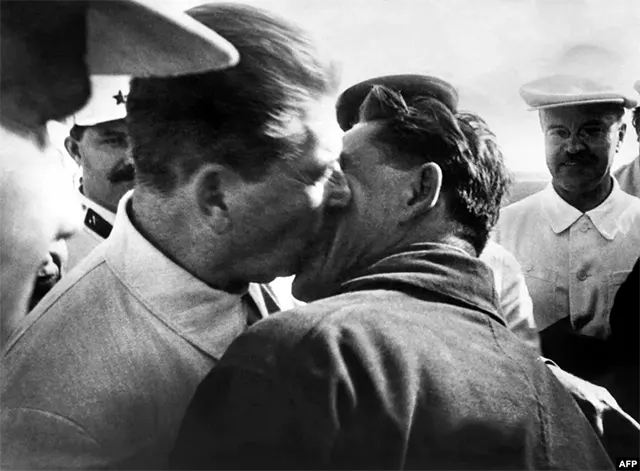
Joseph Stalin (L) kissing Polar pilot Vasily Molokov (R) at his return in Moscow with Otto Schmidt (not pictured) Arctic explorer on July 4, 1937.
Following the 1917 Revolution, the Bolsheviks dismantled the Tsarist legal system, and the new Soviet criminal codes of the early 1920s no longer criminalized consensual homosexual relations between men.
This brief period of legal tolerance ended under Stalin. In 1934, Article 121 of the Soviet criminal code made male homosexual relations a criminal offense, punishable by up to five years of imprisonment with hard labor.
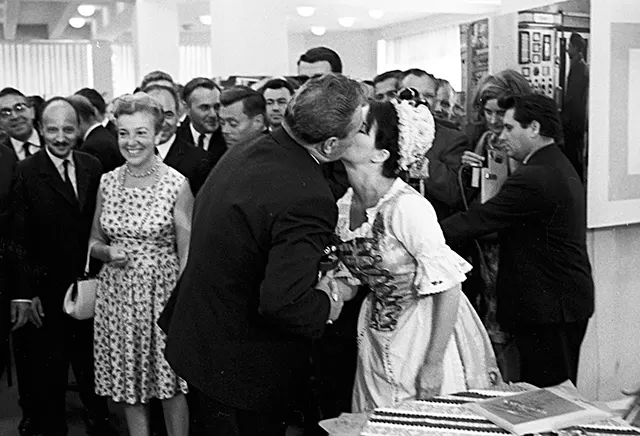
Leonid Brezhnev at the Hungarian Agricultural Exhibition in Budapest in 1967.
Soviet propaganda increasingly portrayed homosexuality as a sign of moral corruption, associating it with bourgeois decadence and hostile Western influences.
Accusations of homosexuality could also be used to discredit political opponents and expose individuals to persecution. In this atmosphere, official photographs of powerful men kissing on the lips presented an unusual contrast.
The authorities celebrated the gesture as an expression of political brotherhood, while private same-sex relationships were treated as a criminal matter. The distinction reflected the tightly controlled boundaries between acceptable public conduct and private life in the Soviet state.
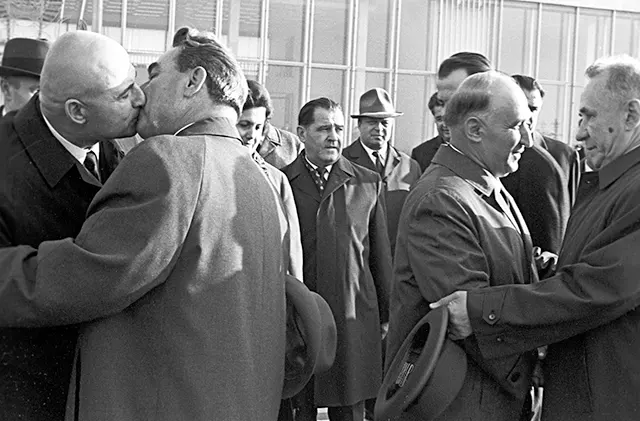
Leonid Brezhnev sees off the delegation from Bulgaria and its leader Todor Zhivkov (second from right) in 1969.
As Soviet influence expanded after the Second World War, the greeting developed into a recognizable feature of diplomatic life throughout the communist bloc.
The Soviet Union was no longer the only communist state, and relations between socialist governments increasingly involved a shared set of political customs and public ceremonies.
The fraternal kiss became one of the most visible expressions of this supposed unity, exchanged by party leaders, heads of state, military officials, and other prominent figures during official visits and international gatherings.

Soviet President Leonid Brezhnev and East German leader Erich Honecker change kisses after Brezhnev was honored with the title “Hero of the German Democratic Republic” and the “Karl Marx Medal”.
The greeting generally consisted of an embrace followed by three kisses on alternating cheeks. It was intended to communicate a close bond between individuals and, more importantly, between their respective countries.
On particularly warm occasions, leaders who enjoyed especially close relations sometimes exchanged a kiss on the lips instead.
These encounters were frequently photographed, and the resulting images became part of the visual language of Cold War diplomacy.
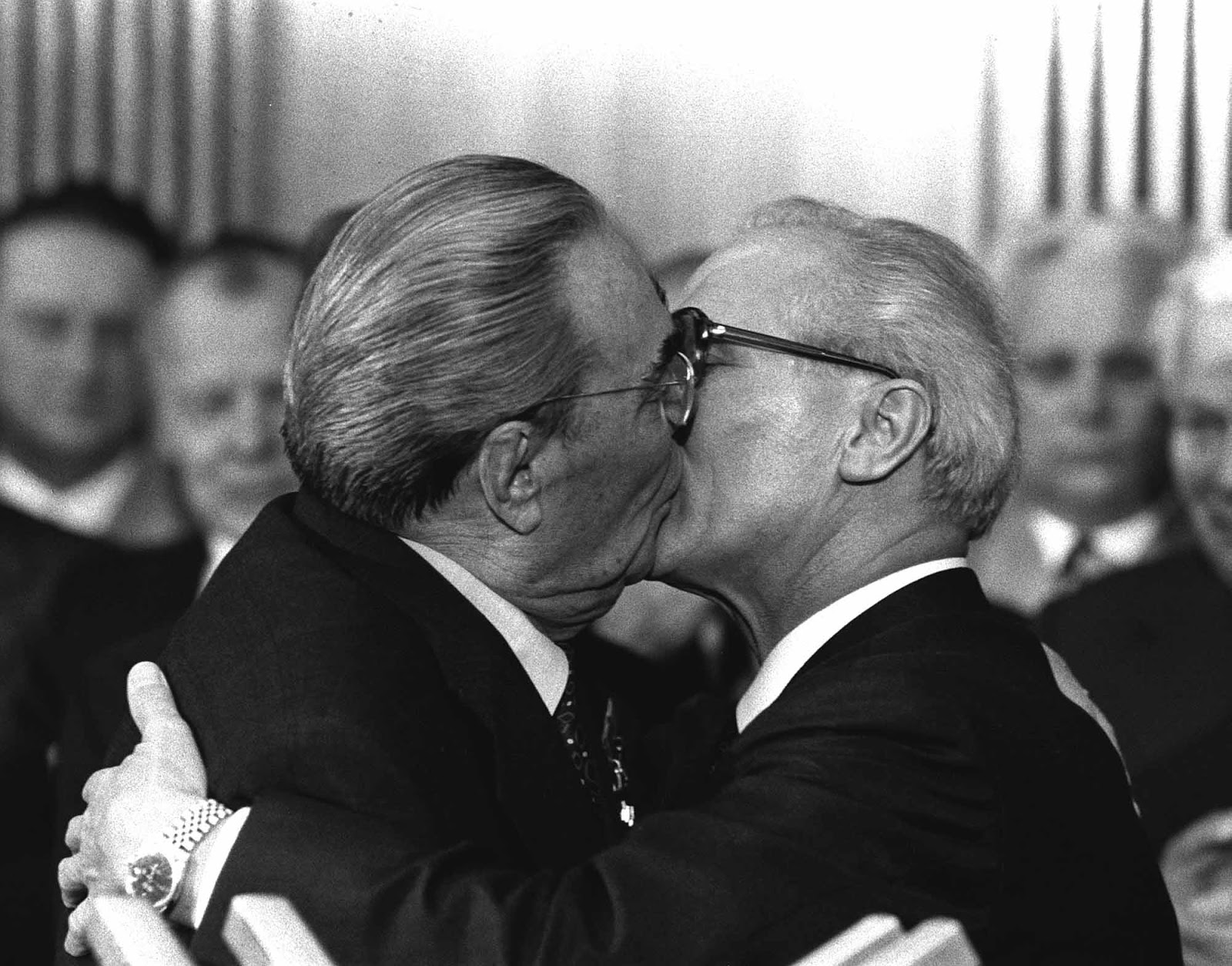
The Socialist Fraternal Kiss, “The Kiss”, 1979.
What might have seemed unusual to observers outside the communist world was treated as an entirely respectable expression of political friendship within it.
The ritual was also closely watched by foreign diplomats and Kremlin observers, who understood that these public gestures could reveal more than simple personal affection.
The presence or absence of the customary embrace sometimes offered clues about the state of relations between two communist governments.
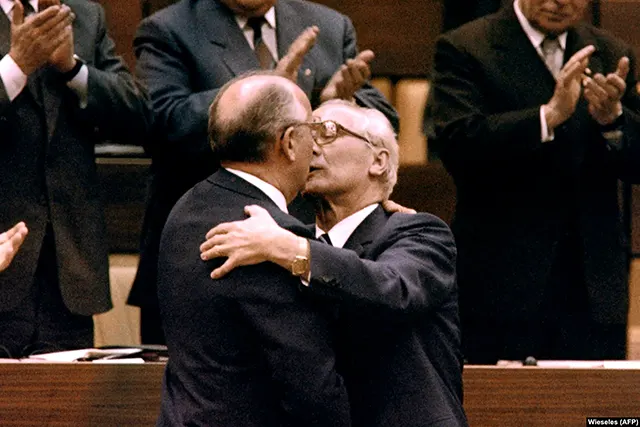
Three years before the Berlin Wall came down, Honecker grips Gorbachev tight during the latter’s state visit to East Germany in 1986.
A leader who deliberately avoided the greeting could signal political distance, disagreement, or a cooling relationship without making an explicit statement.
In an era when diplomatic language was often carefully controlled, even a seemingly minor gesture could carry considerable significance.
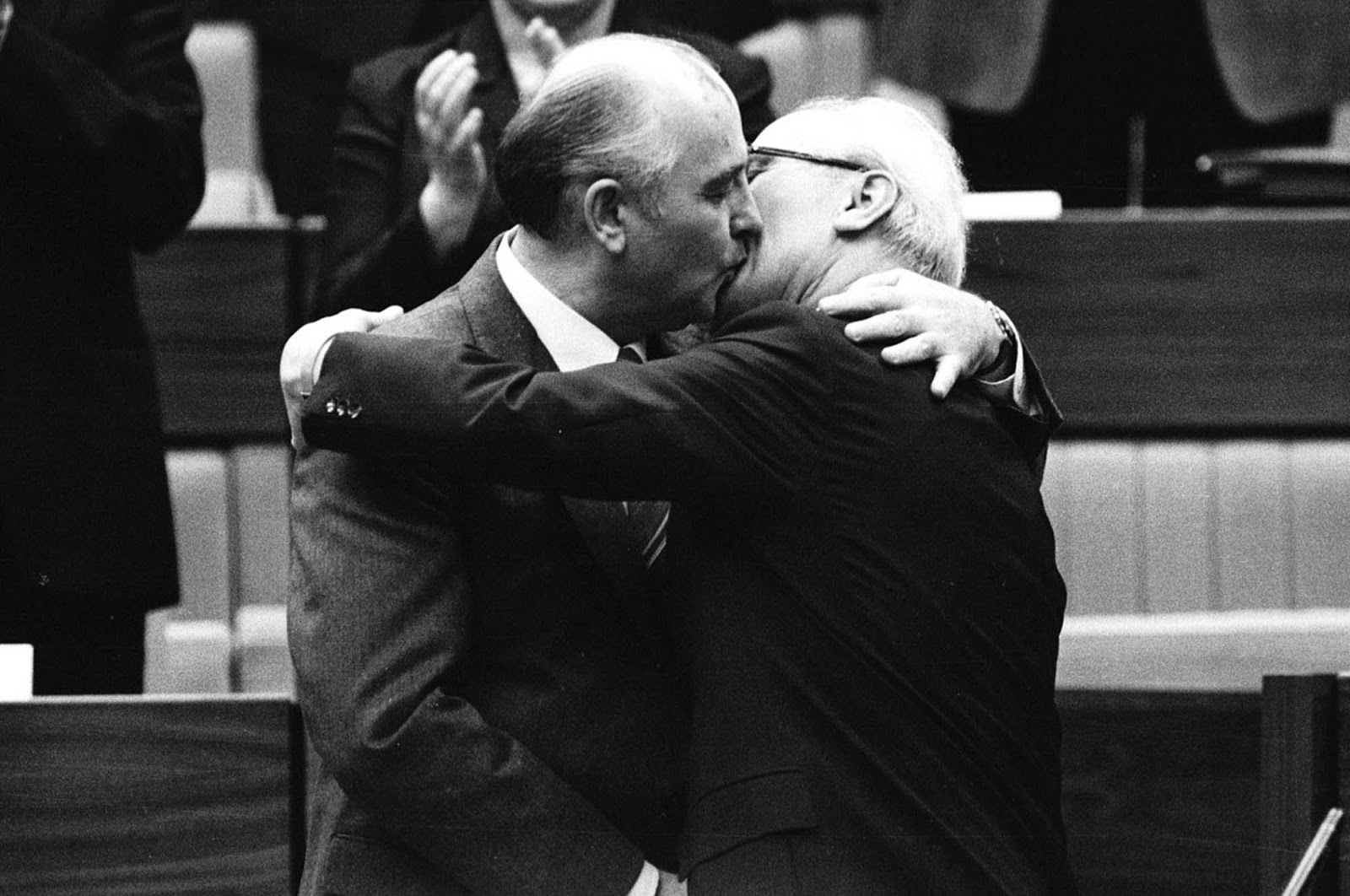
The Soviet leader Mikhail Gorbachev congratulates East German leader Erich Honecker with a fraternal hug and kiss after Honecker’s re-election as General Secretary of the Communist Party Congress in East Berlin, on April 21, 1986.
One of the clearest examples came after the Sino-Soviet split, when relations between Moscow and Beijing deteriorated during the late 1950s and early 1960s.
The Chinese leadership increasingly rejected the familiar language and customs of Soviet political brotherhood.
During Nikita Khrushchev’s visit to Beijing in 1959, he reportedly attempted to embrace Mao Zedong, but the Chinese leader stepped back and offered a handshake instead.

Gorbachev and Honecker sharing another socialist kiss in 1989. Picture taken during the celebration of the 40th anniversary of the German Democratic Republic’s creation in East Berlin.
The seemingly awkward encounter reflected the growing ideological and political divide between the two communist powers.
Even after relations began to improve in 1989, Chinese officials continued to avoid the traditional fraternal embrace in their dealings with Soviet representatives.
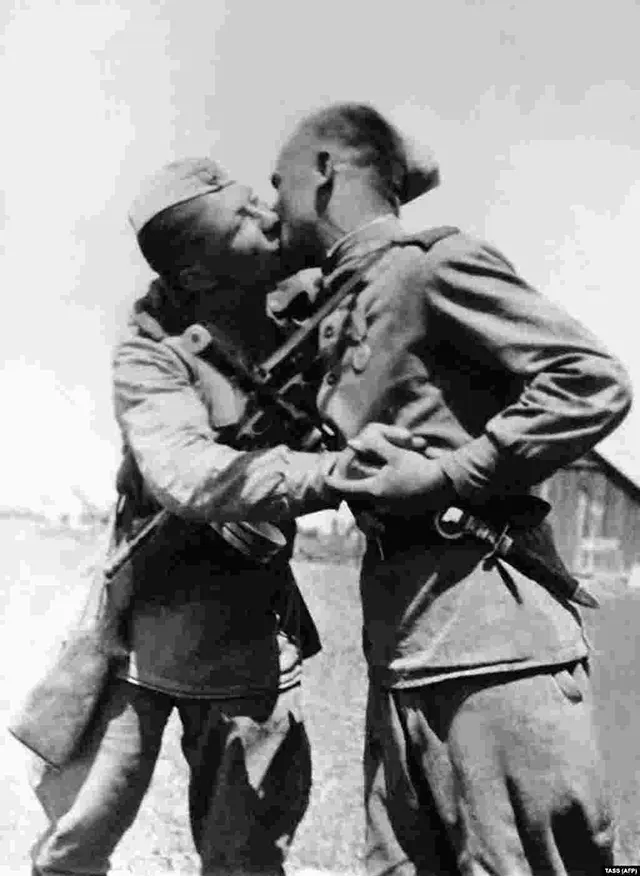
Red Army soldiers kiss after victory was declared over Nazi Germany. The “socialist fraternal kiss” was reportedly an expression of equality — upturning the ancien regime’s custom of lowly subjects kissing noble hands.
In 1962, Khrushchev was photographed enthusiastically welcoming Soviet cosmonauts after their return from space, greeting them with the same affectionate embraces and kisses reserved for other national heroes.
Such public displays helped turn the fraternal kiss into a familiar sight in Soviet newspapers, newsreels, and official photographs.
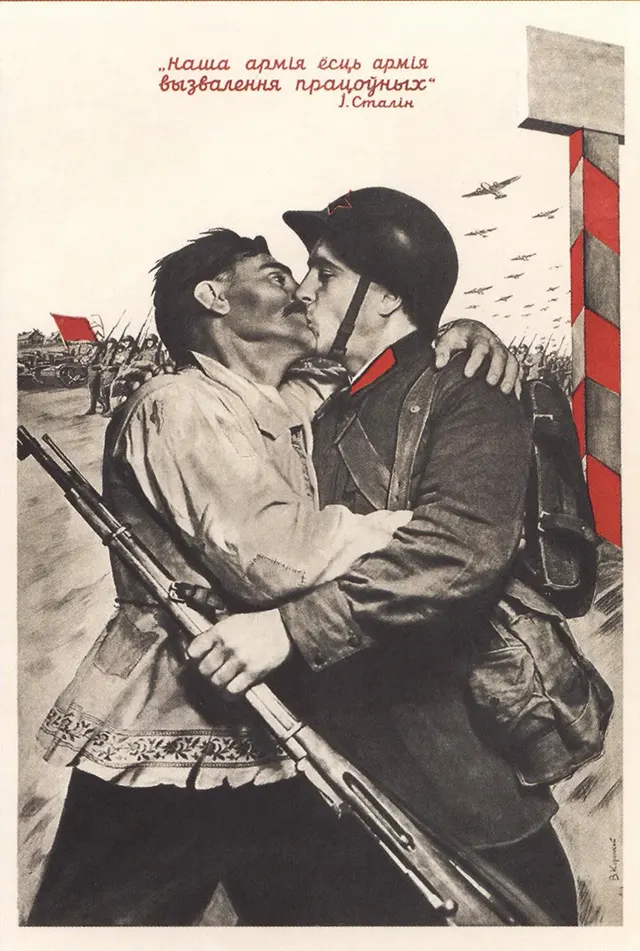
The Socialist Kiss portrayed in Soviet-Ukrainian propaganda.
By the late 1980s, however, the political world that had sustained the tradition was changing.
Mikhail Gorbachev’s reforms, the weakening of Soviet influence, and the collapse of communist governments across Eastern Europe gradually brought the old diplomatic customs to an end.
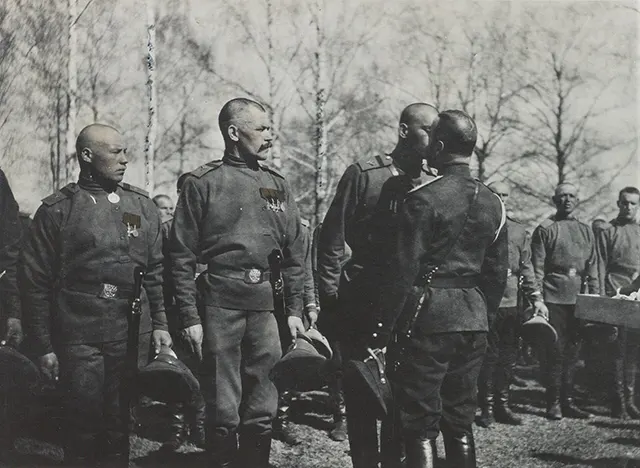
Tsar of Russia Nicholas II gives a kiss of peace to a soldier, 1916.
One of the most famous images associated with the tradition came in 1979, when Soviet leader Leonid Brezhnev exchanged an enthusiastic kiss on the lips with East German leader Erich Honecker.
The photograph became an enduring symbol of the era and remains one of the most recognizable examples of the Socialist Fraternal Kiss.
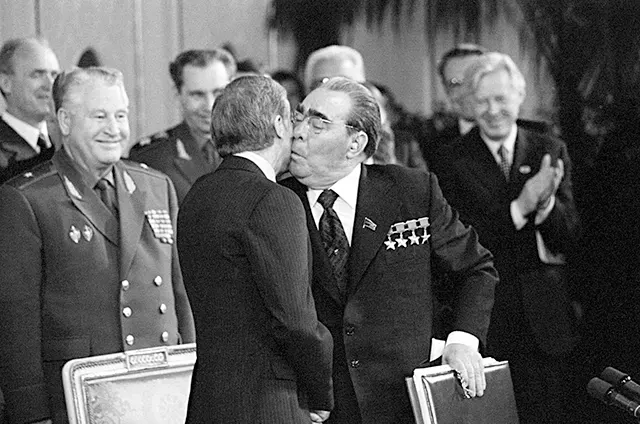
Leonid Brezhnev kissing the cheek of United States President Jimmy Carter in 1979.
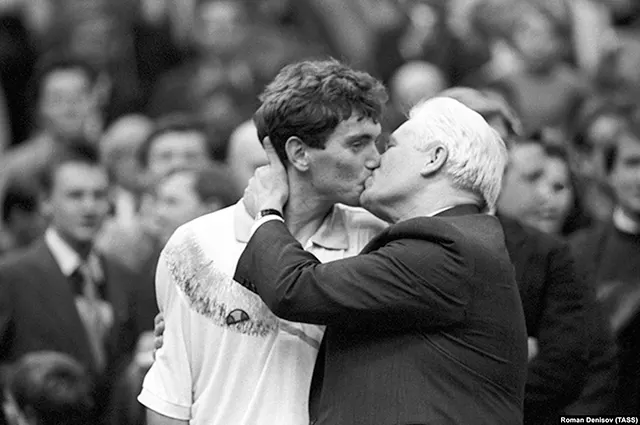
In the dying days of the U.S.S.R. in 1991, Soviet official Ivan Silayev grabs a last kiss as tennis champion Andrei Cherkasov dreams of a brighter future.
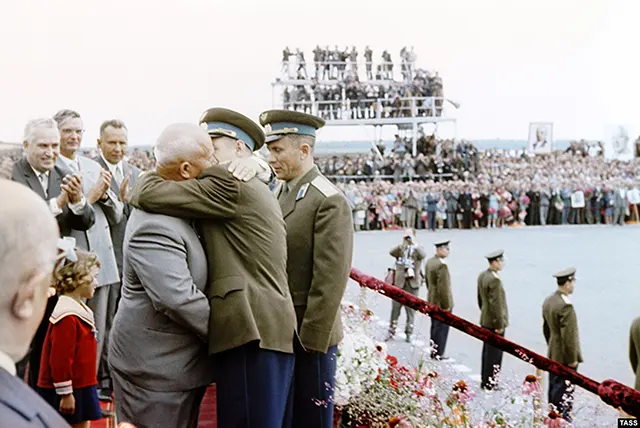
Another angle of the 1962 event shows Khrushchev mid-kiss. The socialist fraternal kiss was usually reserved for the cheeks, but as enthusiasm for communist utopia began to wane, stately kisses only grew in passion.
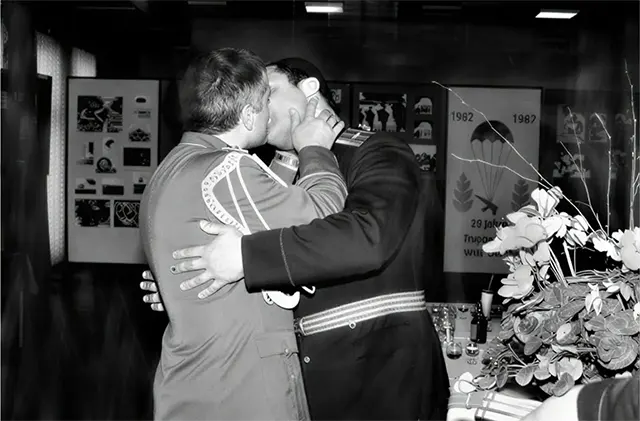
A Socialist Kiss between officers of the NVA and the Red Army in the 1980s.
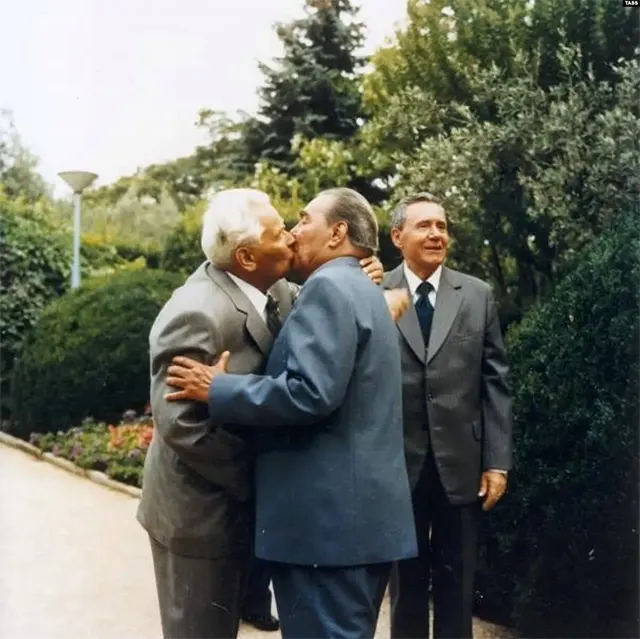
Brezhnev with Konstantin Chernenko.
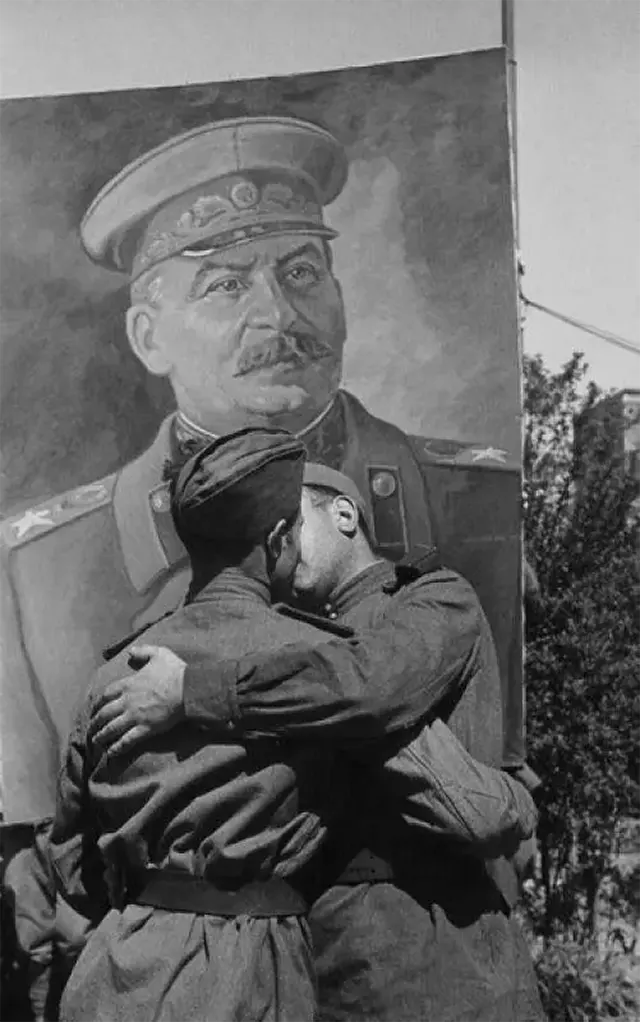
Two Red Army soldiers embrace in a Socialist Kiss in front of an image of Joseph Stalin.
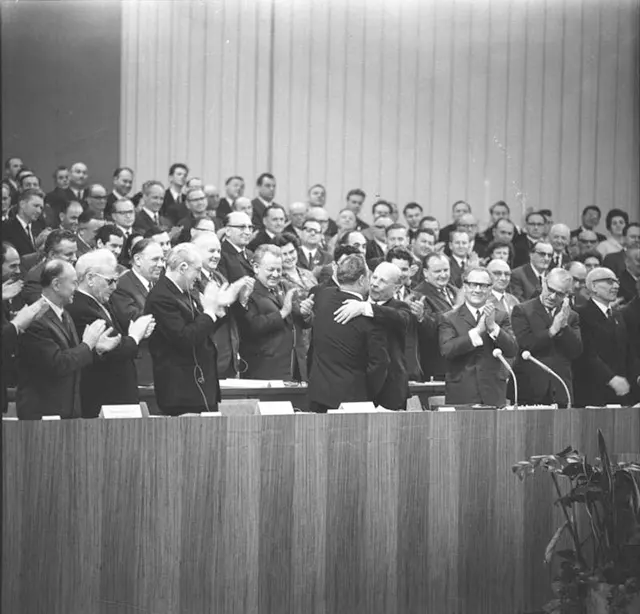
Socialist fraternal kiss exchanged between Walter Ulbricht and Leonid Brezhnev in 1967.
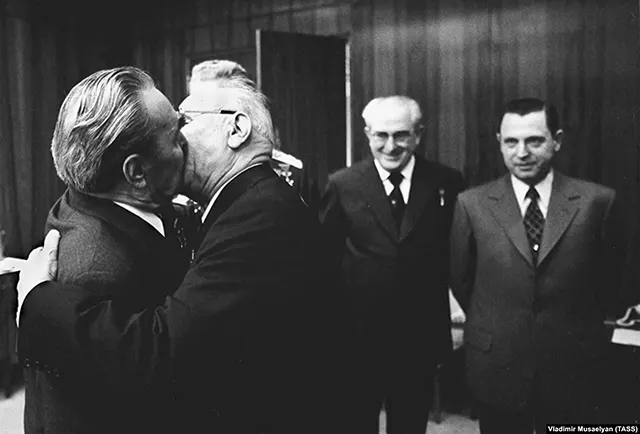
As Brezhnev locks lips with Nikolai Podgorny in the Kremlin in 1975, two elder statesmen (right) suffer instant demotion to third and fourth wheels.
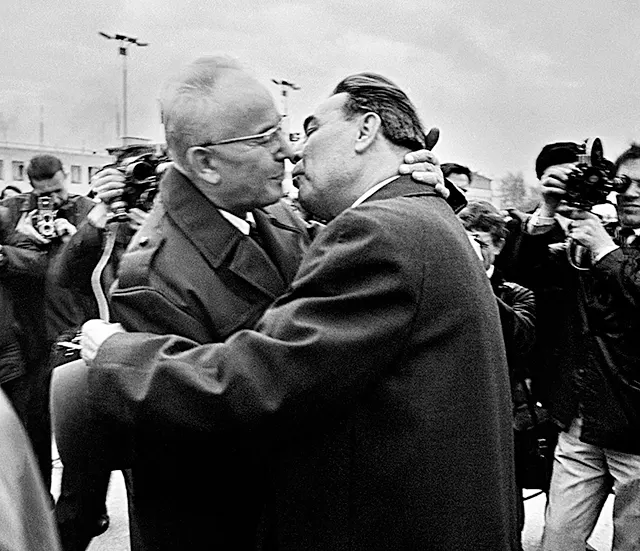
A kiss between Czechoslovak and Soviet party leaders Gustav Husak (left) and Leonid Brezhnev in Prague, 5 May 1970.
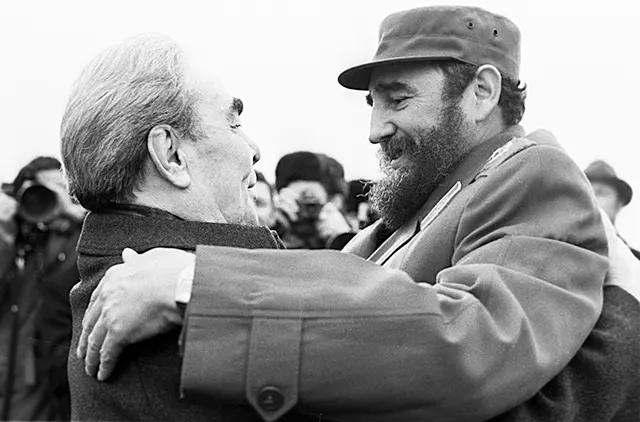
Leonid Brezhnev embracing Fidel Castro during his visit to Moscow.
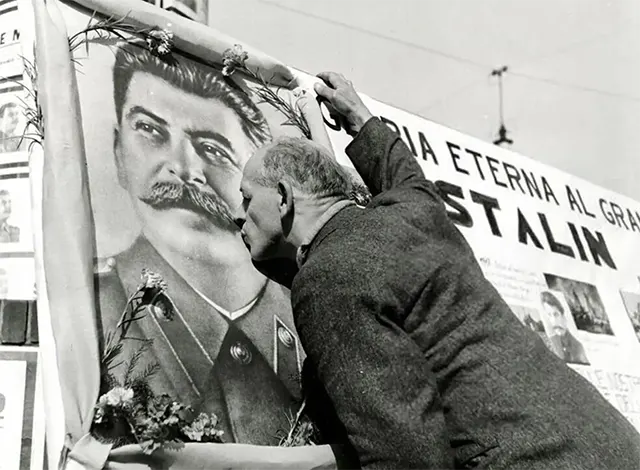
An Italian man kissing an image of Soviet leader Joseph Stalin after his death in 1953.

My God, Help Me to Survive This Deadly Love, a graffiti painting on the Berlin Wall depicting Soviet statesman Leonid Brezhnev kissing East German statesman Erich Honecker.
(Photo credit: Wikimedia Commons / TASS / Soviet Union Archives).