 The Great Depression brought hardship to nearly every corner of America, but life was especially difficult for families who depended on farming to make a living.
Across the countryside, falling crop prices, unpaid debts, and a shortage of work left thousands struggling to keep their land and put food on the table.
In some areas, years of drought and devastating dust storms made matters even worse, forcing families to leave farms they had worked for generations.

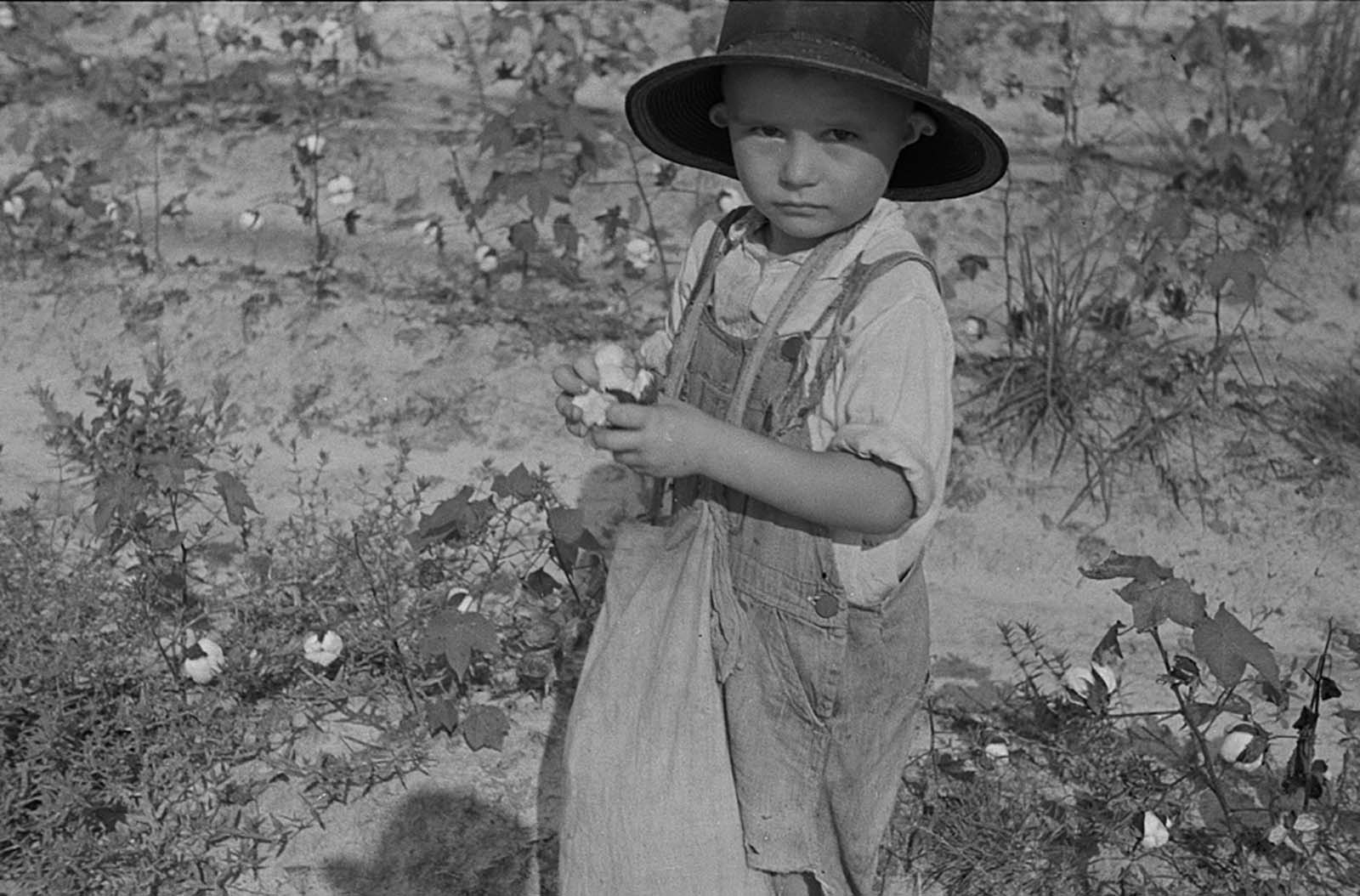
Sharecropper’s child suffering from rickets and malnutrition, Wilson cotton plantation, Mississippi County, Arkansas.
Money was scarce, jobs were hard to find, and many had to rely on their own resourcefulness, growing what they could, repairing old belongings, and sharing whatever little they had with neighbors.
The photographs taken during the 1930s offer an intimate look at these communities, documenting not only the poverty and hardship but also the ordinary moments and determination of people trying to make ends meet.

Son of a sharecropper, Mississippi County, Arkansas.
When the stock market crashed in October 1929, American agriculture was already facing serious financial difficulties.
The collapse of the economy sent demand and prices plunging, leaving farmers with less money for the crops and livestock they worked so hard to produce.
According to historical government estimates, gross farm income fell from approximately $12.8 billion in 1929 to just $5.6 billion in 1932, a decline of more than half in only three years.

Daughter of sharecropper, Mississippi County, Arkansas.
Many farmers could no longer cover their mortgage payments, purchase equipment, or afford the supplies needed for another growing season.
The situation was particularly difficult for tenant farmers and sharecroppers, especially across the South. Unlike landowners, tenant farmers worked land belonging to someone else, paying rent with cash or a portion of their harvest.
Sharecroppers often received only a fraction of the crops they produced, leaving little money to support their families after settling debts with landlords and merchants.

Sharecropper and children in front of company house. Wilson cotton plantation, Mississippi County, Arkansas.
When harvests failed or prices dropped, these families had almost no financial protection. Thousands lost their homes and livelihoods, while others moved from one farm to another in search of work.
The Great Plains faced an additional disaster during the 1930s. Years of intensive cultivation, combined with severe drought and strong winds, left large areas of exposed soil vulnerable to erosion.
Beginning in 1931, dust storms became increasingly destructive, burying fields, damaging homes, and making farming nearly impossible in some communities.

Demonstrating process of canning corn at community canning kitchen near Atkins, Arkansas.
The Dust Bowl affected parts of Oklahoma, Texas, Kansas, Colorado, and New Mexico, forcing many families to abandon their land.
Some headed west toward California in search of agricultural jobs, while others relocated to nearby towns or depended on relatives for shelter.
For those who remained, survival often depended on making use of whatever was available.

Commercial canning kitchen near Huntsville, Arkansas.
Families grew vegetables in small gardens, raised chickens and pigs, preserved food for the winter, and repaired clothing and household items rather than buying replacements. Nothing went to waste.
Neighbors sometimes exchanged labor, food, and supplies, while relatives shared living space when money ran out. Some farmers took temporary jobs outside agriculture, working on road construction, public projects, or other available employment.
Others sold livestock, tools, or personal belongings to pay outstanding debts. Even these measures were not always enough to prevent foreclosure or eviction.

Street scene at Clarksville, Arkansas.
The federal government introduced several programs under President Franklin D. Roosevelt’s New Deal to address the agricultural crisis.
The Resettlement Administration, established in 1935, provided assistance to struggling rural families, including loans, relocation support, and planned farming communities.
Its programs later became part of the Farm Security Administration, established in 1937.

Street scene at Clarksville, Arkansas.
The Bankhead-Jones Farm Tenant Act of the same year also expanded federal support for tenant farmers through loans intended to help eligible families purchase land. These efforts offered some relief, although assistance did not reach everyone who needed it.
One of the government’s most lasting contributions was a photographic project designed to document the conditions of rural America.
Under the direction of economist Roy Stryker, photographers traveled across the country to record the lives of struggling farmers, migrant workers, tenant families, and small-town residents.

Street scene at Clarksville, Arkansas.
Their assignments went beyond photographing poverty. They captured homes, schools, farms, workplaces, family gatherings, and everyday routines, creating an extensive visual record of communities experiencing extraordinary economic hardship.
Among the photographers was Arthur Rothstein, born in New York City in 1915. His interest in photography developed while he was studying at Columbia University, where he met Roy Stryker, then an economics instructor.
Recognizing Rothstein’s technical ability and enthusiasm, Stryker hired him in 1935 as the first staff photographer for the Resettlement Administration’s photographic project.

Scene at Fayetteville, Arkansas.
Over the following five years, Rothstein traveled throughout the country, documenting rural and small-town life during the Depression.
His assignments took him to farming communities, the Dust Bowl, and other areas where economic hardship had reshaped daily existence.
His photographs recorded both the difficult conditions people faced and the determination with which many continued their lives. In 1940, he joined Look magazine, where he eventually became director of photography, remaining until 1971.

Old stage coach tavern near Huntsville, Arkansas, now inhabited by rehabilitation client.

Wife of rehabilitation client, Washington County, Arkansas.

Farmer who supplements his income by selling ice, Huntsville, Arkansas.

Wife and children of sharecropper in Washington County, Arkansas.
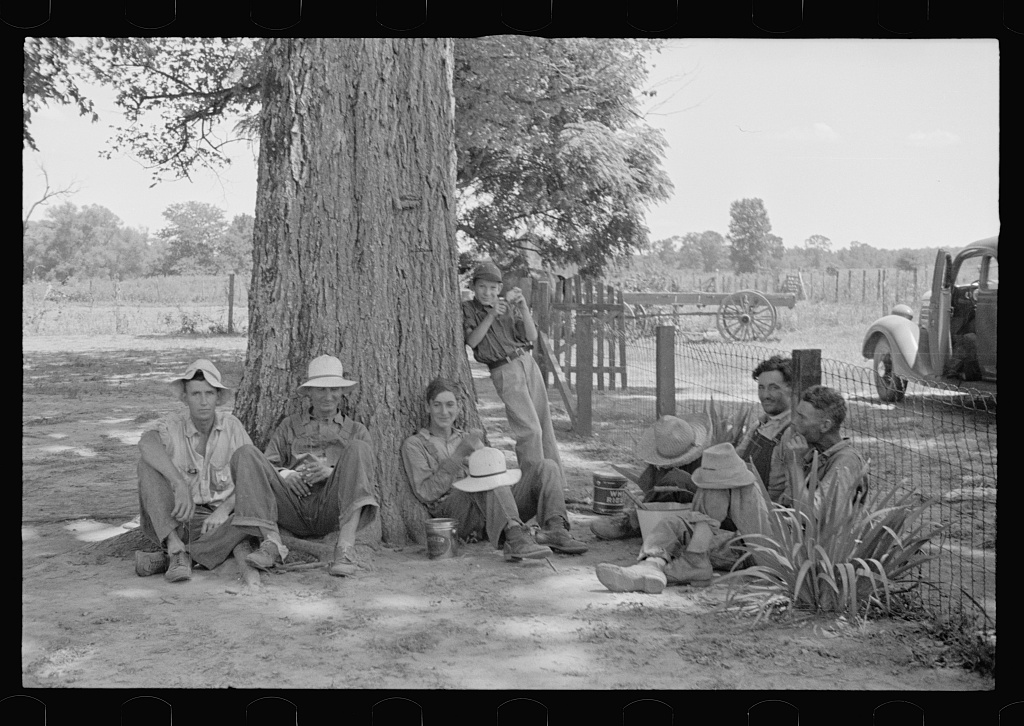
Lunchtime, Pulaski County, Arkansas. Stortz cotton plantation.

Lunchtime, Pulaski County, Arkansas.

Wife of a sharecropper, Stortz cotton plantation, Pulaski County, Arkansas.

Cotton picking scene, Pike County, Mississippi.

Picking cotton, Lauderdale County, Mississippi.

Cotton sharecropper, Lauderdale County, Mississippi.

Truck dropping building materials, Grady County, Georgia.

Slaughtering a bull, Grady County, Georgia.

Blacksmith and foreman, Grady County, Georgia.

Children of resettled farmer who has been moved into a new house, Wolf Creek Farms, Grady County, Georgia.

Young farmer who has been resettled, Penderlea, North Carolina.

Wife and children of resettled farmer, Jackson County, Alabama

Wife and child of sharecropper, Tangipahoa Parish, Louisiana.

Son of a successful rehabilitation client, Tangipahoa Parish, Louisiana.

Wife of sharecropper to be resettled on Skyline Farms, Alabama.

Children of resettlement farmer, Skyline Farms, Alabama.

Resettlement client.

Wife of resettled farmer, Pender County, North Carolina.

Fannie Corbin with some of her children, Shenandoah National Park, Virginia.

Postmaster at Old Rag, Shenandoah National Park, Virginia.

Child in Corbin Hollow, Virginia.

Eddie Nicholson who will be resettled on new land, Virginia.

Settlers weaving baskets, Virginia.

Two of the Nicholson children and their only cow, Shenandoah National Park, Virginia.

Fennel Corbin and two of his grandchildren, Shenandoah National Park, Virginia.

One of Dicee Corbin’s children, Shenandoah National Park, Virginia.

Dicee Corbin with some of her children and grandchildren, Shenandoah National Park, Virginia.

Citizens of Nethers in front of post office, Virginia.

Two of Charlie Nicholson’s children. Shenandoah National Park, Virginia.

Eddie Nicholson and some of his children. Shenandoah National Park, Virginia.

One of Eddie Nicholson’s children. Shenandoah National Park, Virginia.

Children whose family will be resettled on new land. Shenandoah National Park, Virginia.

John Nicholson with some of the baskets he weaves. Shenandoah National Park, Virginia.

Adam Nicholson. Shenandoah National Park, Virginia.
(Photo credit: Arthur Rothstein / Library of Congress).