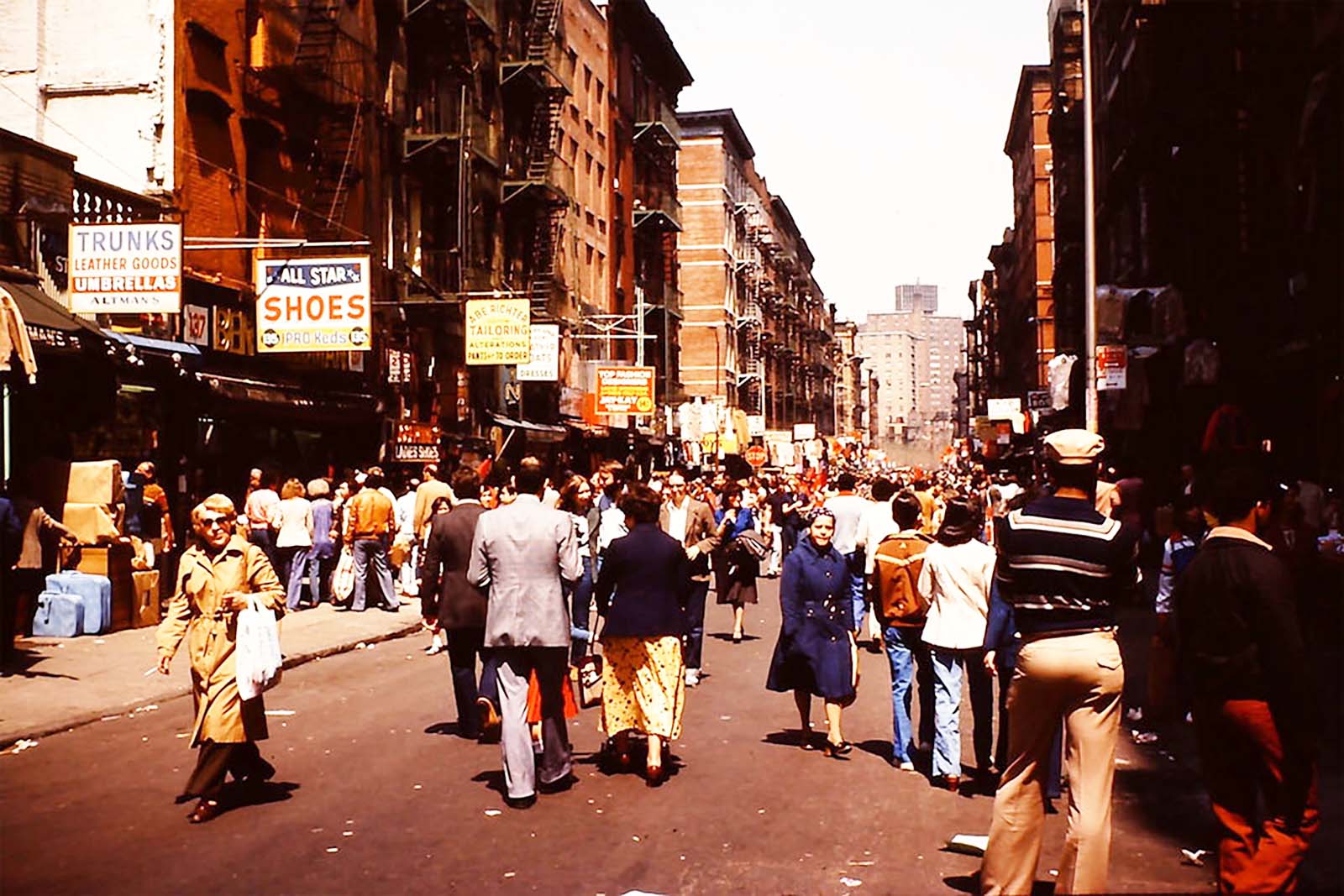
New York City in 1980 had a look that can be surprisingly difficult to picture today.
The buildings are familiar, the streets are recognizable, and the crowds move with the same hurried energy, yet the details belong unmistakably to another time.
Cars from another generation line the curbs, shop signs have different names, and people dress in styles that place the photographs firmly at the beginning of a new decade. Color makes these scenes especially revealing. Instead of reducing the city to architecture and silhouettes, the photographs bring out the small visual details that defined everyday life.
Bright storefronts, painted signs, taxis, buses, clothing, awnings, advertisements, and automobiles all contribute to the character of the streets.
Even the colors of ordinary objects can make a familiar corner feel like a completely different place.
 There is something particularly interesting about seeing New York without the landmarks taking center stage.
A busy sidewalk, a row of parked cars, or a collection of neighborhood businesses can tell a more intimate story than a carefully composed photograph of Times Square.
People are simply going about their day, carrying bags, waiting for transportation, walking to work, meeting friends, or stopping outside a store. Nobody appears to be posing for history because, at the time, there was nothing unusual about any of it.
 The clothing provides another fascinating snapshot of the period. The influence of the 1970s is still easy to spot, while some of the styles associated with the coming decade are beginning to appear. J
ackets, denim, patterned shirts, skirts, dresses, and hairstyles give the crowds a distinctly 1980 appearance.
Looking at several people together also shows how varied New Yorkers’ personal styles could be, long before today’s streets became dominated by familiar global brands.
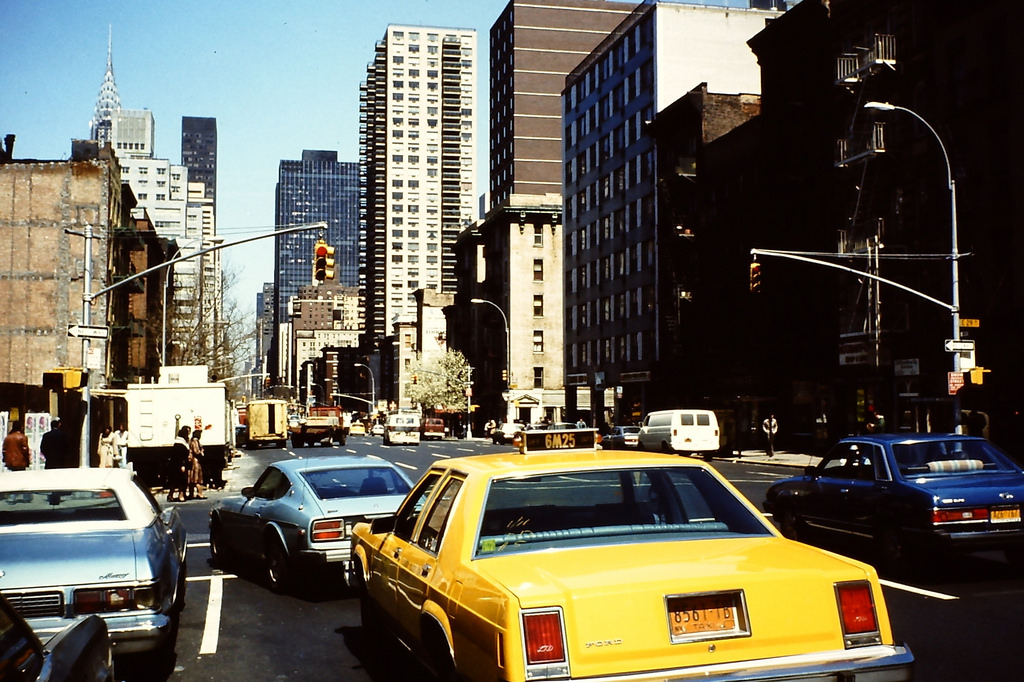
 The automobiles are just as effective at placing the photographs in their time. Boxy sedans, station wagons, older taxis, delivery vehicles, and brightly colored cars fill the streets.
Many of these models have disappeared almost entirely from modern roads, making an ordinary traffic scene an unexpectedly useful historical record.
License plates, parking signs, traffic signals, and other street details add even more clues for anyone interested in reconstructing the period.
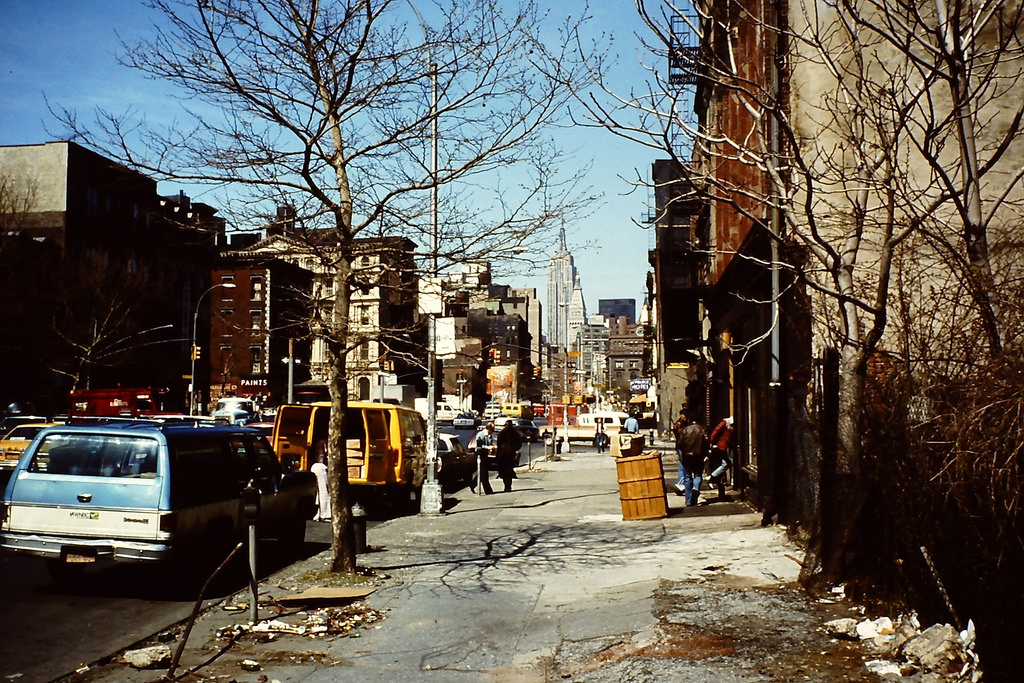
 The city itself was also in a complicated stage of transition.
The New York of 1980 still carried much of the physical and visual character of the previous decades, while the changes that would reshape large parts of the city were gradually taking form.
Neighborhoods that look dramatically different today could still have rows of modest businesses, older apartment buildings, vacant lots, and streets that had yet to experience the redevelopment of later years.
 What makes these photographs valuable is that they were not necessarily intended to document a major event. Their importance comes from the ordinary things they happened to record.
A particular storefront, an outdated car, a hairstyle, a street sign, or the way people gathered on a corner can become a piece of evidence about a city that no longer exists in quite the same form.
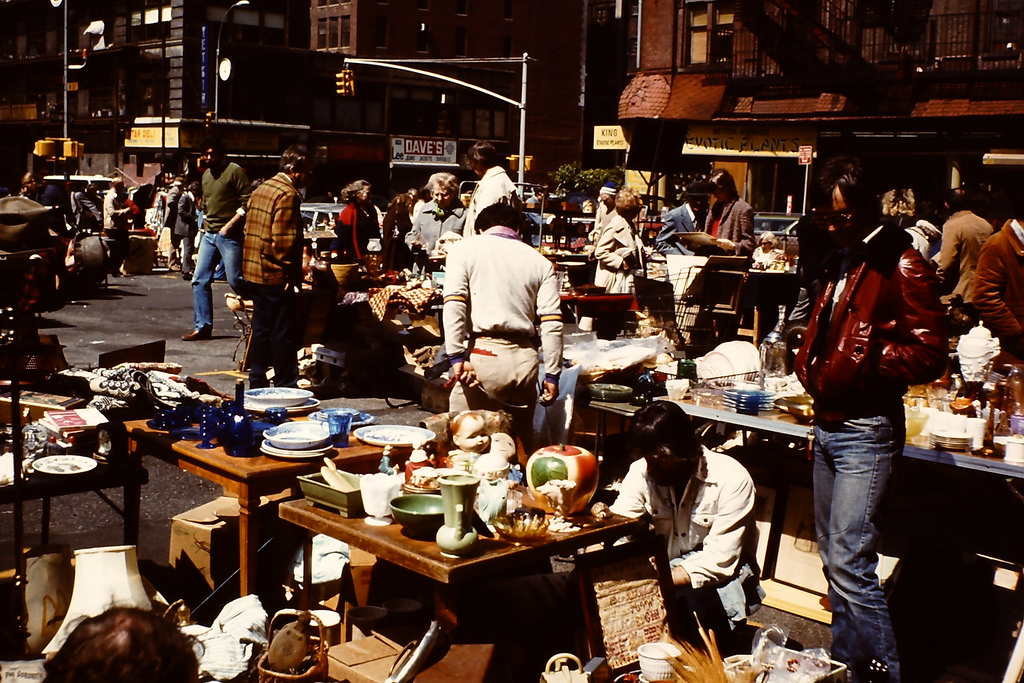 In 1980, New York City was still living with the consequences of the difficult years that had preceded it.
The city had experienced a severe fiscal crisis during the 1970s, along with population loss, rising crime, deteriorating infrastructure, and widespread disinvestment in many neighborhoods.
Parts of the city looked worn and neglected, while abandoned buildings and vacant lots had become familiar features of the urban landscape.
 At the same time, millions of people continued to live, work, shop, commute, and build communities across the five boroughs, giving the city an energy that never disappeared. The year also sat at an interesting point in New York’s broader history.
The financial industry was becoming increasingly important to Manhattan’s economy, while neighborhoods across the city were beginning to experience changes that would become much more visible during the following decades.
The arrival of new businesses, growing interest in real estate, and the gradual revival of parts of Manhattan were signs of a city beginning to turn a corner.




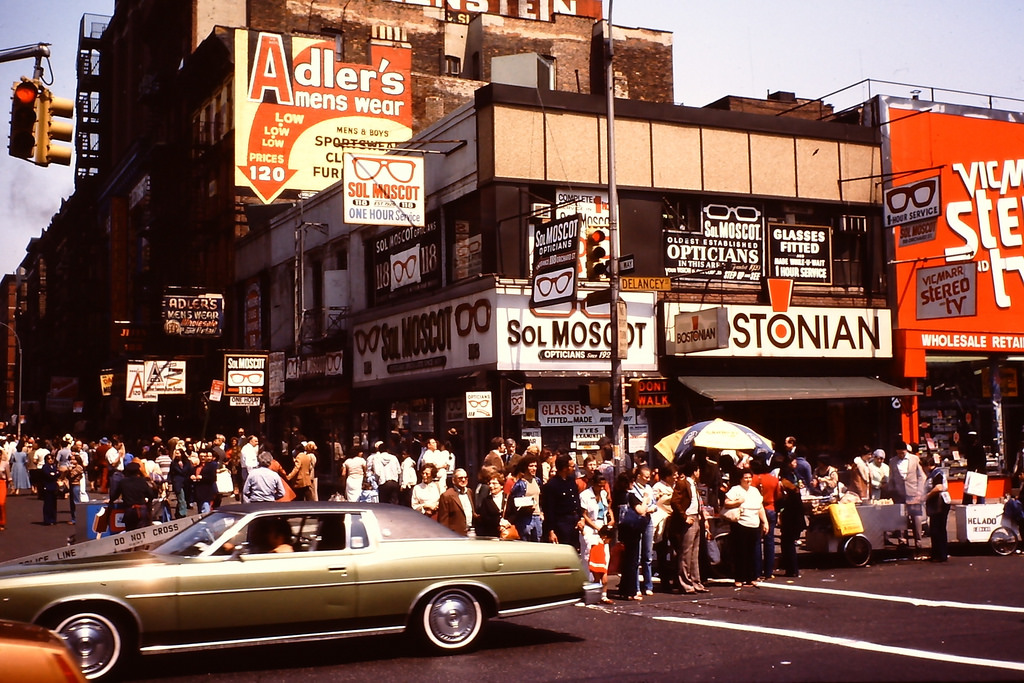


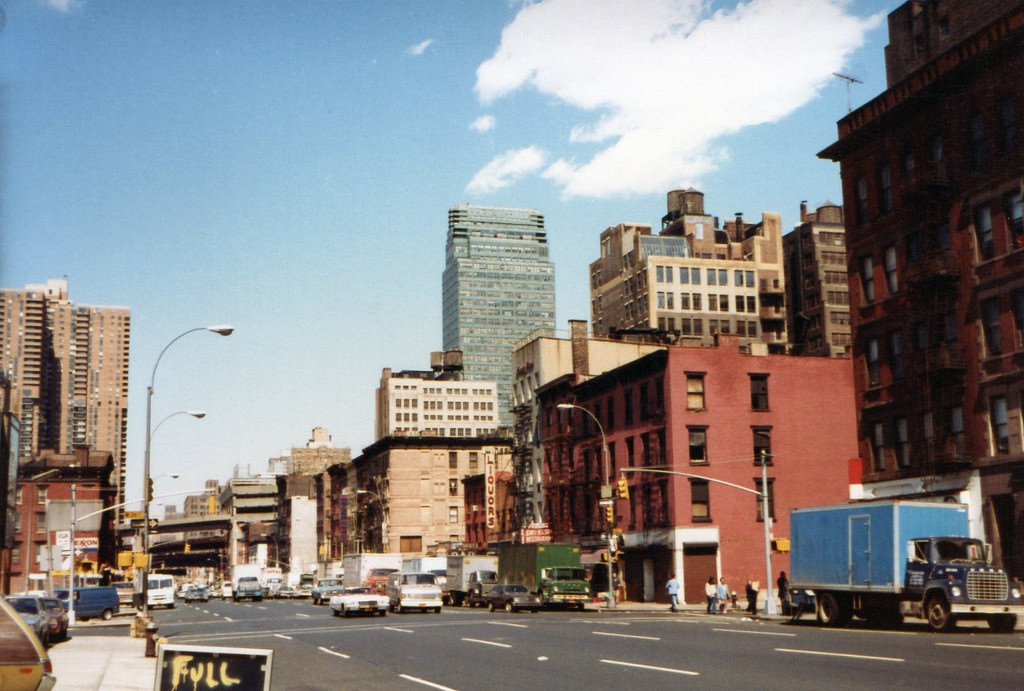


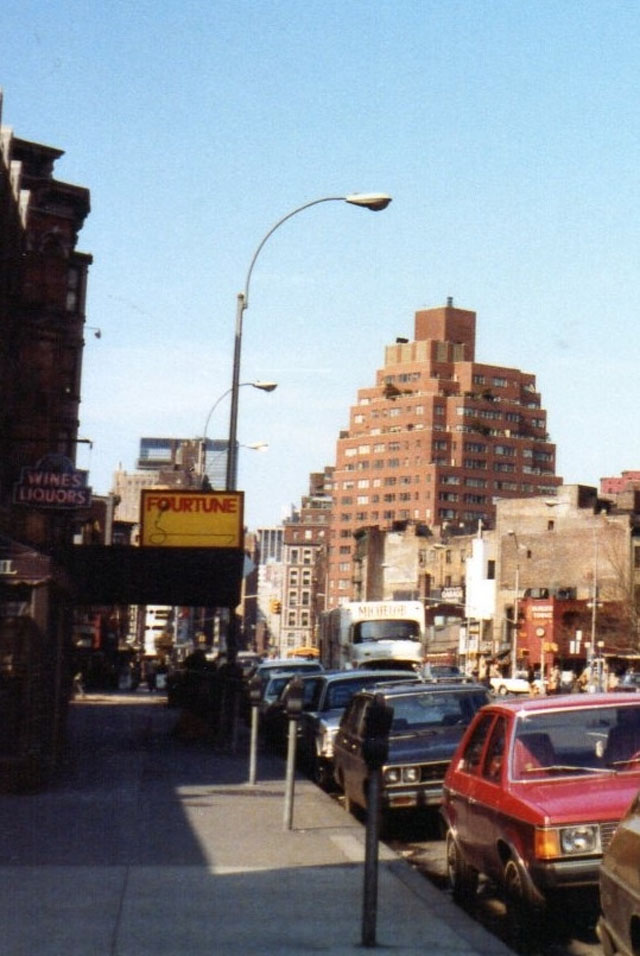


(Photo credit: Ed Sijmons flickr.com/photos/edsijmons/with/36820443264 / vintag.es/2016/04/new-york-over-35-years-ago-63-color.html).