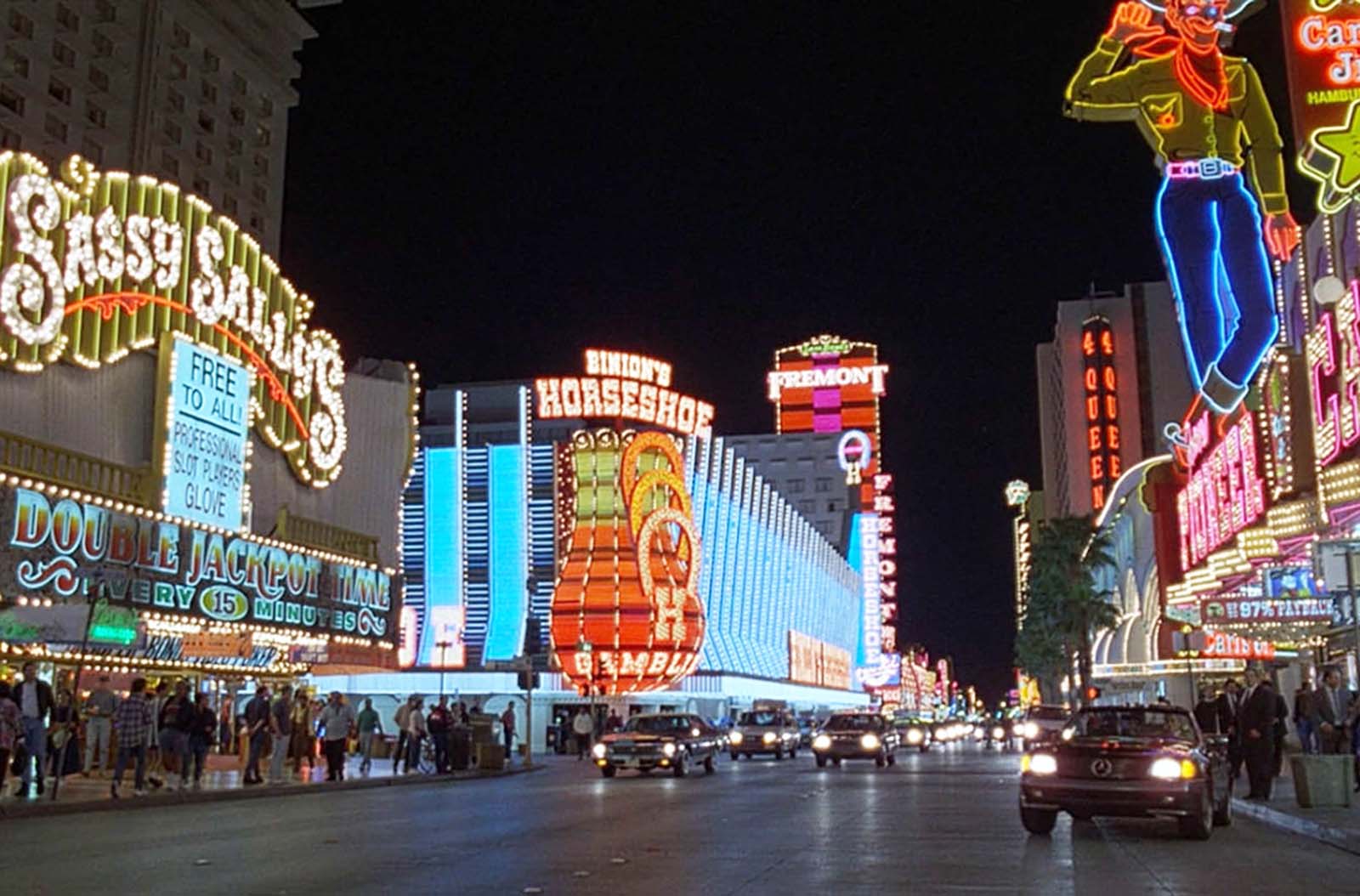
 Las Vegas in the 1990s was a city undergoing a major transformation. The Strip was growing, old landmarks were making way for enormous new resorts, and casino owners were competing to build bigger and more elaborate attractions.
Medieval castles, Egyptian pyramids, pirate ships, and miniature city skylines began appearing along the desert highway.
The familiar gambling halls and neon-lit streets were still there, but a new kind of Las Vegas was taking shape, one filled with themed hotels, spectacular shows, affordable buffets, and entertainment for visitors of all ages.
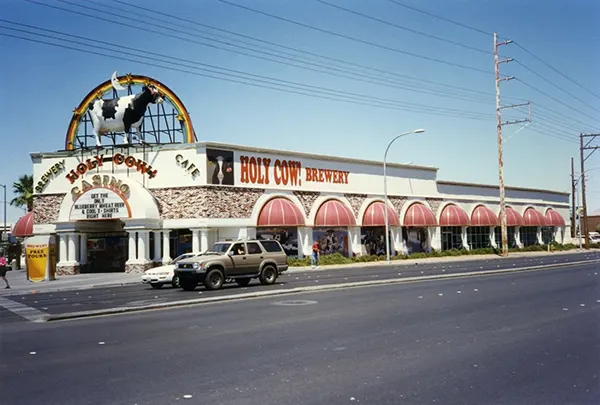
Holy Cow! Brewery, Las Vegas Blvd S & Sahara, June 27, 1996.
For many people, it was an exciting time to visit, with something new seemingly opening around every corner. The shift was visible in 1990, when the Excalibur opened with castle towers, a drawbridge, and a medieval theme.
Its playful design reflected the casino industry’s effort to broaden the city’s appeal to families. In 1993, the pace accelerated.
The Luxor arrived as a giant black-glass pyramid, complete with an enormous sphinx, while Treasure Island introduced a pirate theme and outdoor battle spectacle.
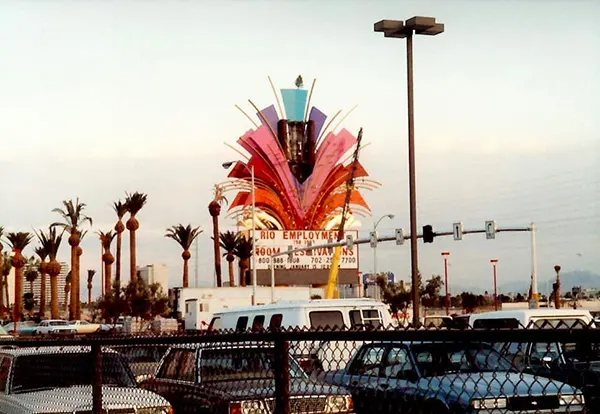
Installation of the sign at Rio Las Vegas, 1990
The MGM Grand opened that December with 5,005 rooms and a sprawling theme park, briefly making it the world’s largest hotel.
These resorts were attractions in their own right, designed to keep guests entertained without leaving the property.
The building boom continued through the second half of the decade. The Stratosphere tower opened in 1996, adding a landmark to the northern end of the Strip.
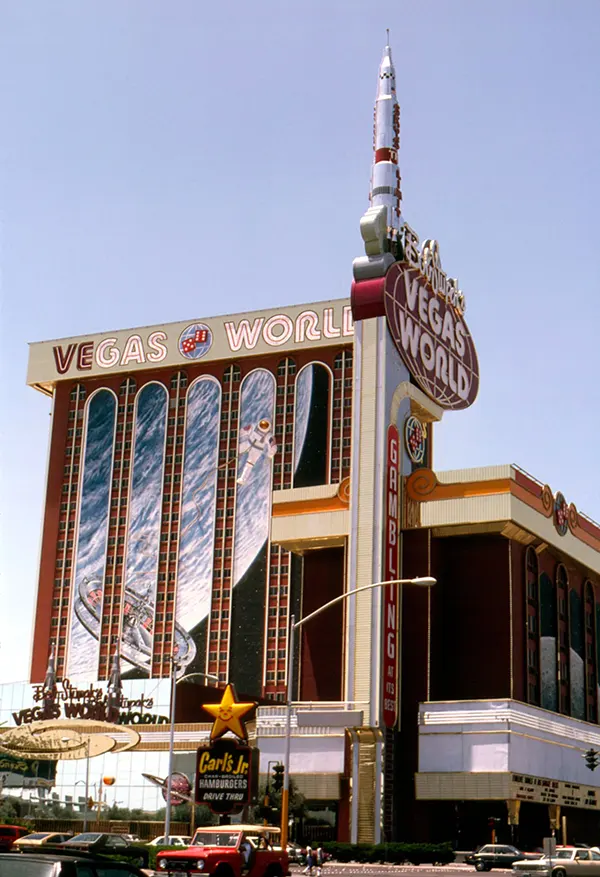
Vegas World sign, 1991
New York-New York followed in 1997, with a miniature Manhattan skyline and a roller coaster winding around its buildings.
The Bellagio opened in 1998 with a more refined approach, bringing Italian-inspired architecture, fine dining, upscale shopping, and its famous lake to the Strip.
In 1999, Mandalay Bay, The Venetian, and Paris Las Vegas further changed the skyline. By decade’s end, the Strip had become a showcase of spectacle.
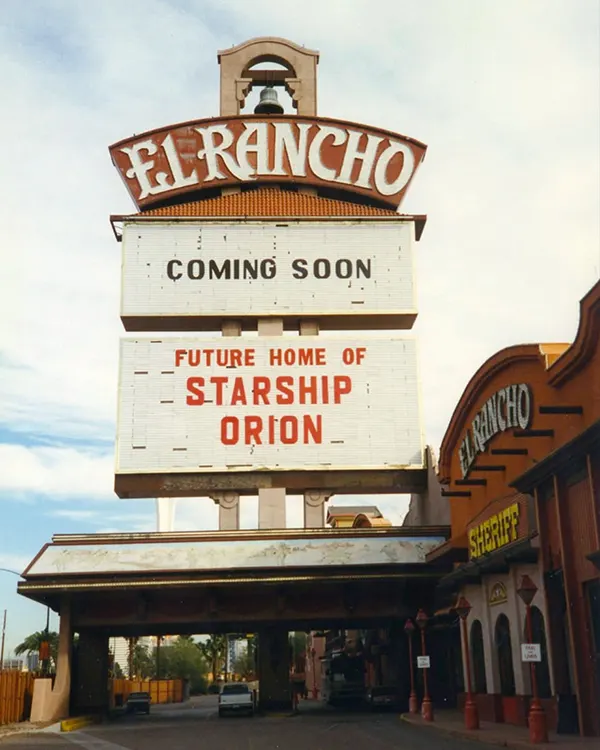
Starship Orion and Countryland, Las Vegas, 1997.
For ordinary visitors, Las Vegas could still be surprisingly affordable. The city had a long tradition of using inexpensive rooms, meals, and entertainment to attract guests and encourage them to gamble.
In 1991, weekday rooms at some Strip hotels were advertised for around $20, while downtown visitors could find remarkably cheap buffet meals.
A 1994 travel report listed a standard room at the Luxor from $59 on off-peak dates and a dinner buffet for about $10. Even in 1997, deals included hotel rooms for $39 or less, buffets under $7, and show tickets at modest prices. .
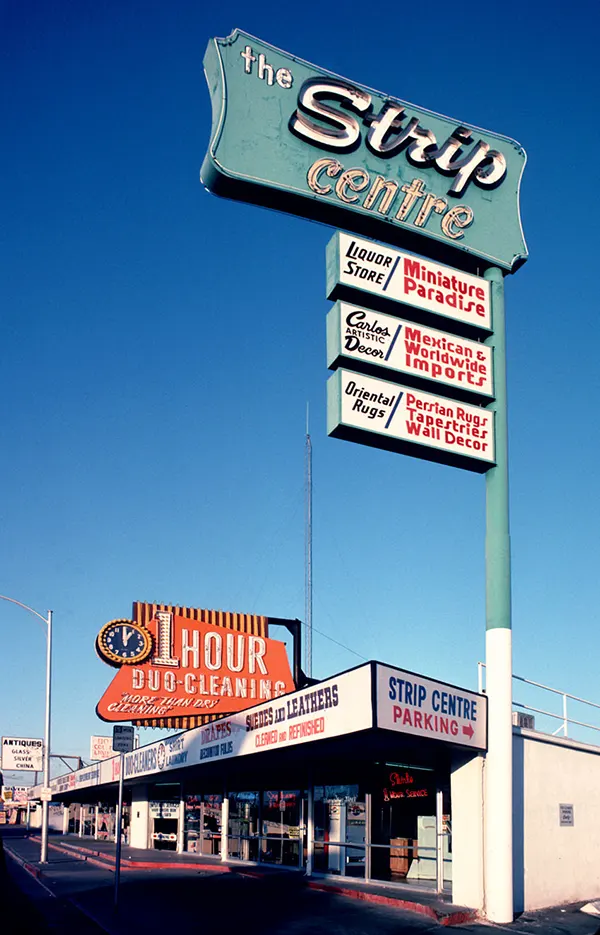
1-Hour Duo-Cleaning at Strip Centre, Las Vegas, 1991.
Costs varied by season and hotel, but discounted rooms, all-you-can-eat meals, and low-cost entertainment made a Vegas trip accessible to many travelers.
There was plenty to do beyond the casino floor. Visitors could watch the Mirage volcano erupt after dark, see the pirate battle outside Treasure Island, ride attractions at the MGM Grand Adventures theme park, or browse the Forum Shops at Caesars Palace.
The entertainment calendar was just as varied. Siegfried & Roy’s elaborate magic and animal show at the Mirage was one of the city’s signature attractions.
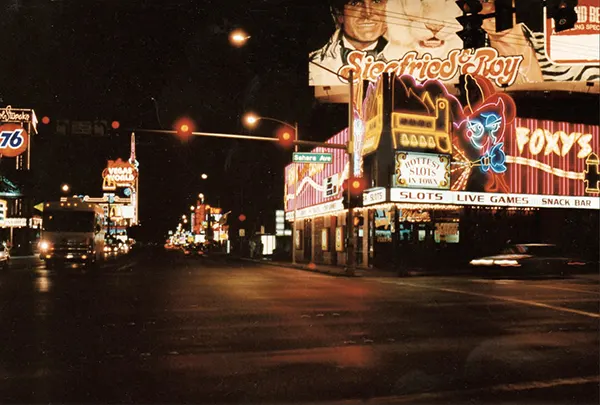
Las Vegas Strip, July 1992
Cirque du Soleil brought a new style of theatrical spectacle to the Strip with Mystère, which debuted at Treasure Island in 1993.
Traditional productions such as Jubilee!, Folies Bergère, and Splash continued to draw audiences, while Starlight Express added a high-energy musical performed on roller skates.
There were also headline performers, comedy, live music, lounges, and clubs.
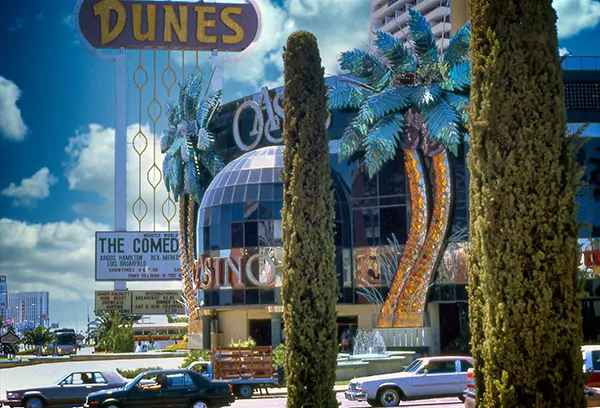
Dunes & Oasis Casino, August 1990
The decade gave Las Vegas a prominent place on movie screens. Films such as Honeymoon in Vegas (1992), Indecent Proposal (1993), Casino (1995), Showgirls (1995), and Leaving Las Vegas (1995) used the city as more than a backdrop.
They reflected different sides of its identity, from glossy resort fantasy to the darker world of gambling and excess.
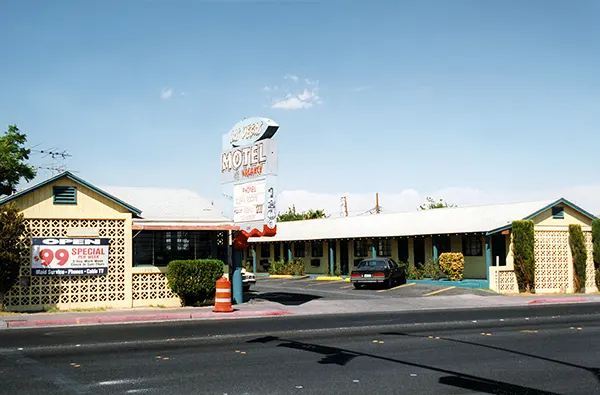
Las Vegas, Fisher, and Star View motels in 1999.
Vegas Vacation (1997) turned the city’s attractions into a comedy playground, helping make its neon-lit streets and casinos recognizable worldwide.
For all the new attractions and family-friendly marketing, Las Vegas never stopped being an adult playground.
Gambling remained at the center of the business, casinos stayed open around the clock, and nightlife continued into the early hours.
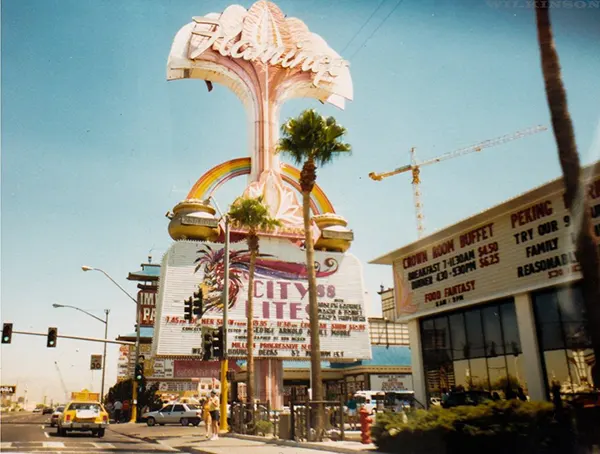
Flamingo, Las Vegas, 1990
The difference was that visitors could build an entire holiday around a resort, a show, a meal, or a spectacle, whether or not they spent much time at the tables.
That mix of old and new gives photographs of 1990s Las Vegas their particular appeal.
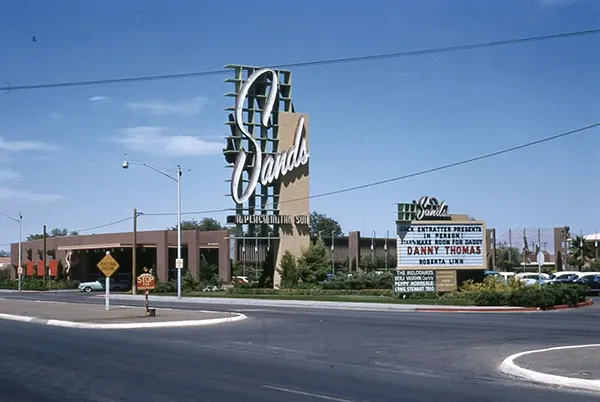
Las Vegas, June 1990s
They capture a city in transition, when familiar neon signs stood beside newly built mega-resorts, crowds filled the sidewalks, and every new opening seemed determined to outdo the last.
It was a decade of bold architecture, bright lights, bargain buffets, memorable entertainment, and a Strip that looked noticeably different by the time the 2000s arrived.
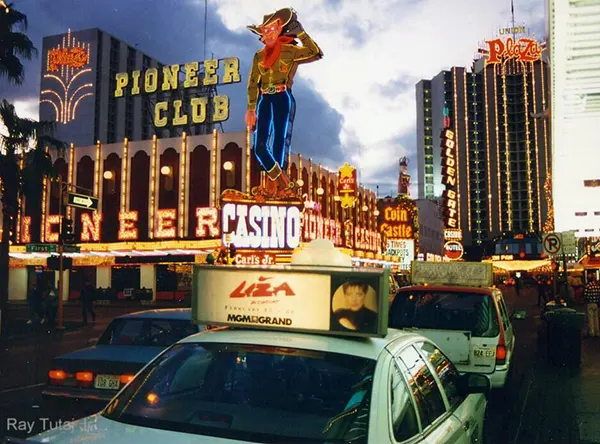
Fremont St, Las Vegas, 1993
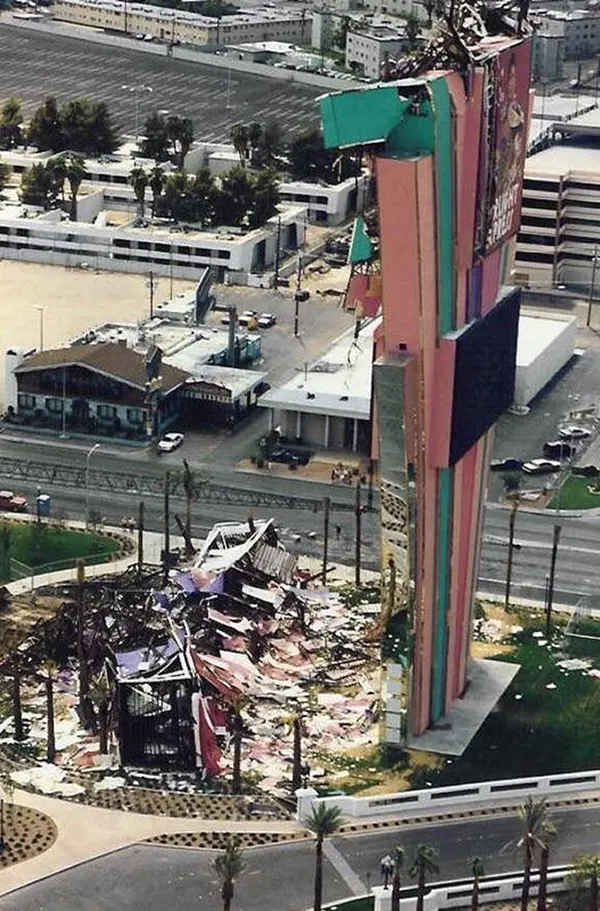
Wreckage of the Las Vegas Hilton sign after a storm, July 21, 1994.
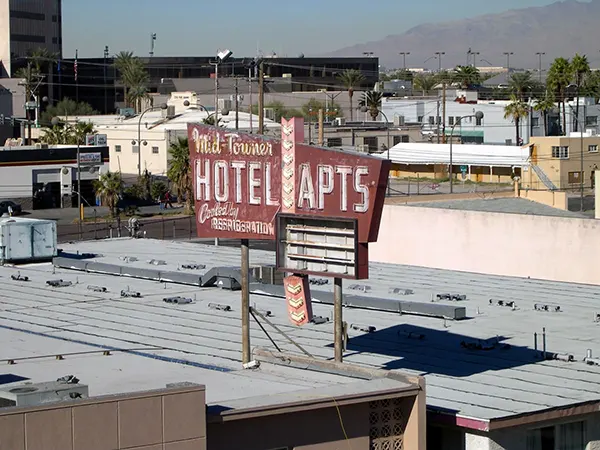
Mid-Towner Hotel, 211 N. 7th St., Las Vegas, 1990
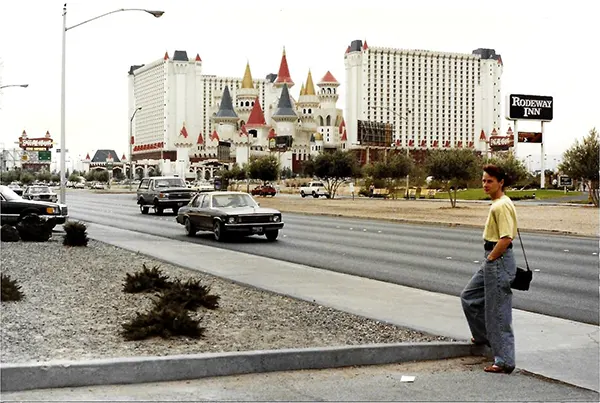
Las Vegas Blvd, 1990
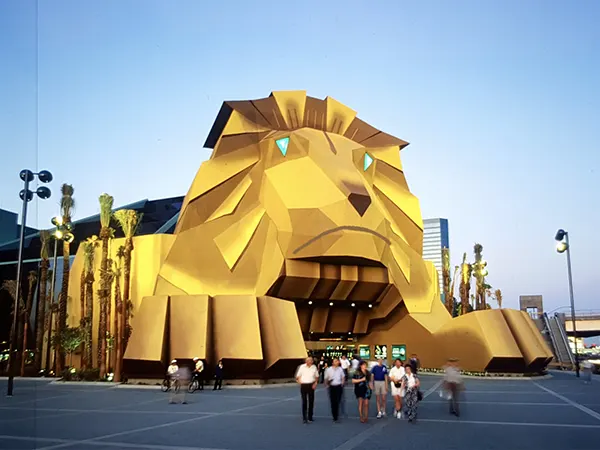
MGM Grand, Las Vegas, 1993
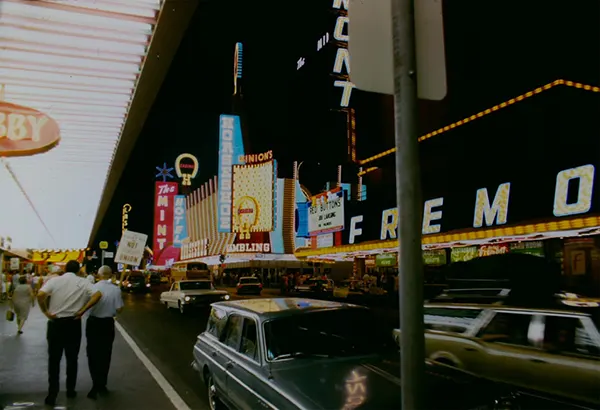
Under the marquee of 4 Queens, Fremont St, August 1966
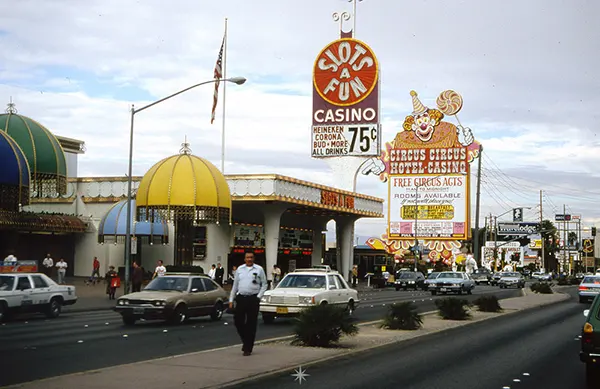
Driving up the Strip, December 1990
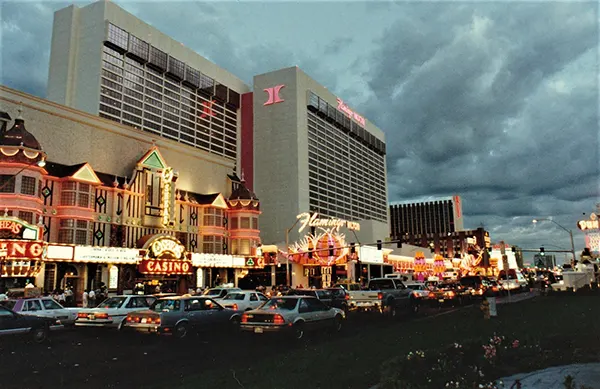
Las Vegas strip at night, 1990
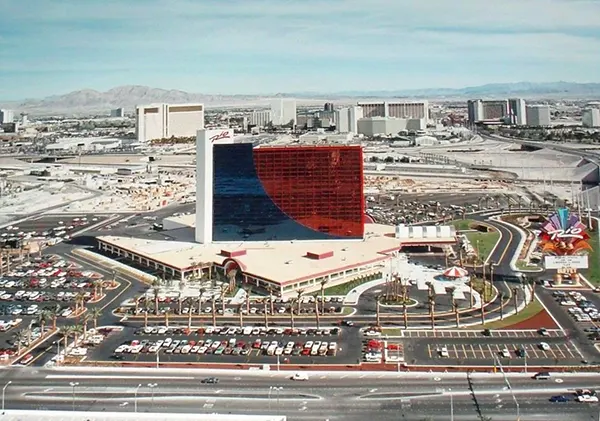
Rio Las Vegas, 1990
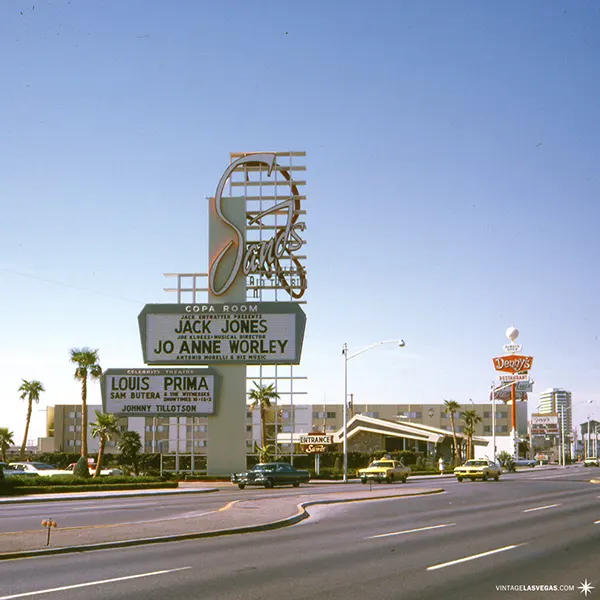
Denny’s and Joey’s New Yorker on the right, present location of Casino Royale.
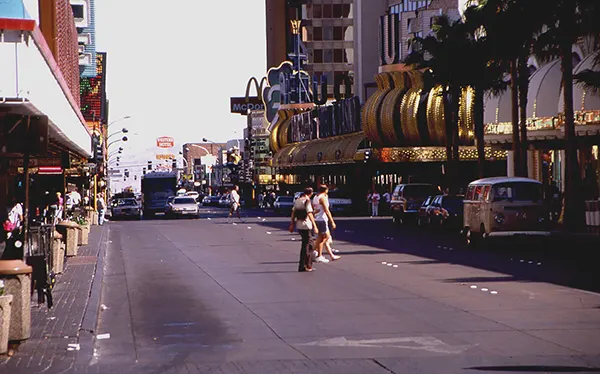
Downtown Las Vegas, 1990
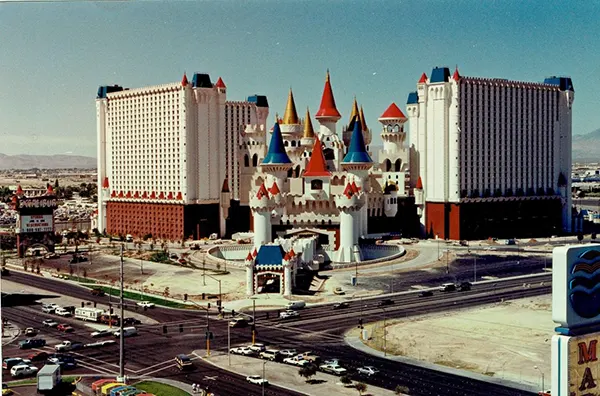
Excalibur, before it’s grand opening. Las Vegas, 1990
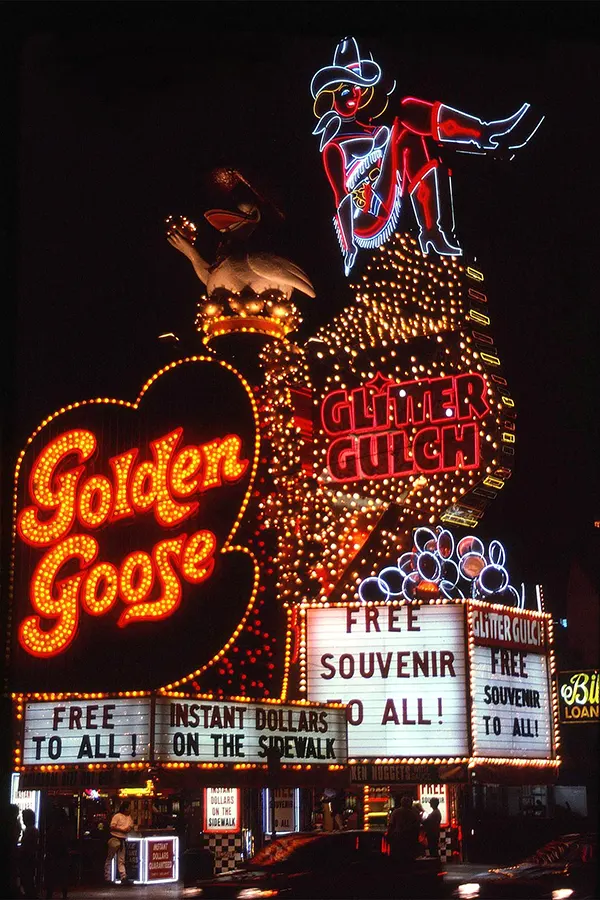
Golden Goose & Glitter Gulch c. 1990
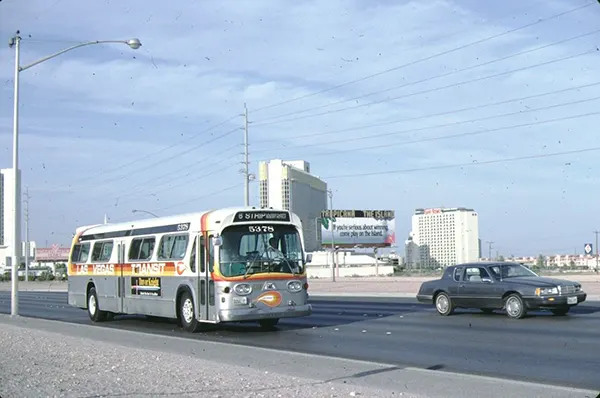
Las Vegas Transit, October 1991. South of Tropicana.
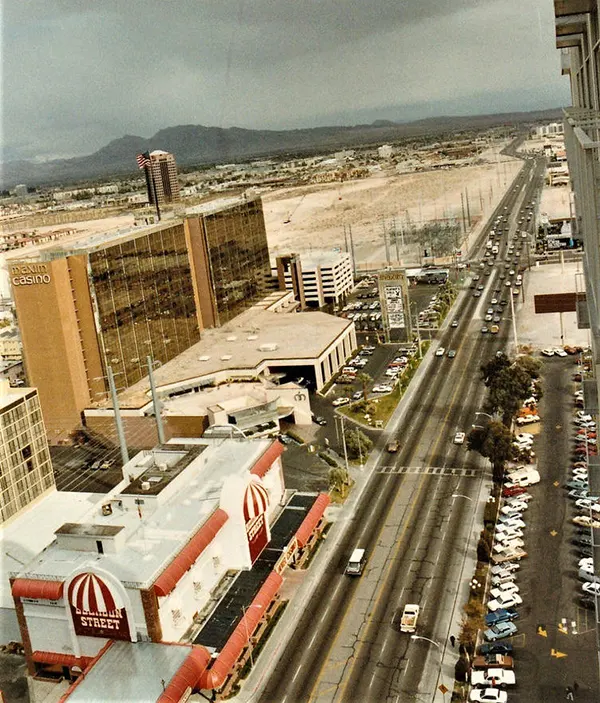
Bourbon Street and Maxim on Flamingo Rd, Las Vegas, 1991
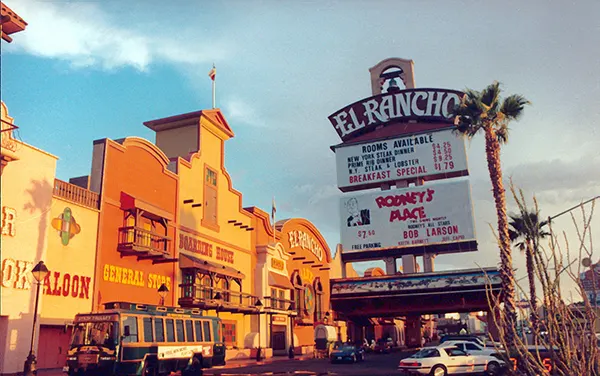
El Rancho, Las Vegas, 1991.
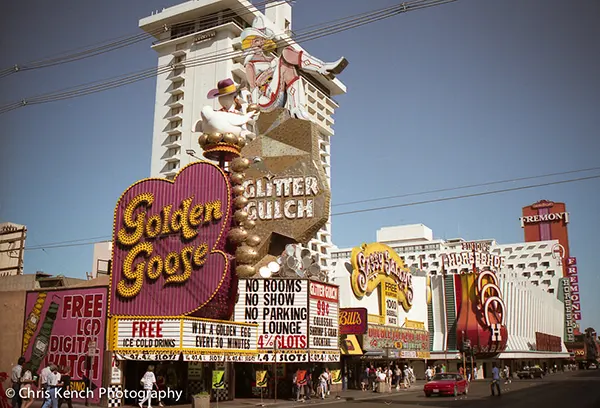
Golden Goose and Glitter Gulch, Las Vegas, 1991. Photo by Chris Kench.
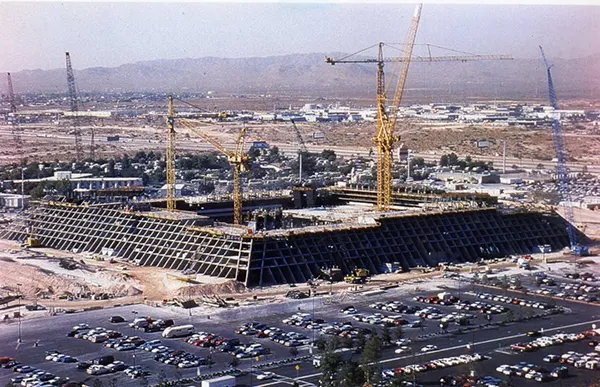
Luxor Hotel & Casino under construction, c. November, 1992.
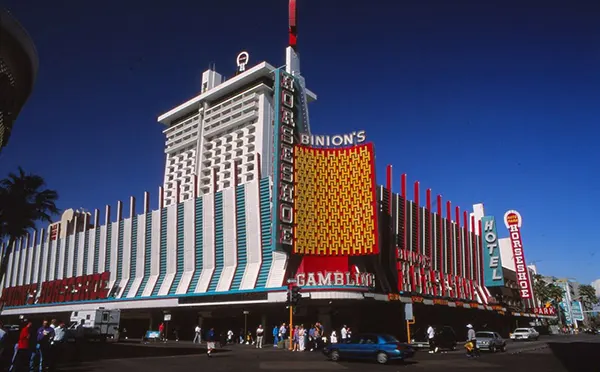
Binion’s Horseshoe, Las Vegas, November 1992
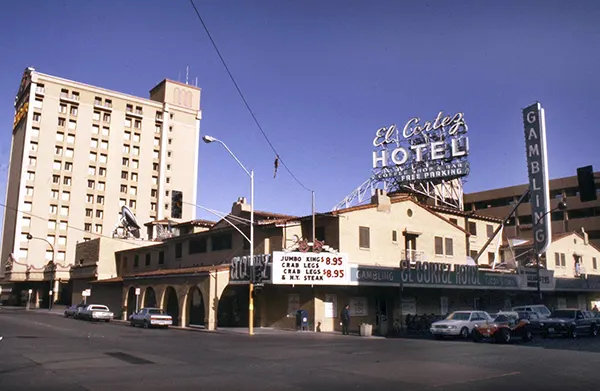
El Cortez, Las Vegas, 1992
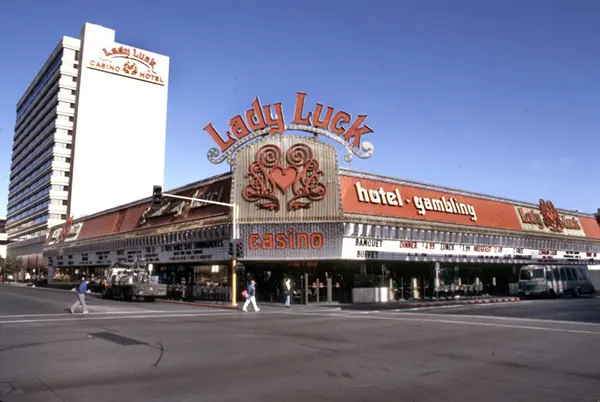
Lady Luck – 3rd & Ogden – 1992
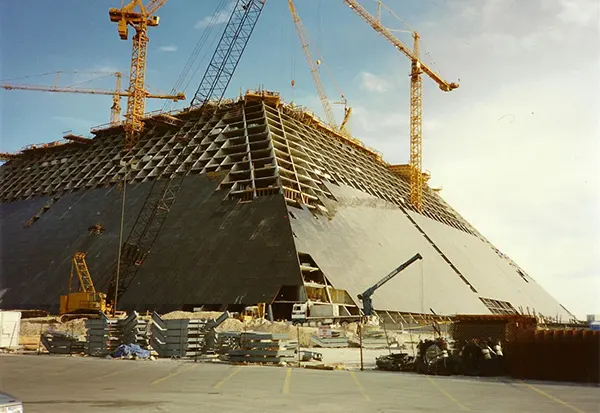
Building the Luxor pyramid, April 1, 1993
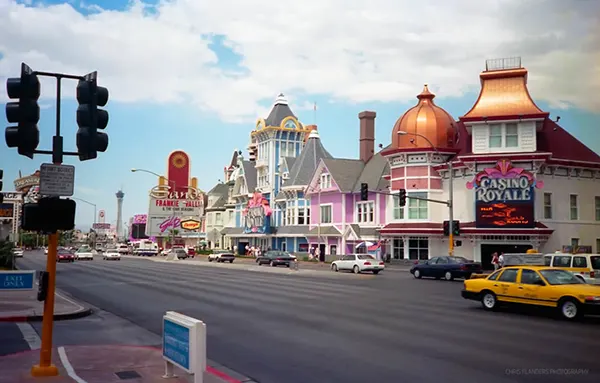
Casino Royale, Las Vegas, 1994-1995. Photo by Chris Flanders.
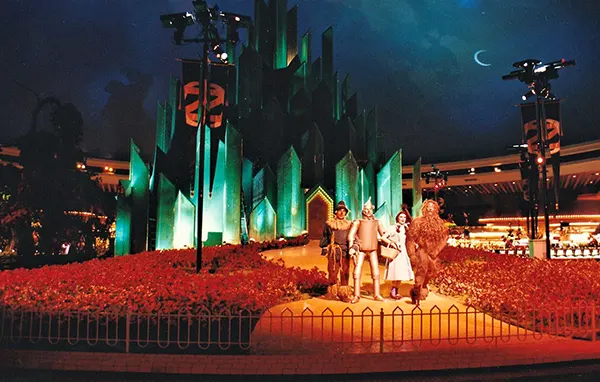
Entering Oz. MGM Grand, Las Vegas, 1994-1995.
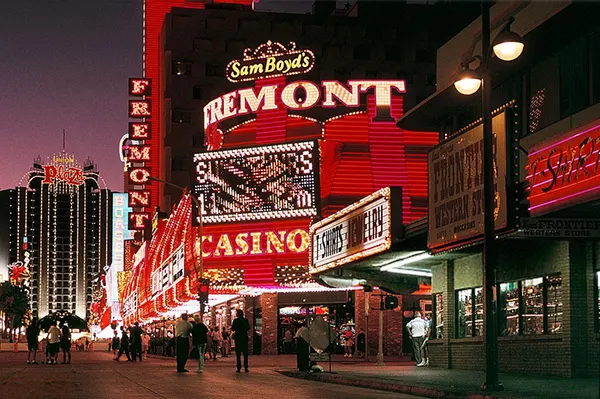
Fremont Street just after being closed to traffic, 1994
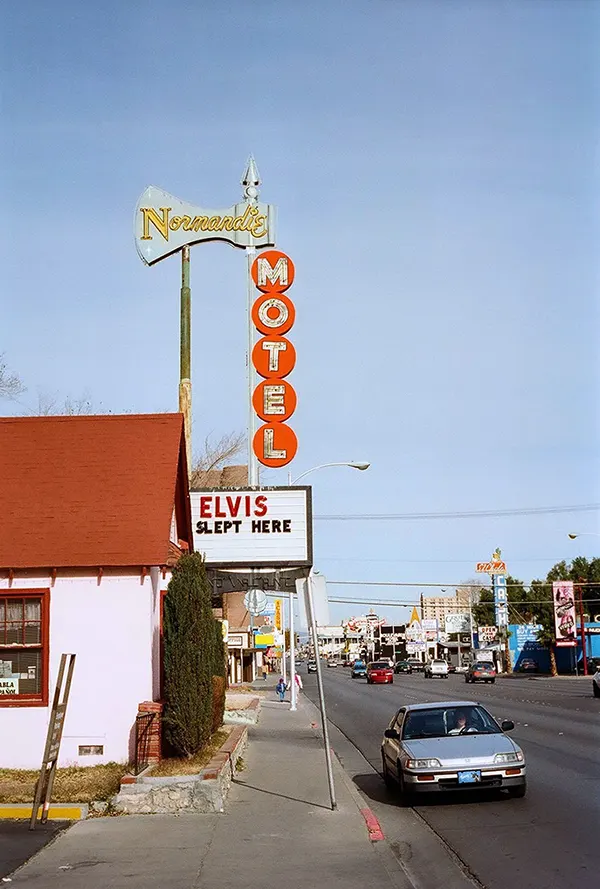
Normandie Motel, 708 S Las Vegas Blvd.
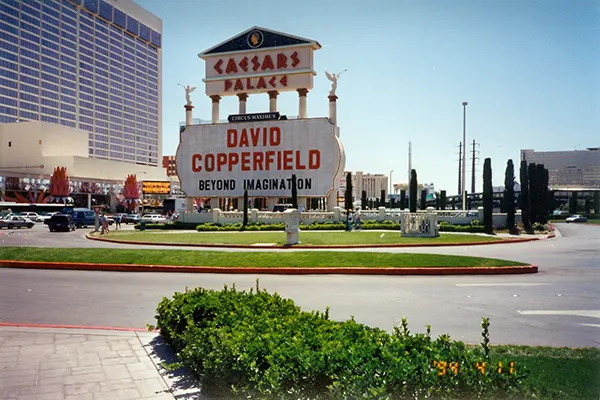
Caesars Palace. Las Vegas, April 11, 1994.
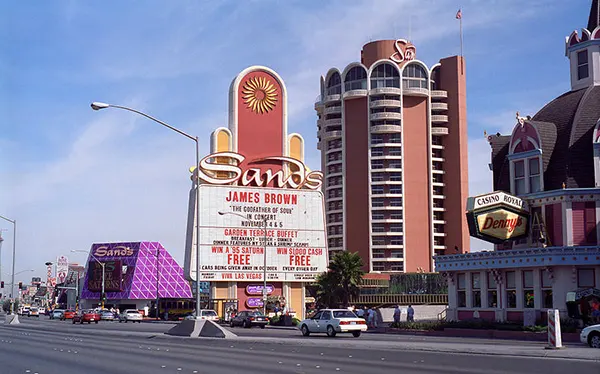
Sands. Las Vegas, 1994.
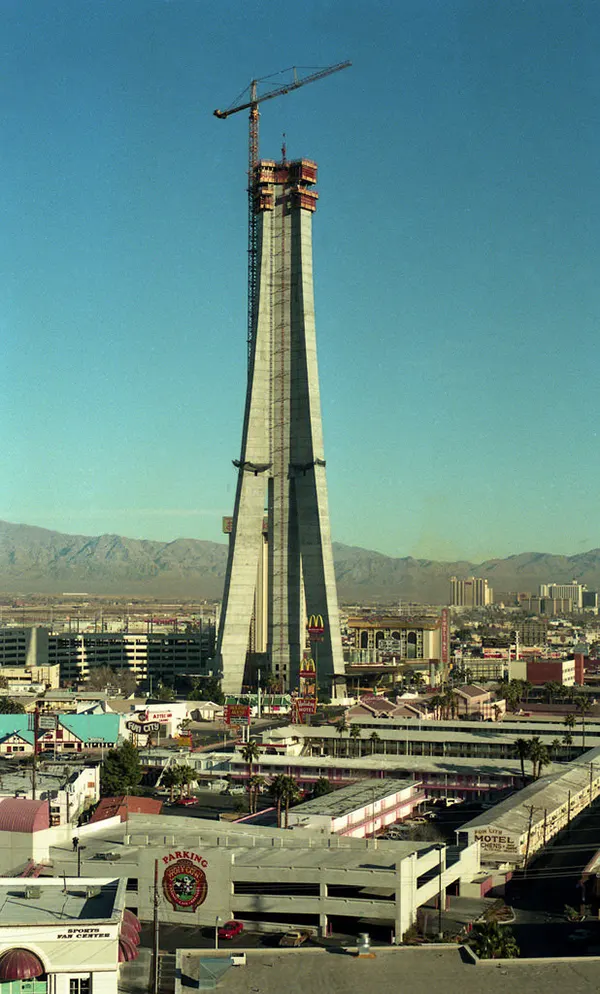
Stratosphere under construction, Las Vegas, 1994.
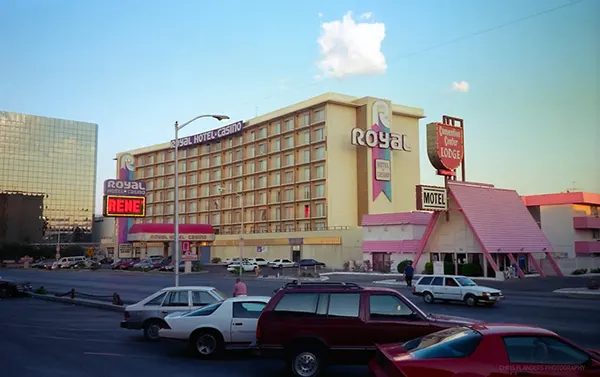
Royal Hotel & Casino, Convention Center Dr, June 1995
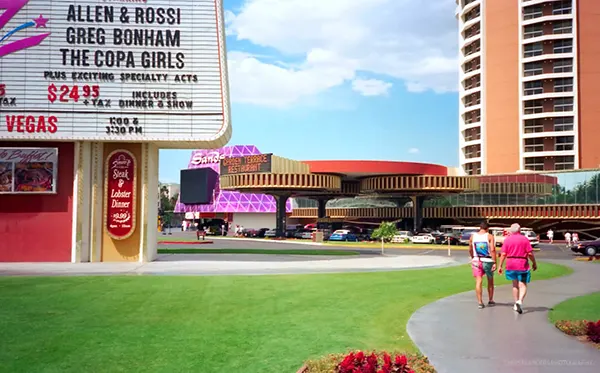
Sands Hotel. Las Vegas, 1995.
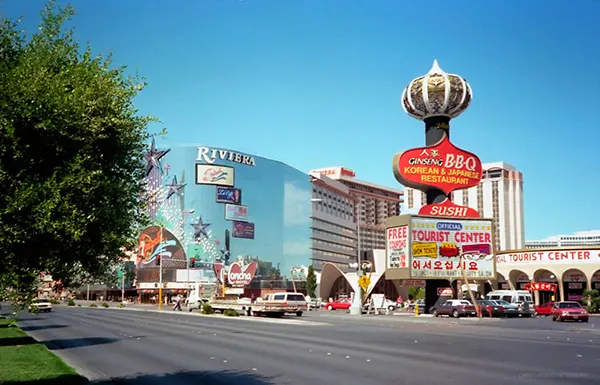
Riviera on the Las Vegas Strip, July 1995.
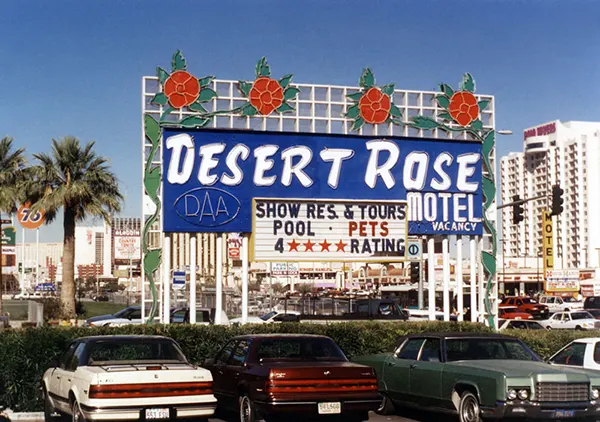
Desert Rose Motel, Las Vegas Strip, 1995.
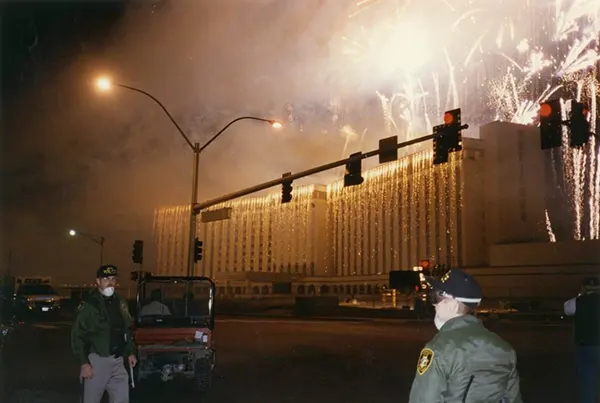
Hacienda, December 31, 1996 – fireworks show right before the tower implosion.
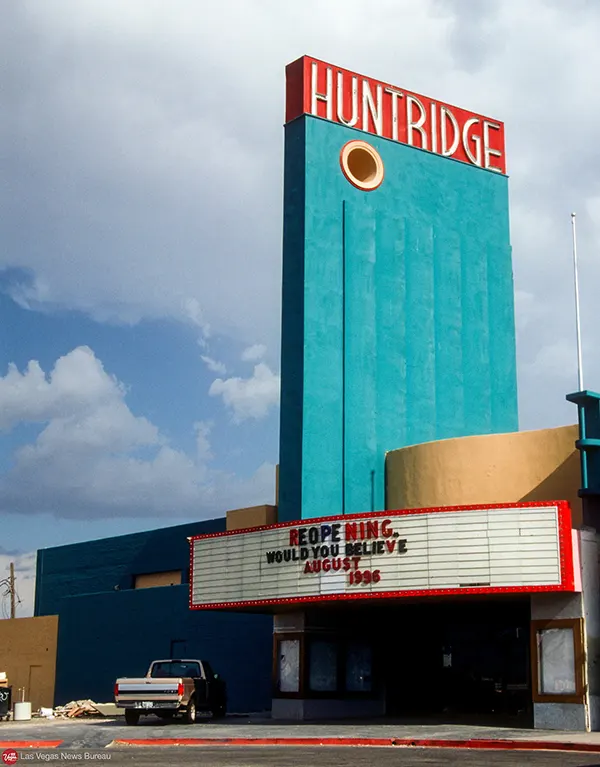
Huntridge Theater, July 10, 1996
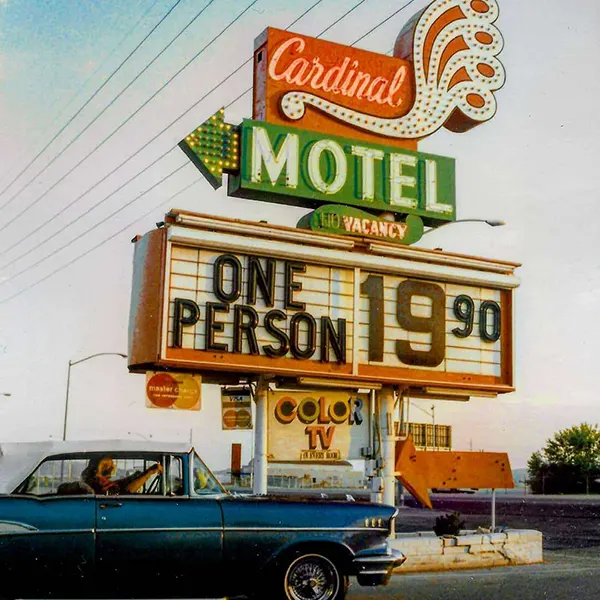
Cardinal Motel, 1996
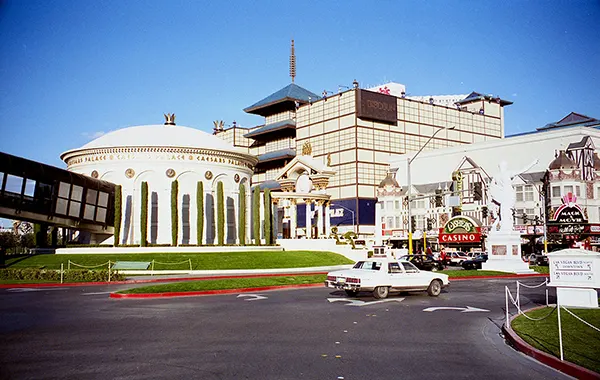
Caesars Palace, Las Vegas, 1996
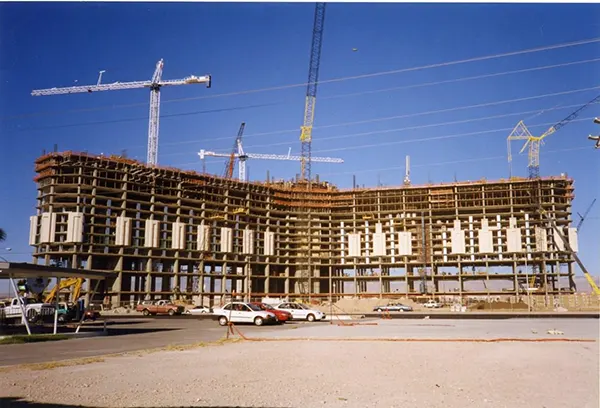
Construction of Mandalay Bay, 1977
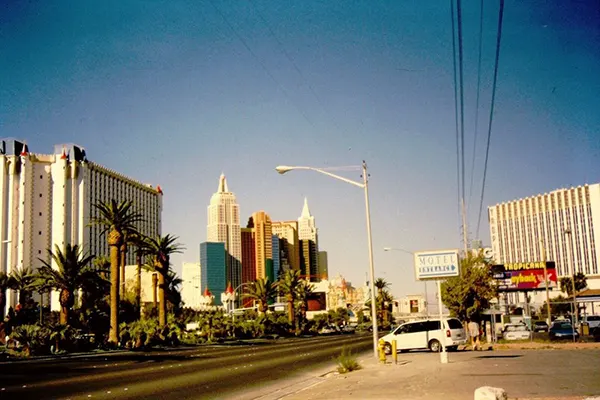
Las Vegas Strip, October 1997
(Photo credit: Flickr / Pinterest).