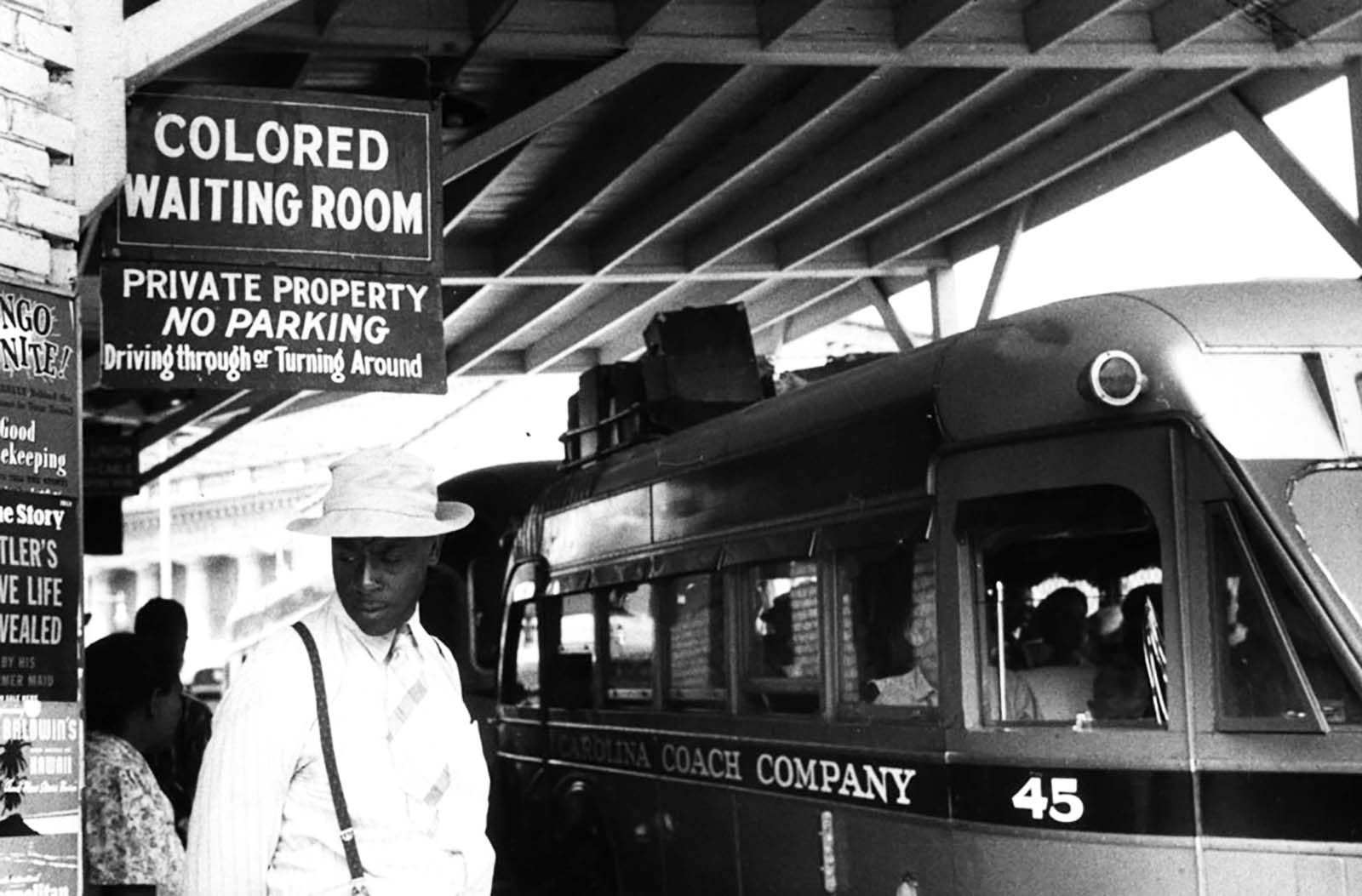
 A drinking fountain marked “colored,” a segregated waiting room, or a sign separating public spaces by race could tell the story of an entire social system.
During the Jim Crow era, these ordinary sights became symbols of a country where racial separation was woven into everyday routines, shaping where people could go, what services they could access, and how they were treated in public life.
The photographs from the 1940s, 1950s, and 1960s offer a window into this period, capturing the realities of segregation beyond the pages of history books.

In this undated picture, men drink from segregated water fountains.
They show the neighborhoods, schools, businesses, transportation systems, and public spaces where racial inequality was enforced through both law and custom.
Each image reflects a time when African Americans had to navigate restrictions that affected nearly every part of daily life.
Jim Crow was a system of state and local laws, along with social practices, that enforced racial segregation across much of the United States, especially in the South.
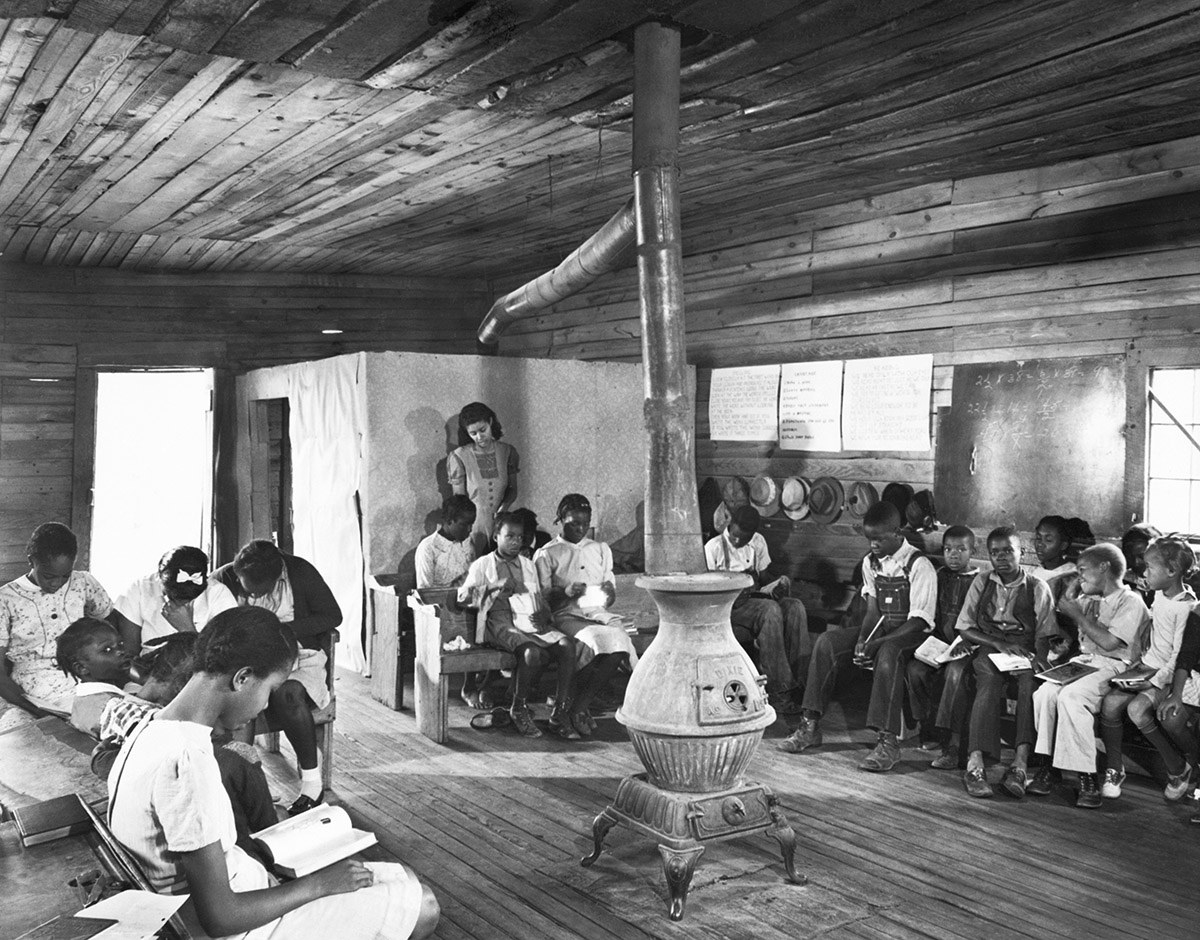
A teacher instructs a segregated class of black students at a poorly funded, one-room school in the backwoods of Georgia in 1941.
The system developed after the end of Reconstruction in the late 19th century and remained in place for decades, shaping American society until the civil rights movement challenged its foundations in the mid-20th century.
By the middle of the 20th century, segregation was deeply embedded in public life. Schools, restaurants, theaters, hospitals, parks, and transportation facilities were often divided by race.
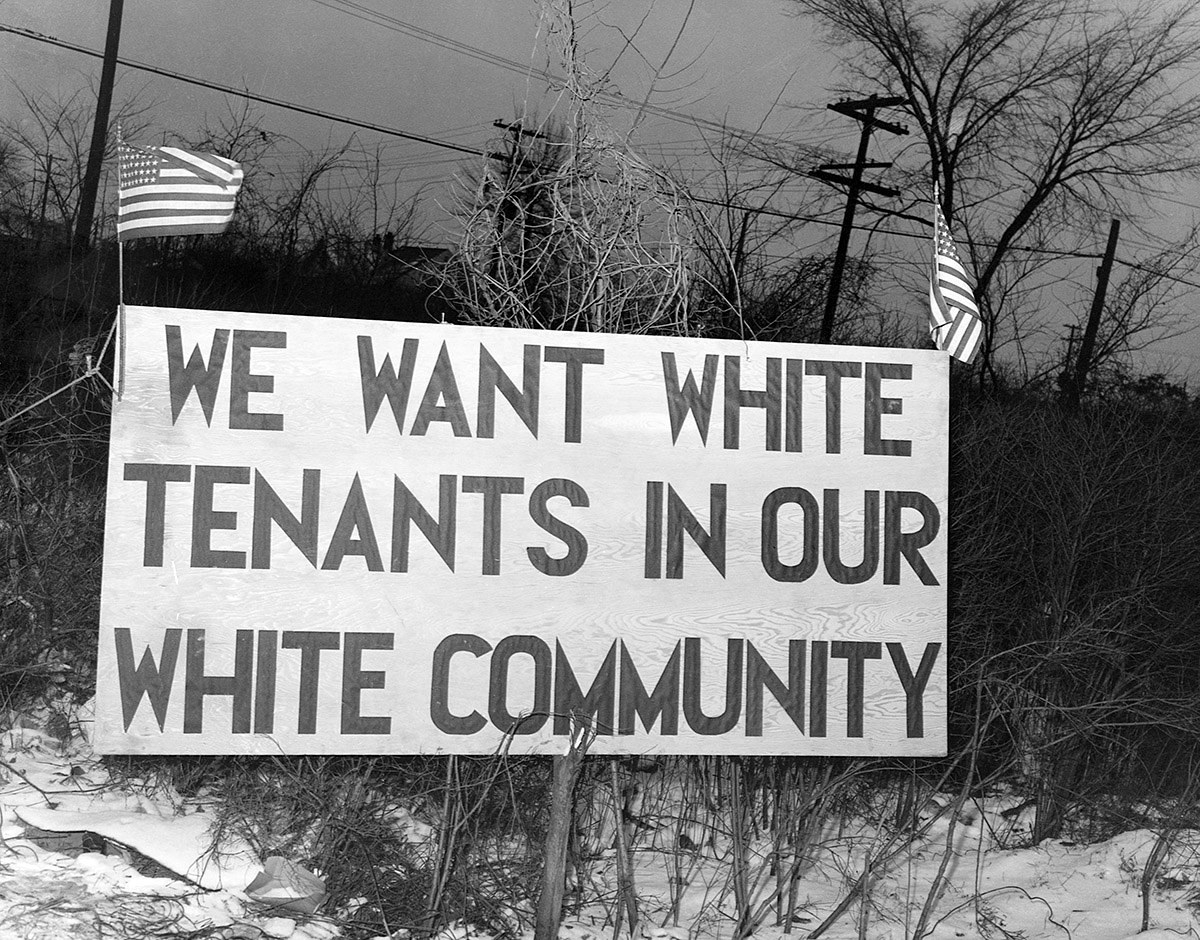
White tenants seeking to prevent black Americans from moving into the Sojourner Truth Homes, a federal governmental housing project, erected this sign in Detroit in 1942.
The Supreme Court’s 1896 decision in Plessy v. Ferguson established the doctrine of “separate but equal,” allowing states to maintain segregated facilities.
In reality, the resources provided to African Americans were frequently unequal, with Black schools, public facilities, and services receiving significantly less funding and support.

Dr. and Mrs. Charles N. Atkins of Oklahoma City, Oklahoma, and their sons, Edmond, 10, and Charles, 3, pause for a glance at the Santa Fe Depot segregation sign on Nov. 25, 1955.
The impact of segregation extended far beyond public signs and separate entrances. It influenced where families could live, where people could work, and what opportunities were available to them.
Housing discrimination, employment restrictions, and unequal access to financial services limited economic mobility and reinforced racial divisions.
While Southern states maintained segregation through explicit laws, similar forms of discrimination existed in other parts of the country through private agreements, institutional practices, and social barriers.

US and Confederate flags fly from a car parked on Tennessee’s Capitol Hill in Nashville, where Gov. Frank Clement met with a delegation of pro-segregationists on Jan. 24, 1956. Clement turned down a bid to lead a fight for continued racial segregation, saying he did not plan to interfere with local authorities and their decisions on such matters.
Transportation became one of the most visible examples of Jim Crow restrictions.
African Americans were often required to use separate sections of buses and trains, and travel could involve navigating a complicated network of racial rules and limitations.
Public spaces were designed to reflect a strict racial hierarchy, with everyday activities such as shopping, attending school, or seeking medical care often shaped by segregation.

Rosa Parks is fingerprinted by a police officer in Montgomery, Alabama, on Feb. 22, 1956, two months after refusing to give up her seat on a bus for a white passenger on Dec. 1, 1955. She was arrested with several others who violated segregation laws. Parks’ refusal to give up her seat led to a boycott of buses in December 1955, a tactic organized by the Rev. Martin Luther King Jr.
Despite these restrictions, the Jim Crow era was also marked by determination, activism, and community strength.
African Americans built thriving neighborhoods, supported their own businesses, created educational institutions, and organized efforts to challenge discriminatory laws and practices.
The growing civil rights movement of the 1950s and 1960s brought national attention to the realities of segregation and helped lead to landmark legislation, including the Civil Rights Act of 1964 and the Voting Rights Act of 1965.

From left: Buddy Trammell, Max Stiles, and Tommy Sanders, students at Clinton High School in Clinton, Tennessee, picket their school when it becomes the first state-supported school to integrate, on Aug. 27, 1956.

Black citizens sit in the rear of the bus in compliance with South Carolina segregation law in April 1956.
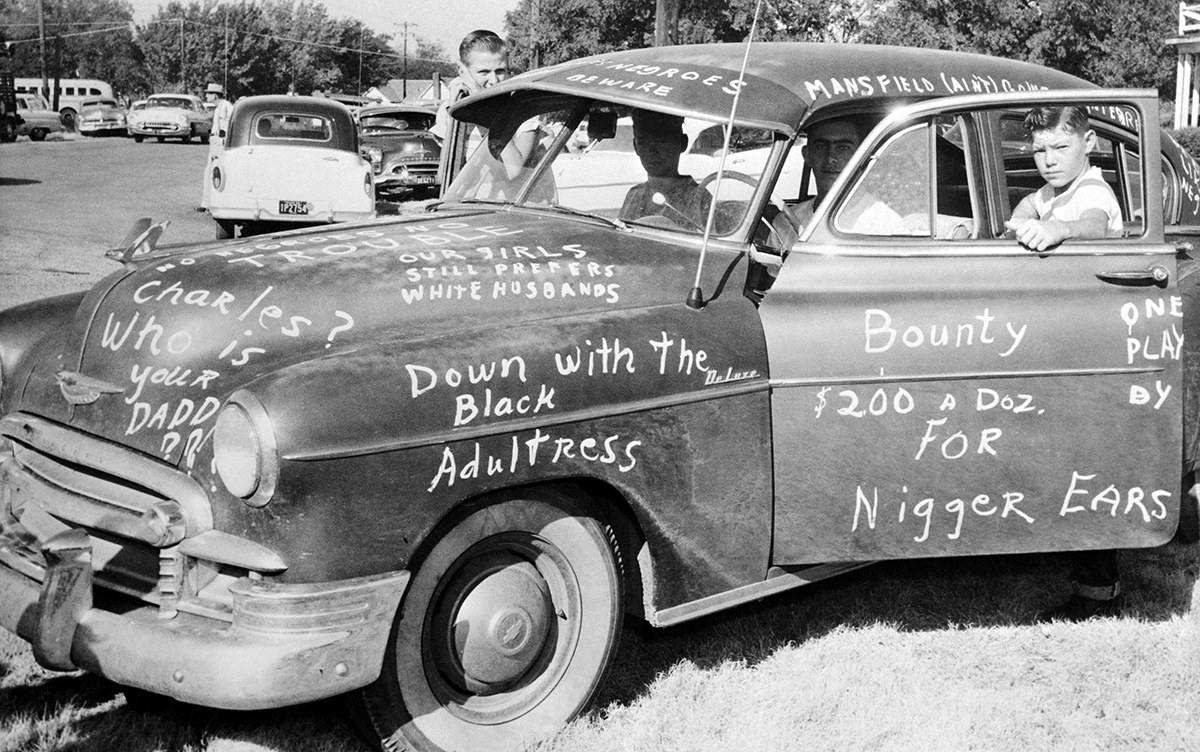
Roy Lee Howlett, 14, stands beside a car painted with signs protesting the desegregation of Mansfield High School in Dallas on Aug. 31, 1956.

An unruly mob protesting integration of the Clinton High School attacks a car full of black people who just happened to be passing through on Aug. 31, 1956.

A group of students known as the Little Rock Nine form a study group after being prevented from entering Little Rock’s newly integrated Central High School on Sept. 13, 1957.

An unidentified white student slugs an effigy outside Central High School in Little Rock, Arkansas, on Oct. 3, 1957, as nearly 75 students of the school walked out to protest integration.
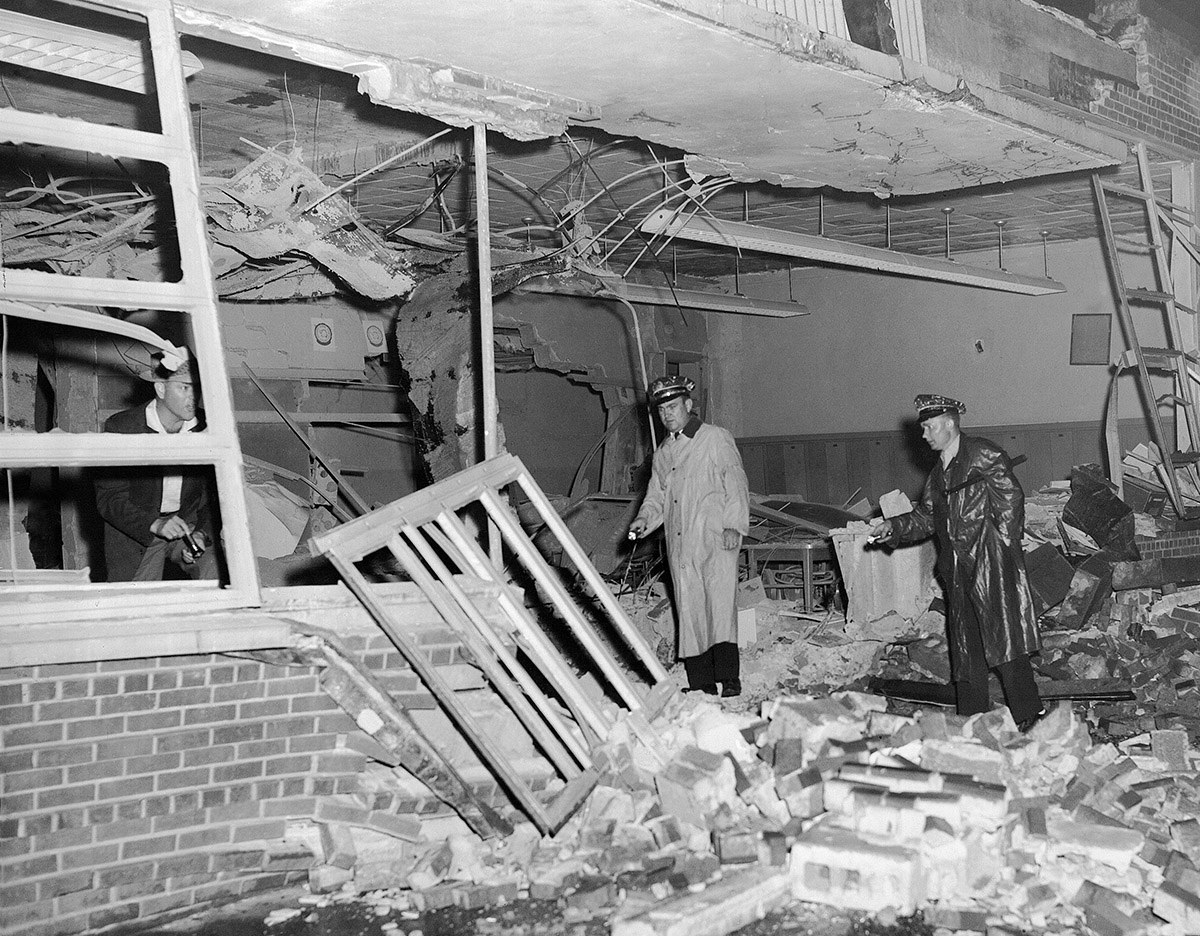
Police examine the wreckage of the newly desegregated Hattie Cotton grammar school, which was dynamited in Nashville, Tennessee, on Sept. 10, 1957. The entire east wall and four classrooms were demolished. The attack occurred after a single six-year-old black child was admitted at this school to the first grade.

David Isom, 19, broke the color line in one of this city’s segregated public pools on June 8, 1958, which resulted in officials closing the facility.
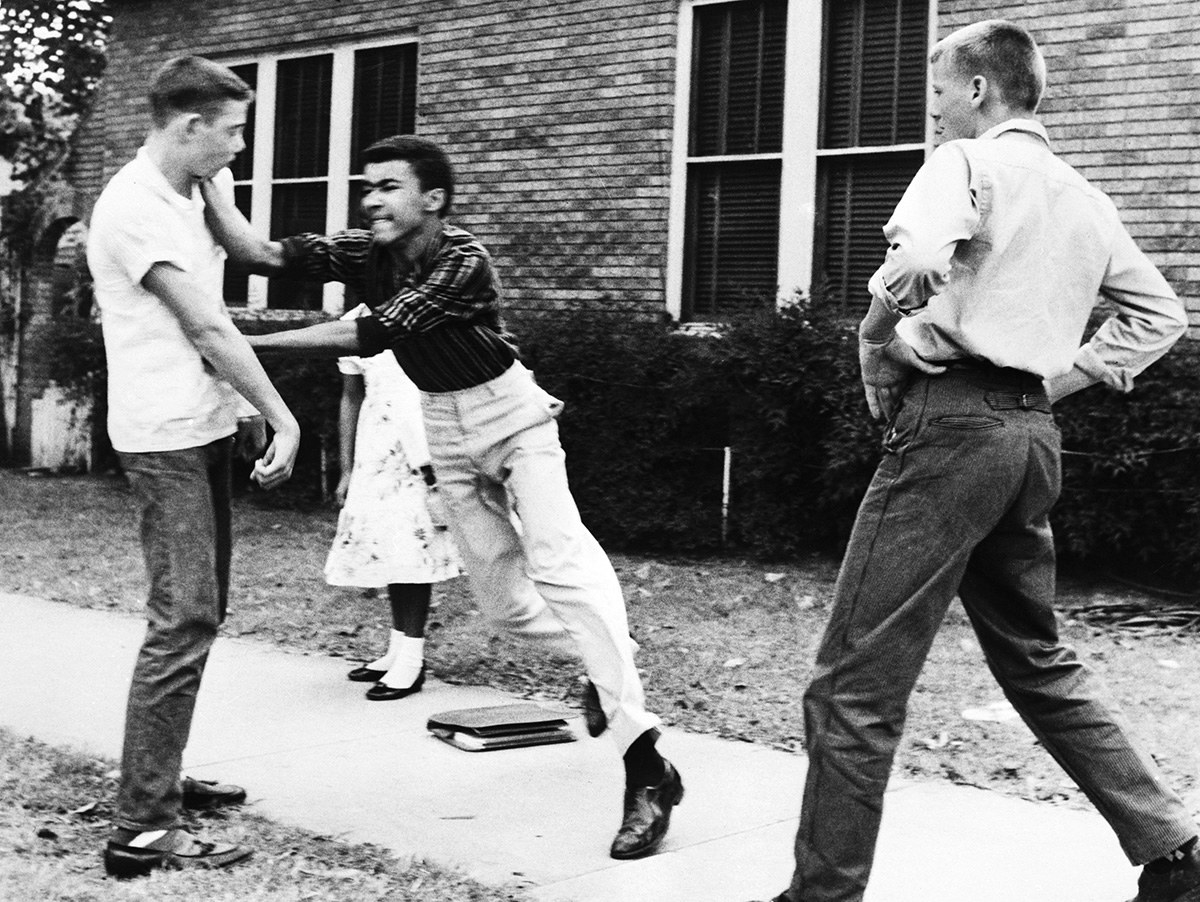
Johnny Gray, 15, punches a white student during a scuffle in Little Rock, Arkansas, on June 16, 1958. Johnny and his sister, Mary (standing behind him), were en route to their segregated school when the two white boys in the photo ordered them to get off the sidewalk.

Demonstrators staging a sit-in at a drugstore lunch counter in Arlington, Virginia, are picketed by members of the American Nazi Party in 1960.

Women and teenagers at William Franz Elementary School yell at police officers during a protest against the desegregation of the school, as three black youngsters attended classes at the school for the second day on Nov. 15, 1960. The sign on the far right reads: “All I Want for Christmas Is a Clean White School.”
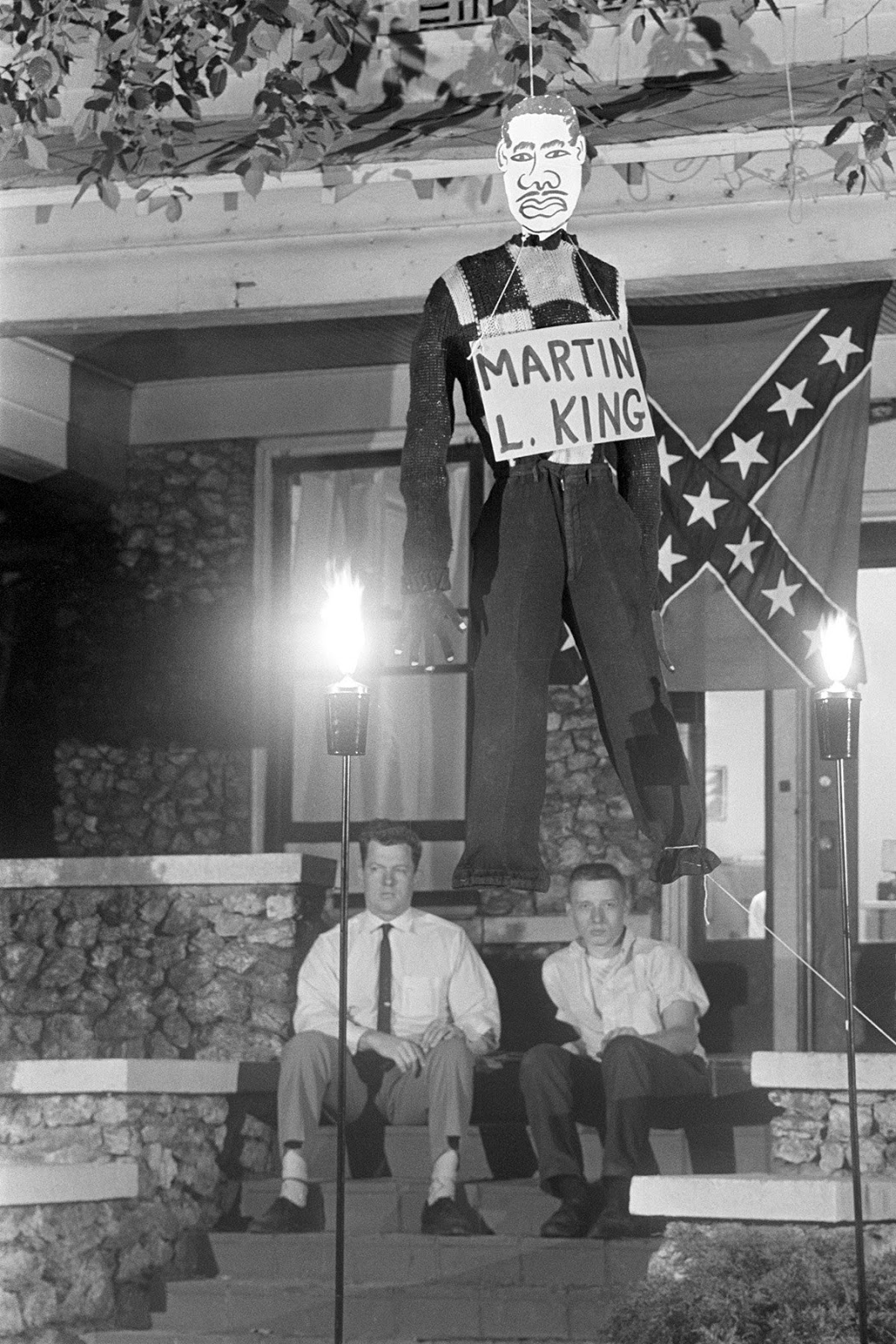
Counter-protesting against civil rights demonstrations. Birmingham, Alabama, on May 6, 1963.

Demonstrators outside of West End High School in Birmingham, Alabama, sing songs and cheer during an anti-desegregation protest on Sept. 10, 1963.

A man waves a Confederate flag before a group of demonstrators in front of an Indianapolis hotel where then-Gov. George Wallace of Alabama was staying on April 14, 1964.
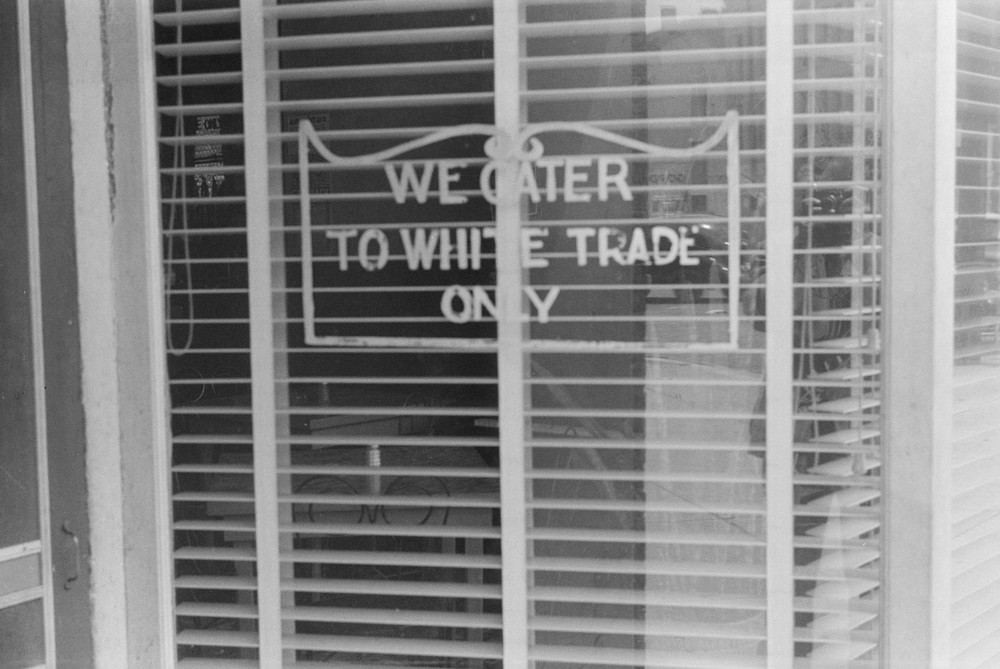
A sign on a restaurant in Lancaster, Ohio, August 1938.
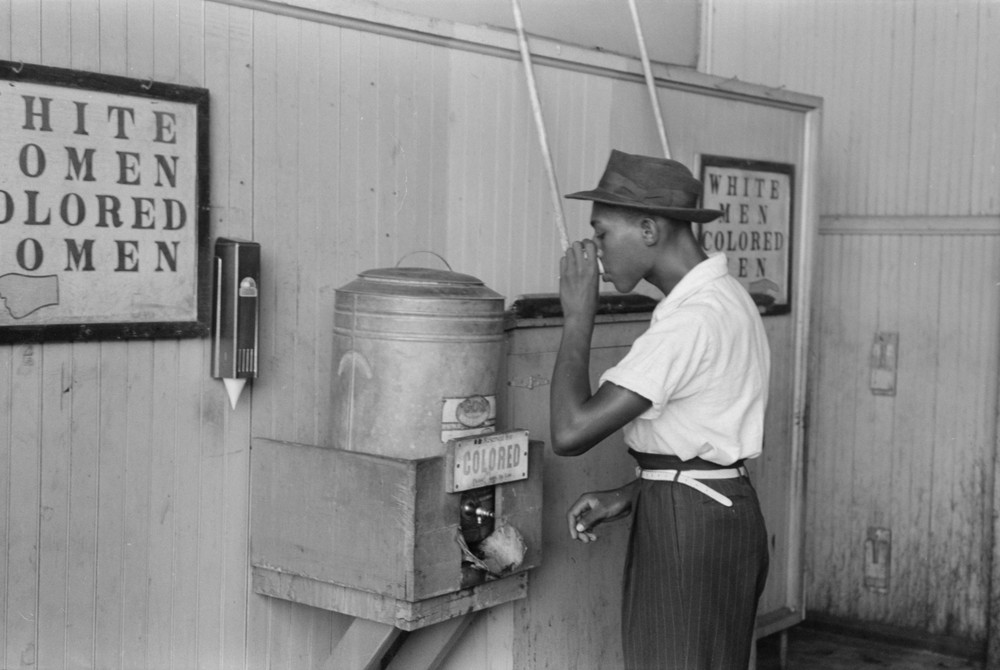
A man drinks at a “colored” water cooler in a streetcar terminal in Oklahoma City, July 1939.

A group of people, one holding a Confederate flag, surround speakers and National Guard, while protesting the admission of the “Little Rock Nine” to Central High School outside the state capitol in Little Rock, Arkansas, August 1959.

School children entering the Mary E. Branch School at S. Main Street and Griffin Boulevard, in Farmville, Prince Edward County, Virginia, September 16, 1963.

Alabama Governor George Wallace standing defiantly at a door while being confronted by Deputy U.S. Attorney General Nicholas Katzenbach while attempting to block integration at the University of Alabama in Tuscaloosa, June 11, 1963.

Martin Luther King with other civil rights leaders leaders during the civil rights march on Washington D.C., August 28, 1963.
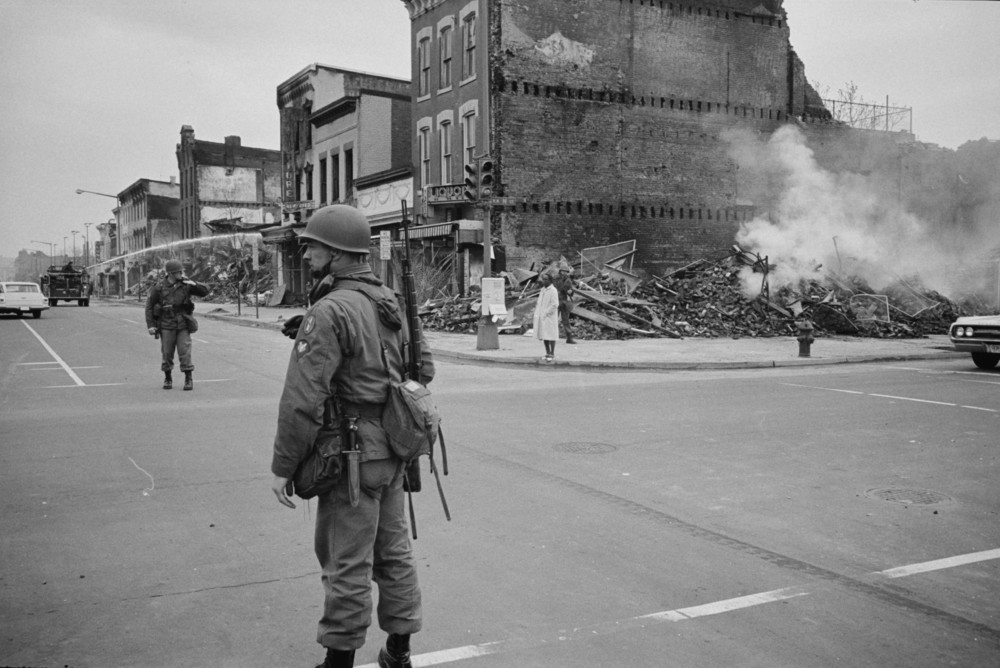
A soldier standing guard at 7th and N Street, N.W., Washington, D.C., with the ruins of buildings that were destroyed during the riots that followed the assassination of Martin Luther King, Jr., April 8, 1968.

A “Don’t work” sign promoting a holiday to honor the anniversary of the assassination of Martin Luther King, Jr., on a shop on H Street, N.W., Washington, D.C., April 3, 1969.
(Photo credit: Library of Congress).