 Some of the most extraordinary objects ever created by human hands were never meant to be seen by the public.
They were built for kings, popes, and aristocrats who wanted their wealth expressed not in square footage or acreage, but in something far more intimate: a single piece of furniture so breathtaking, so dense with craftsmanship and hidden meaning, that standing before it felt like encountering a small, self-contained world.
These were not cabinets in any ordinary sense. They were statements of power, vessels of obsession, and among the most ambitious works of decorative art ever attempted.
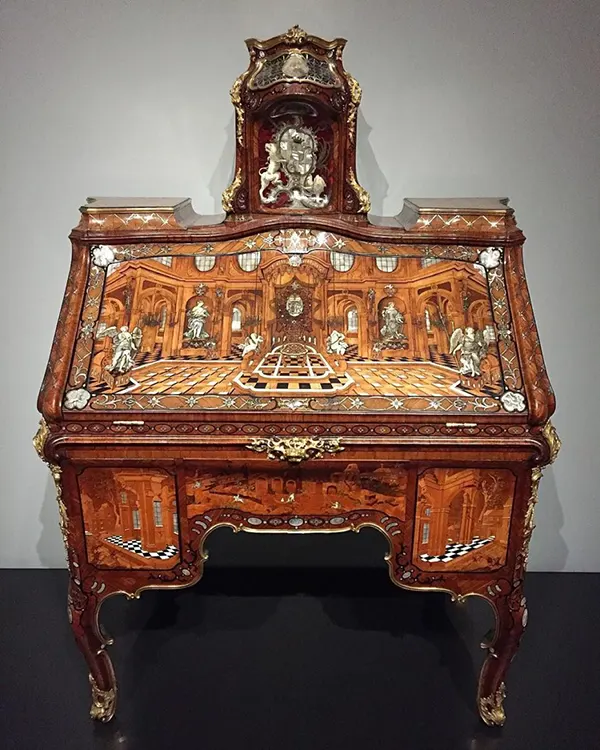
A piece by Abraham Roentgen.
The golden era for this kind of extravagance was the 17th and 18th centuries, when European nobility competed openly through the quality of their possessions.
Master craftsmen worked with the finest available materials, including exotic hardwoods, rare metals, gemstones, and hand-painted miniatures, to produce furniture that functioned almost as architecture in miniature.
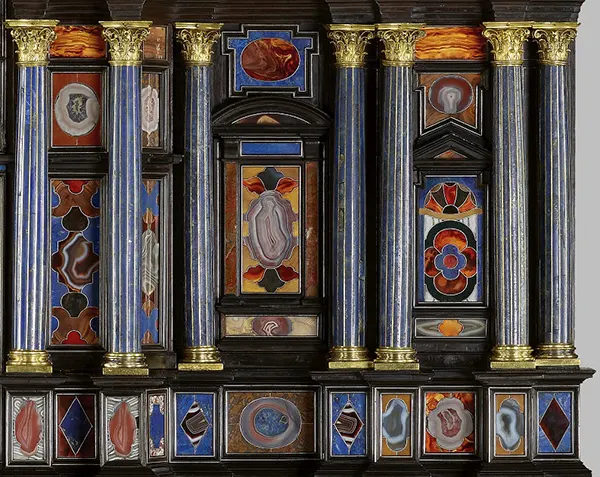
Surfaces were inlaid with scenes drawn from Greek mythology, rendered in meticulous detail using techniques like pietra dura, a labor-intensive method of cutting and fitting colored stones to form pictorial compositions.
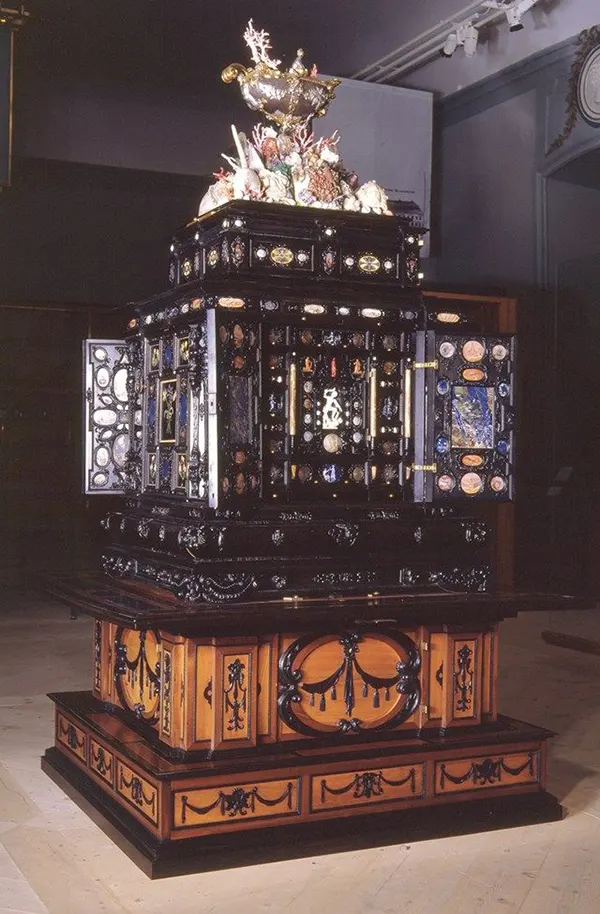 Trompe l’oeil effects tricked the eye into seeing depth where there was none. False book spines concealed hidden drawers.
Mechanical locks guarded compartments within compartments. The result was furniture that rewarded close attention and revealed itself slowly, almost reluctantly, to those patient enough to study it.
Among the most celebrated surviving examples is the Borghese-Windsor Cabinet, a 17th century masterpiece once housed at the Villa Borghese in Rome.
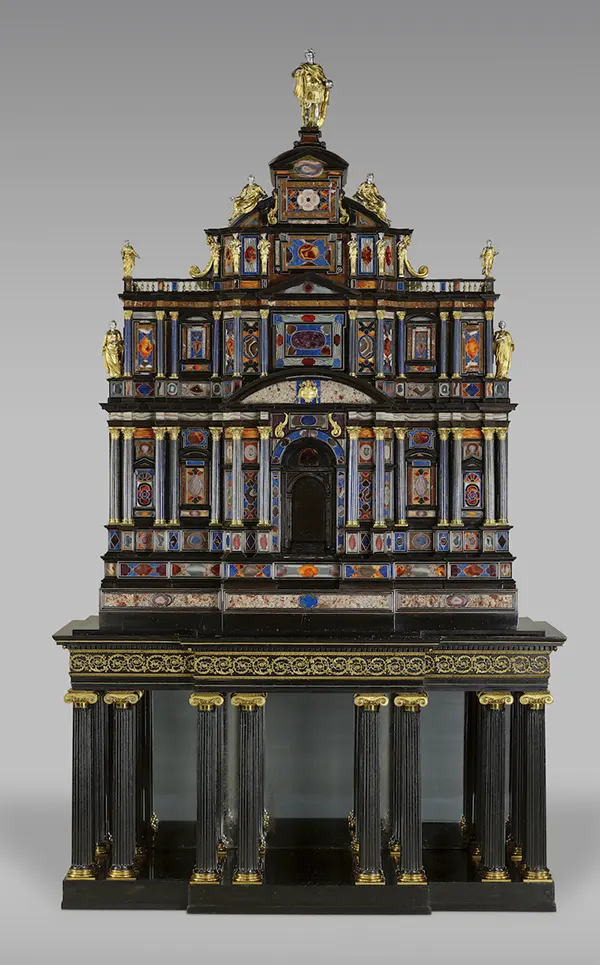
The Borghese-Windsor Cabinet
Commissioned for Pope Paul V as a repository for his family’s most prized possessions, the cabinet bears his family crest and is adorned with inlays of agate, amethyst, lapis lazuli, and other stones that even experienced craftsmen found notoriously difficult to work with.
The identity of its maker remains unknown, which only adds to its mystique. When it came to auction at Sotheby’s, it sold for approximately three million dollars, a figure that reflects not just its materials but the irreplaceable skill embedded in every surface.
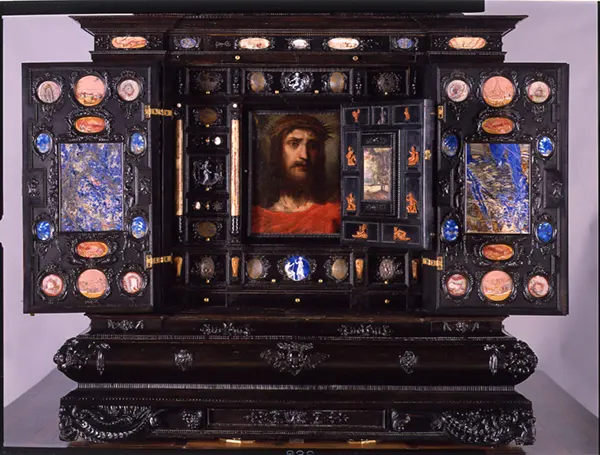 Another landmark piece from the same era is the Augsburg Art Cabinet, constructed by the German polymath and collector Philipp Hainhofer in the early 17th century.
Hainhofer was not a craftsman himself but rather a supremely ambitious curator who commissioned teams of specialized artisans to fill a single cabinet with nearly a thousand objects.
The result was less a piece of furniture than a portable museum, containing everything from ivory carvings and gemstones to intricate paintings and, reportedly, a preserved baby crocodile.
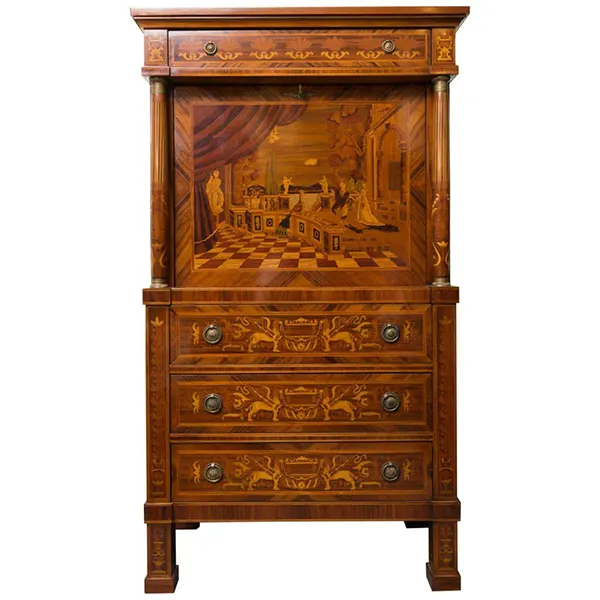
Italian Kingwood and Satinwood Marquetry Abattant.
The cabinet was gifted to a Swedish king and has remained in Sweden ever since, now held at the Gustavianum, Uppsala University Museum.
Of the small number of Augsburg cabinets known to have survived, this one is considered the most complete and intact, making it an object of serious scholarly interest as well as visual spectacle.
Hainhofer’s other surviving masterwork, known as the Berlin Secretary Cabinet, occupied an even more remarkable place in history.
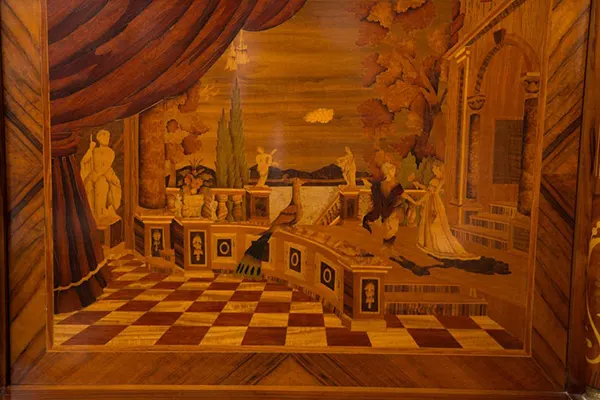
Italian Kingwood and Satinwood Marquetry Abattant.
At the time of its creation, it was widely regarded as the most expensive piece of furniture in the world, with a price equivalent to roughly one and a half million dollars in modern terms.
The cost was justified by what the cabinet contained and concealed. Its exterior was encrusted with precious materials, but the true achievement was mechanical.
The cabinet operated through an elaborate system of hidden levers and triggers, each one unlocking a different sequence of compartments that unfolded in unexpected directions. 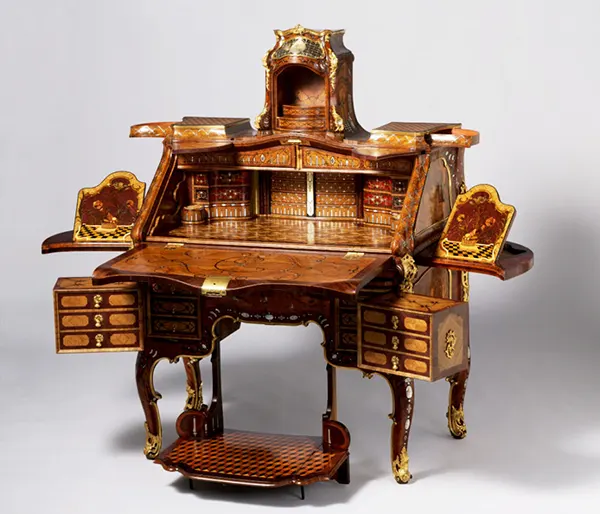
Among its many interior chambers was a fully realized miniature room, crafted at dollhouse scale with the same attention to detail applied to every other element of the piece.
What connects these objects across centuries is the underlying impulse behind them. Wealth, in its most refined historical expressions, was rarely satisfied with simple accumulation.
The aristocrats and clergy who commissioned these cabinets wanted something that could not be replicated, something that fused the skill of the best available artisans with materials from the far corners of the known world, producing objects that felt genuinely singular.
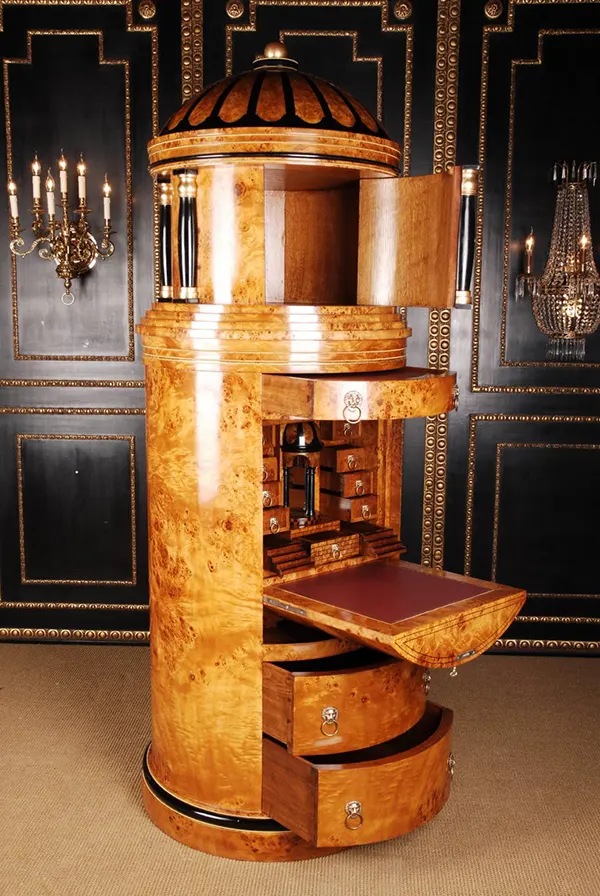
20th century cylindrical secretaire in Biedermeier style maple root veneer.
A great cabinet of the 17th century was also a kind of autobiography, reflecting the tastes, travels, religious devotion, and intellectual interests of its owner through every inlay, every hidden drawer, and every carefully chosen stone.
The photographs collected here offer a rare chance to spend time with some of the most elaborate examples ever built.
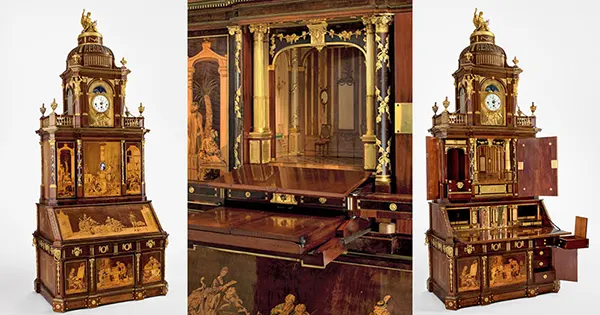
A piece of Roentgen Furniture from the Kunstgewerbe-museum that costs over $1.5million / MET Museum.
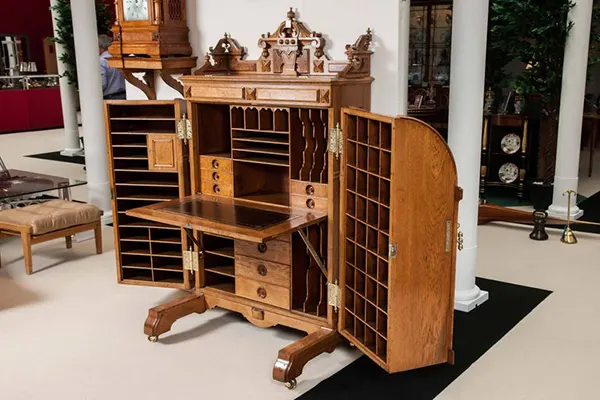
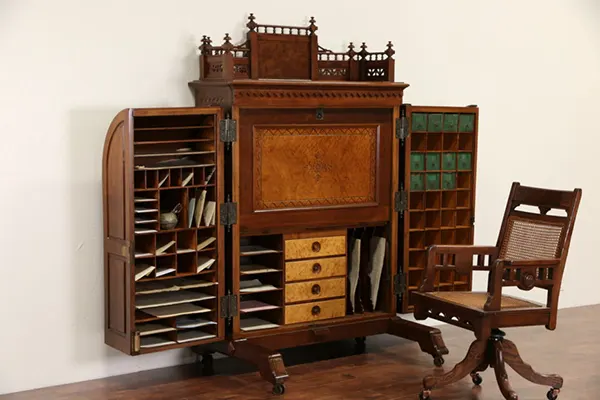
Wooton Signed Victorian 1874 Patent Antique Walnut Desk.
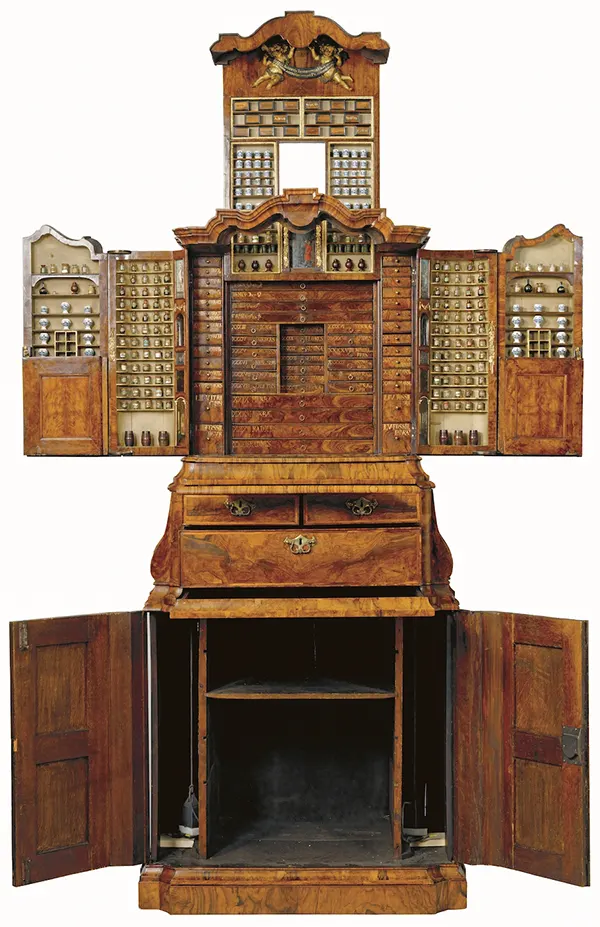
A cabinet at the Rijksmuseum.
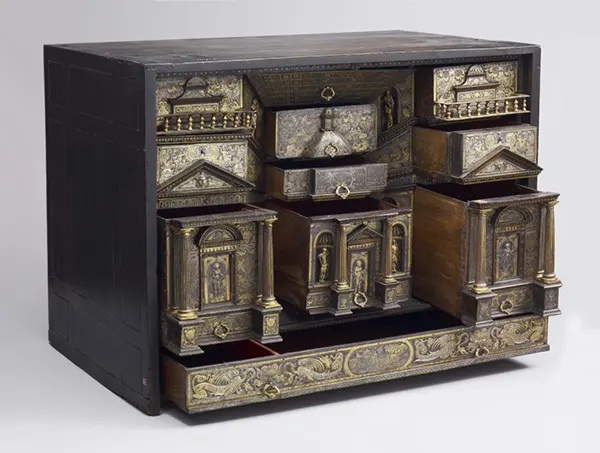
A 16th century cabinet at the British Museum.
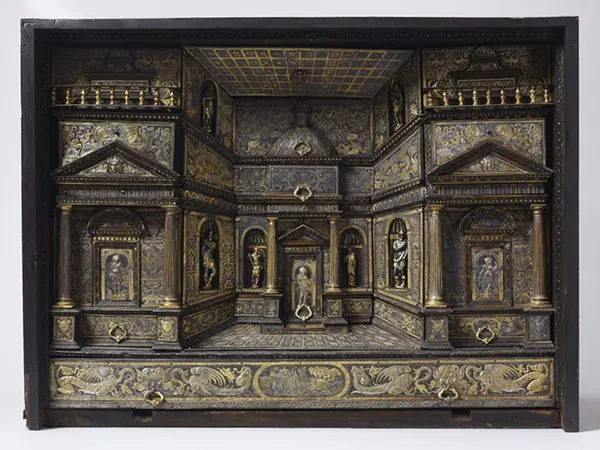
A 16th century cabinet at the British Museum.
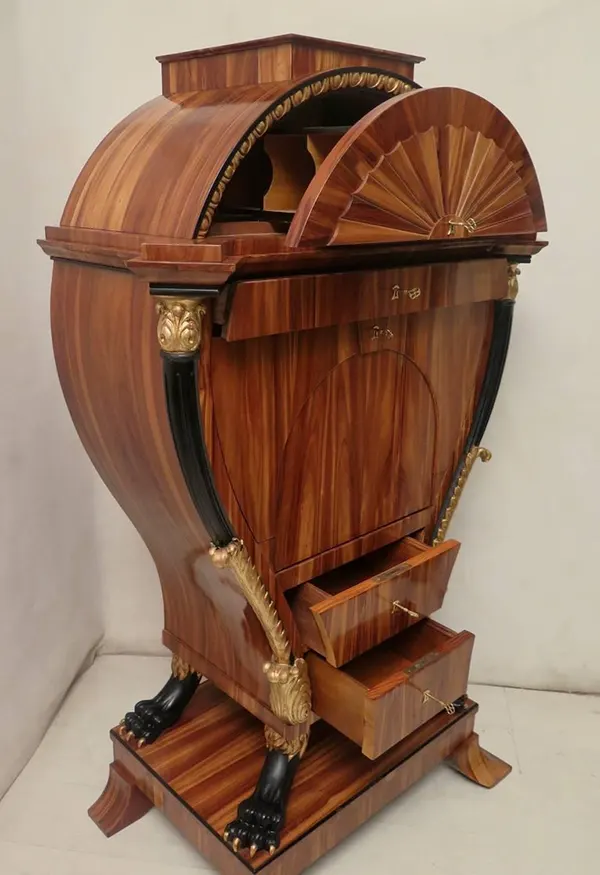
Austrian Biedermeier Style Cherry Wood Secretaires.
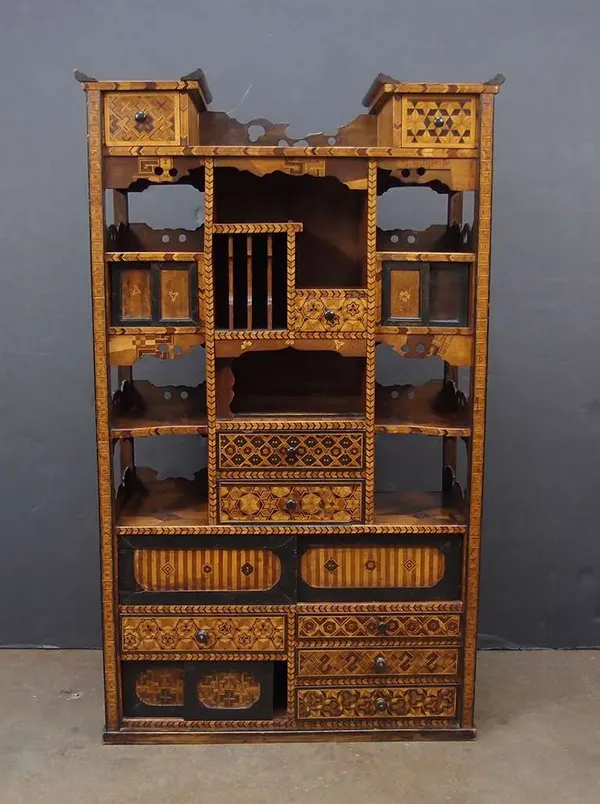
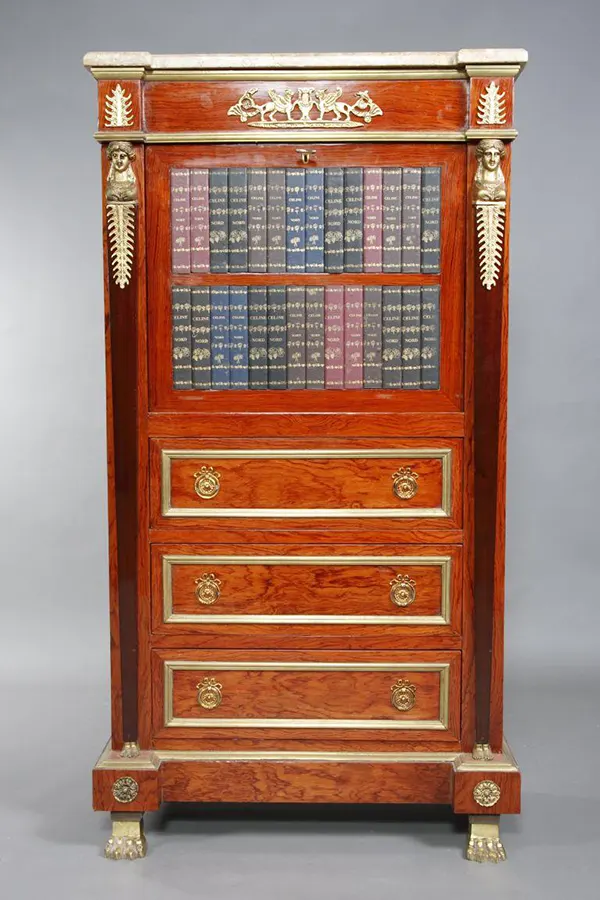
Extremely Decorative Secretary Empire Style with Dummies Books.
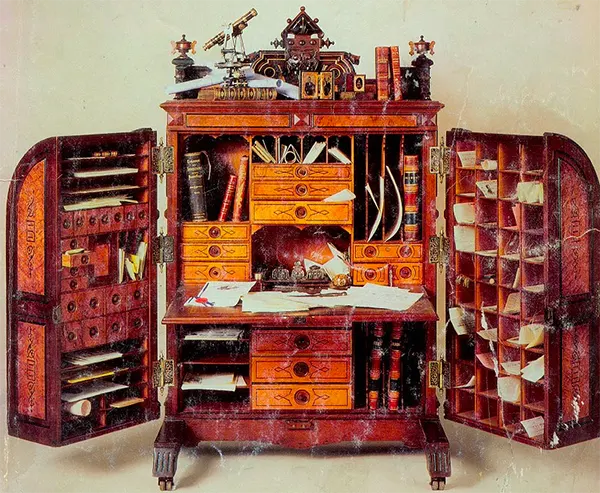
A Wooton Desk.
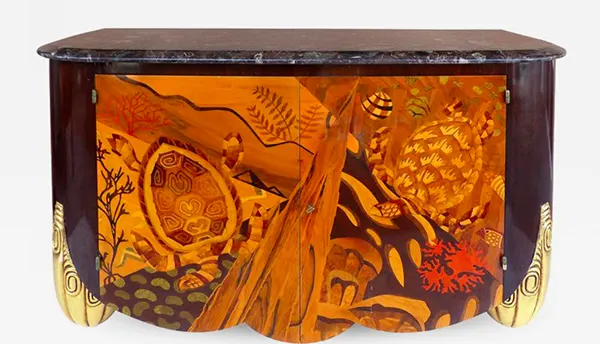
Italian Art Deco Style Marble-Top Cabinet with Marquetry of Sea Turtles.
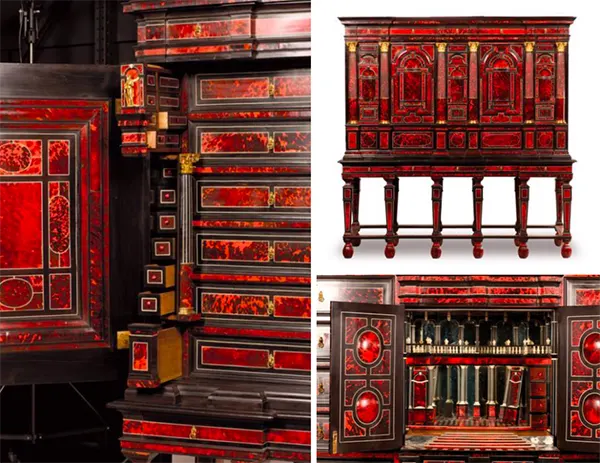
A 17th century Italian cabinet.
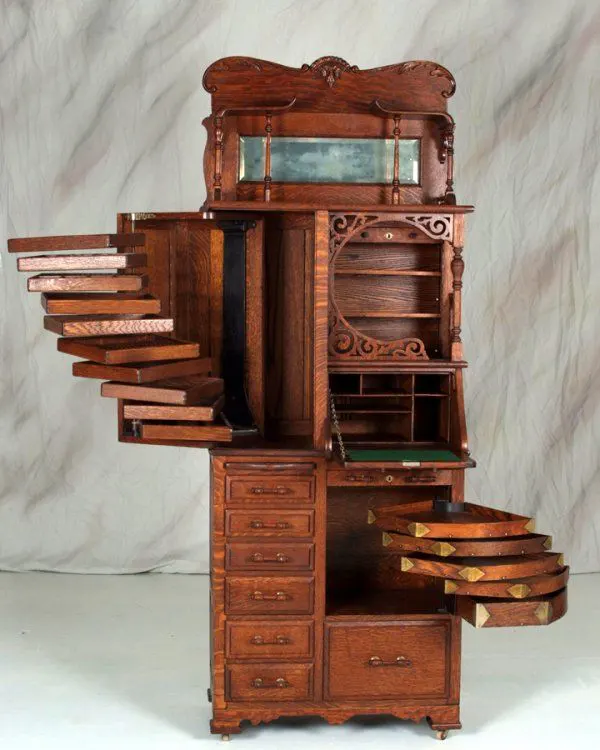
Rare antique Harvard dental cabinet made by Harvard Company of Canton Ohio.
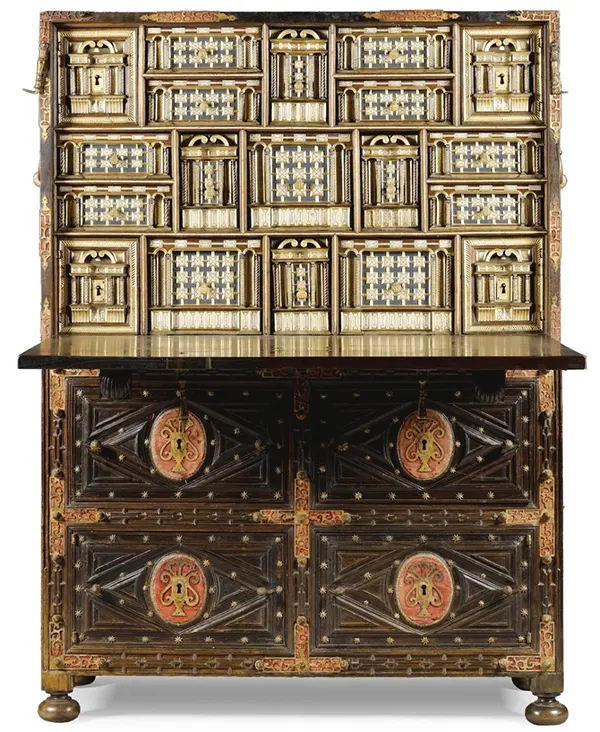
A rare, mid-17th century Spanish piece.
(Photo credit: Wikimedia Commons / MET).