 The 1970s are often remembered for their distinctive fashion, colorful cars, changing city streets, and evolving American culture.
But photographs from the decade reveal another side of the country, where industrial smokestacks towered over residential neighborhoods, chemical plants lined waterways, and pollution was part of everyday life for many communities.
These scenes existed alongside ordinary moments of family life, neighborhood gatherings, and personal celebrations, creating a portrait of America that was far more complicated than its familiar nostalgic image.

Children play in the yard of Ruston home, while a Tacoma smelter stack showers the area with arsenic and lead residue. Ruston, Washington, August 1972.
Much of this visual record comes from Documerica, a photographic project commissioned by the Environmental Protection Agency (EPA) in the early 1970s.
Photographers traveled across the United States to document environmental conditions and the communities living with them.
Their work captured a country beginning to confront the consequences of decades of industrial growth while preserving the people, places, and everyday scenes that defined American life during the era.

Stanton Street in the second ward, the Spanish-speaking section. El Paso, Texas, June 1972.
The contrast was especially striking in Ruston, Washington, where photographer Gene Daniels documented a scene that exposed the human consequences of industrial pollution.
In August 1972, children played in the yard of a family home while a nearby Tacoma smelter released arsenic and lead residue over the surrounding area.
The photograph captured an unsettling reality of the time: industrial facilities and residential neighborhoods often existed side by side, leaving families exposed to pollution in places where they lived and played.

Gasoline stations abandoned during the fuel crisis in winter of 1973-74.
A similar situation appeared in Birmingham, Alabama. In July 1972, photographer Leroy Woodson documented homes standing beside a U.S. Steel pipe plant in North Birmingham.
Industrial smog hung over the neighborhood, illustrating the scale of air pollution in one of the city’s most heavily affected areas.
For residents, the factories were not distant features of the industrial landscape. They were part of the immediate surroundings, visible from nearby homes and streets.

Housing adjacent to a U.S. Steel plant. Birmingham, Alabama, July 1972.
Water pollution was another major concern. In Lake Charles, Louisiana, photographer Marc St. Gil captured chemical plants lining the shoreline in June 1972.
Their proximity to the water raised concerns about industrial waste entering nearby waterways.
Such scenes reflected a broader environmental problem across the country, where manufacturing and chemical production had left rivers, lakes, and coastal areas vulnerable to contamination.

Chemical plants on shore are considered prime source of pollution. Lake Charles, Louisiana, June 1972.
The photographs also documented communities and people whose lives had little to do with industrial production.
In June 1972, Danny Lyon photographed Stanton Street in El Paso, Texas, recording everyday life in the city’s predominantly Spanish-speaking Second Ward.
Rather than focusing exclusively on environmental damage, his work preserved the character of an urban neighborhood and the people who called it home.
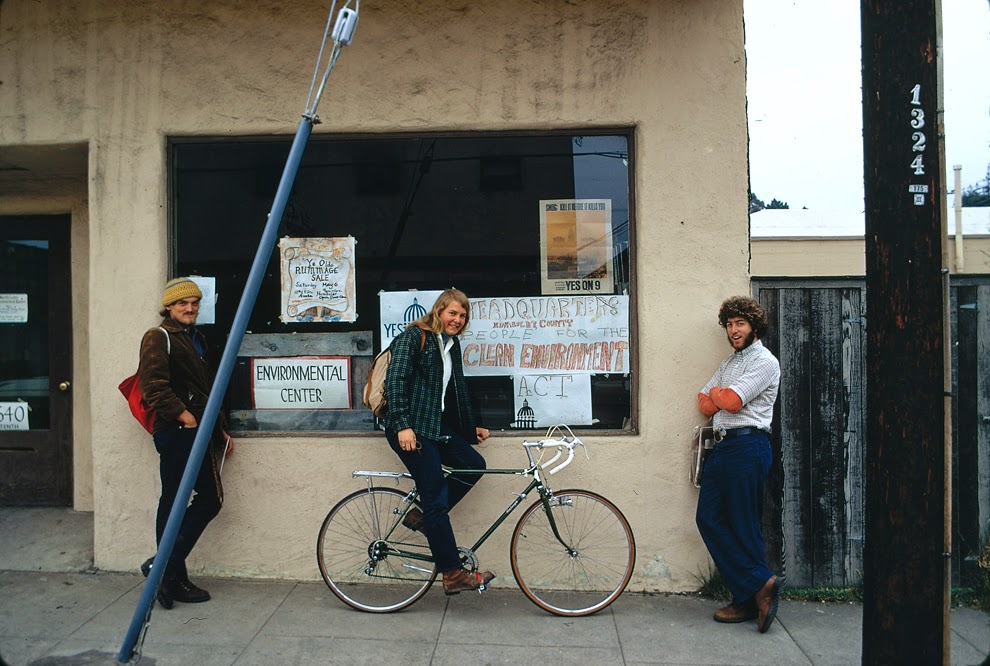
Cyclist in front of environmental center. Humbolt County, California, May 1972.
Energy shortages also became part of the American experience during the decade. The oil crisis of 1973 and 1974 disrupted fuel supplies, brought long lines to gas stations, and forced some stations to close temporarily.
During the winter of 1973 to 1974, photographs of closed and abandoned gas stations reflected the uncertainty surrounding America’s dependence on fuel.
The crisis affected transportation, businesses, and household routines, adding another dimension to a decade already marked by economic and environmental concerns.

Photograph of a bride and her attendants in New Ulm, Minnesota. New Ulm, Minnesota, October 1974.
Not every photograph carried such a troubling message. In May 1972, Thomas Sennett photographed a cyclist outside an environmental center in Humboldt County, California.
The image offered a quieter scene, with an individual and a bicycle providing a contrast to the smokestacks, industrial facilities, and polluted waterways appearing elsewhere in the collection.

Mary Workman holds a jar of undrinkable water that comes from her well, and she has filed a damage suit against the Hanna Coal Company. She has to transport water from a well many miles away although the coal company owns all the land around her, and many roads are closed, she refuses to sell. Near Steubenville, Ohio, October 1973.
By June 1974, Danny Lyon was documenting another side of American urban life. At Lynch Park in Brooklyn, New York, he photographed two Latina girls standing in front of a graffiti-covered wall.
The image preserved a small but revealing moment in the city’s history, capturing the appearance of a neighborhood and its younger residents at a time when New York’s urban landscape was undergoing considerable change.
Graffiti-covered walls, aging buildings, and densely populated streets had become familiar features of many American city neighborhoods.

Michigan Avenue, Chicago (couple on street). Chicago, Ilinois, July 1975.
Other photographs turned away from industrial landscapes and urban concerns to record personal celebrations.
In October 1974, photographer Art Hanson captured a bride surrounded by her attendants at a wedding in New Ulm, Minnesota.
The gathering offered a glimpse of an ordinary American celebration, with friends and family coming together for an important occasion.

[Pin on Pinterest] Industrial smog blacks out homes adjacent to North Birmingham pipe plant. This is the most heavily polluted area of the city. Birmingham, Alabama, July 1972.
They show industrial pollution reaching residential neighborhoods, chemical plants lining waterways, and communities adapting to economic and social changes.
At the same time, they preserve the ordinary moments that made up daily life, from children playing outdoors to weddings and neighborhood gatherings.

Dorothy Thierolf, Ocean Beach businesswoman and leader of the fight to reopen nearby beach to auto traffic. To protect clam beds the state government had banned cars from a short stretch of beach during the summer months on August 12, 1972.

Near the town of Wisconsin Dells the Wisconsin River channels through deep, soft sandstone cliffs, cutting rock into fantastic shapes. These natural splendors have given rise to a booming tourist industry. People come in droves, often in campers and trailers. September 1973.
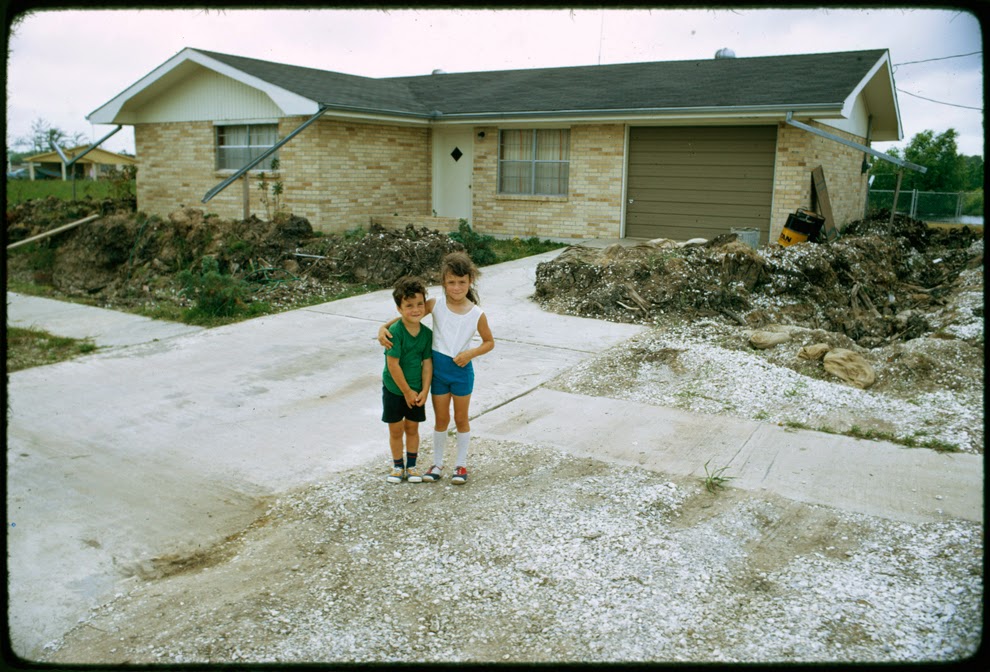
Stevensville children in front of a trenched house. Owner dug trench and formed levee to protect house from flood waters. Stevensville, Louisiana, May 1973.

The painted bus is home. Rifle, Colorado, October 1972.
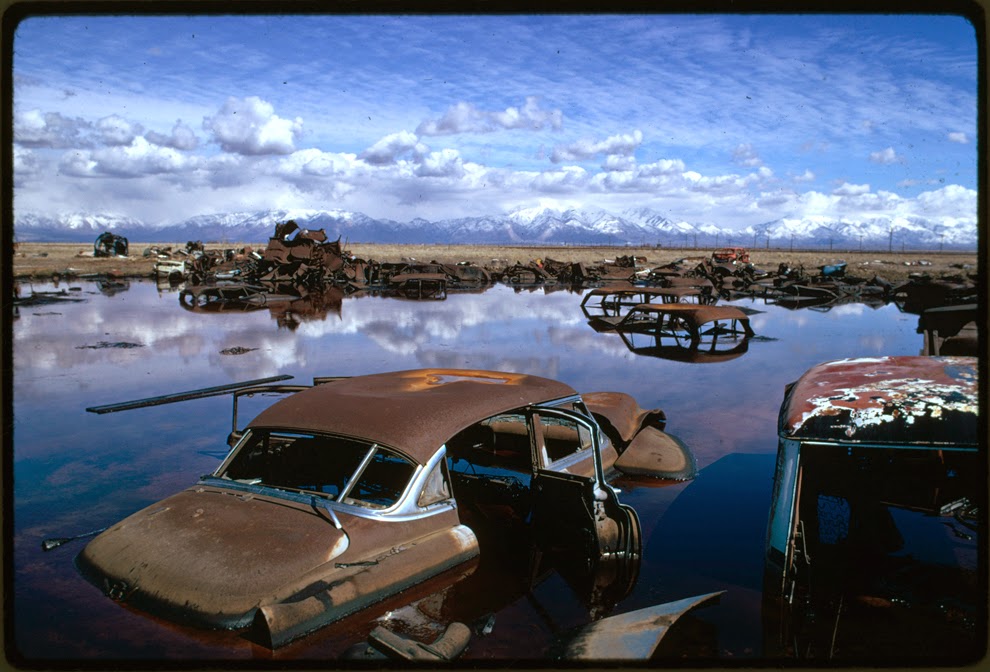
Abandoned automobiles and other debris clutter an acid water and oil filled five acre pond. It was cleaned up under EPA supervision to prevent possible contamination of Great Salt Lake and a wildlife refuge nearby.†Near Ogden, Utah, April 1974.

Auto dump. Escondido, California, April 1972.
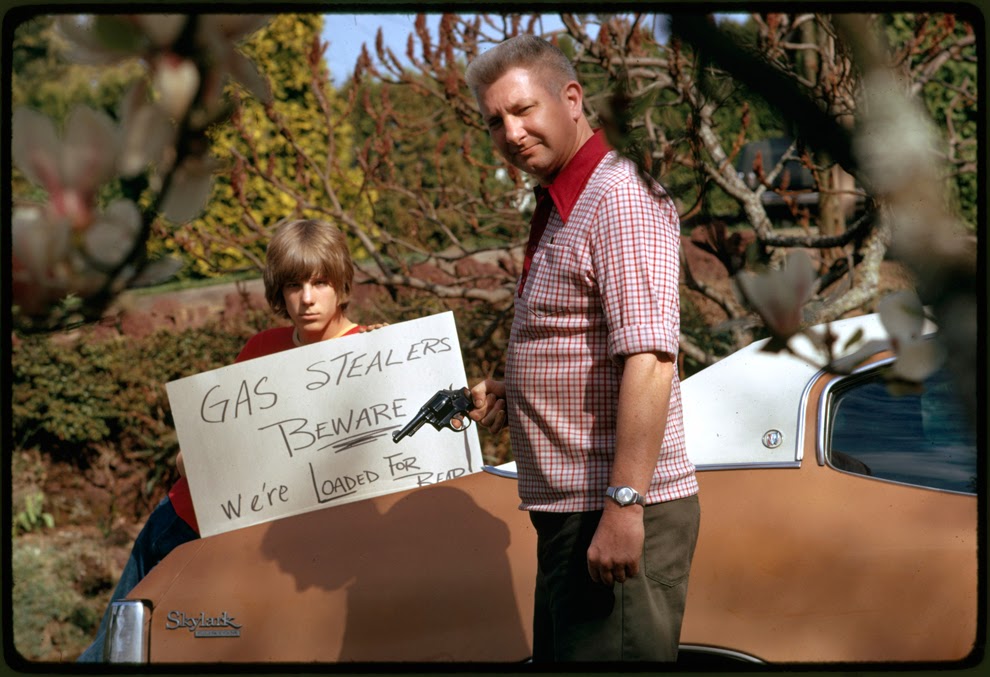
Country’s fuel shortage led to problems for motorists in finding gas as well as paying much more for it, and resulted in theft from cars left unprotected. This father and son, made a sign warning thieves of the possible consequences. Portland, Oregon, April 1974.

Two girls smoking pot during an outing in Cedar Woods near Leakey, Texas. (Taken with permission.) One of nine pictures near San Antonio. Leakey, Texas, May 1973.
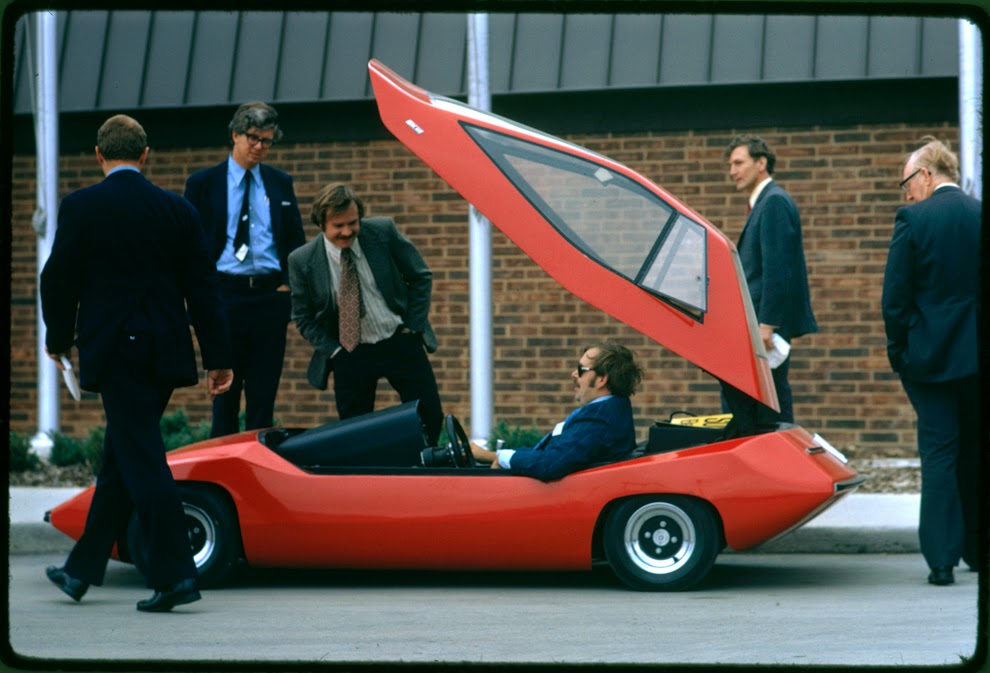
Exhibit at the first symposium on low pollution power systems development held at the Marriott Motor Inn, Ann Arbor, Michigan, October 1973.

Mr. and Mrs. Berry Howard of Cumberland, Kentucky, and the new truck he just bought with some of his black lung payments. Cumerland, Kentucky, October 1974.
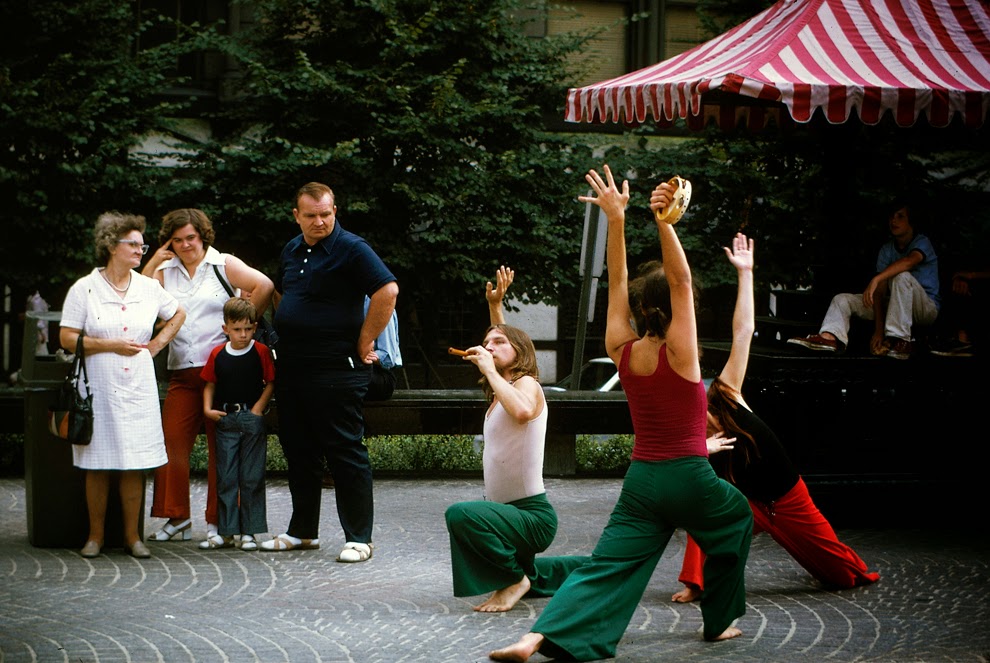
D’aug Days (pronounced dog) is a month long presentation of all the arts at downtown Cincinnati’s immensely popular public plaza, Fountain Square. Dancers from New Media Theater, a Cincinnati group. Cincinnati, Ohio, August 1973.
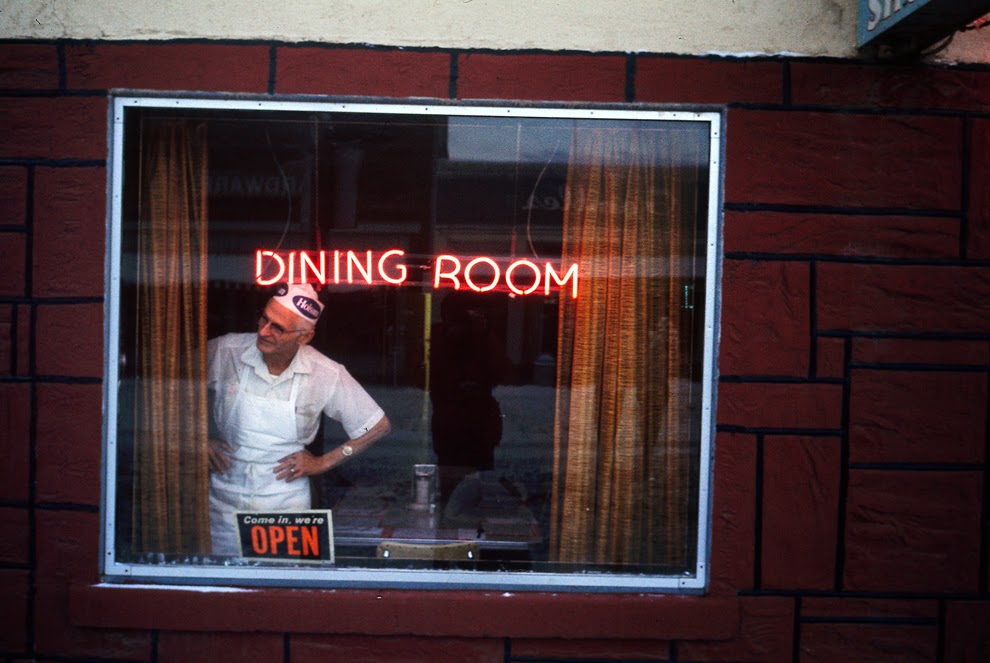
The cook at the Texan Cafe watches the snow removal crew at work. Rifle, Colorado, January 1973.

Water cooling towers of the John Amos Power Plant loom over a Poca, WV, home that is on the other side of the Kanawha River. Two of the towers emit great clouds of steam. Poca, West Virginia, August 1973.

Central expressway leading south into Dallas. Dallas, Texas, May 1972.

Movie Theatre. Berlin, New Hampshire, June 1973.

Sandra Bruno straightens a pillow in the immaculate living room of her family’s home at 39 Neptune Road. Boston, Massachusetts, July 1973.
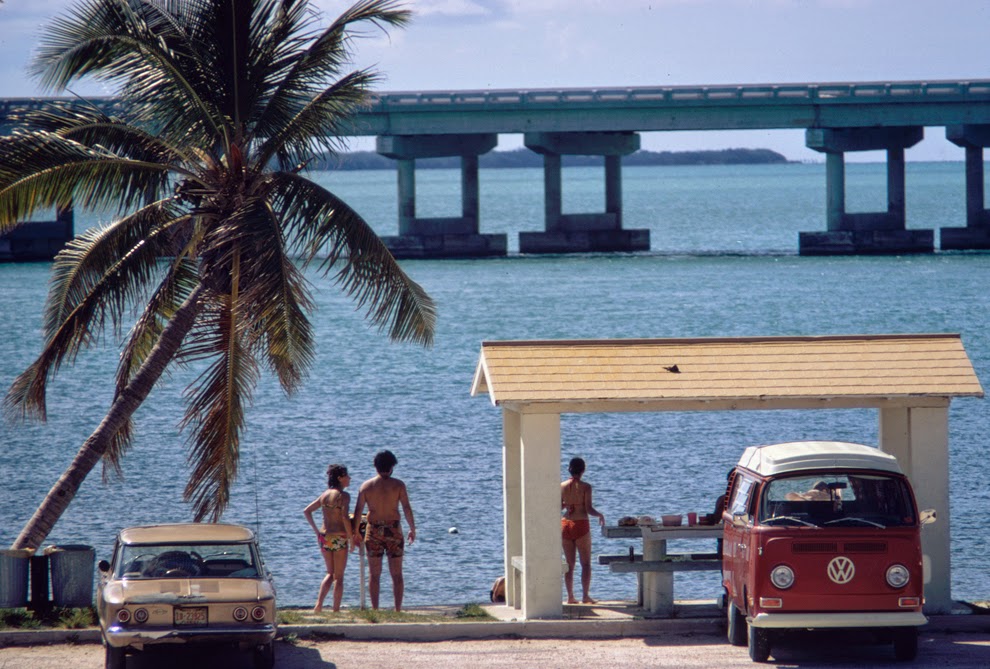
At Bahia Honda State Park, on Bahia Honda Key, Florida. June 1973.
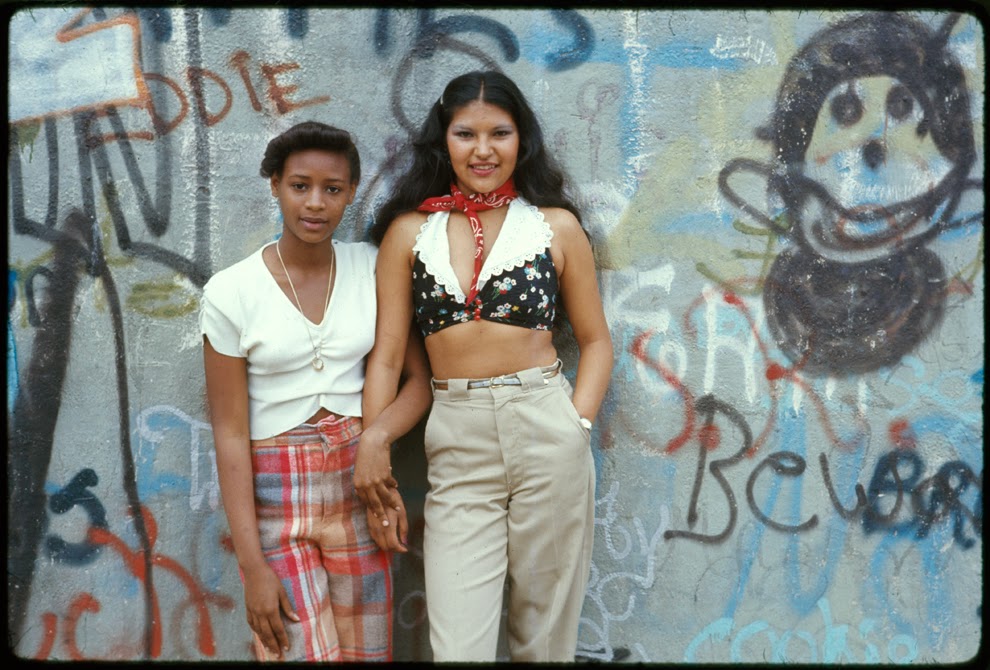
Two Latin girls pose in front of a wall of graffiti in Lynch Park, Brooklyn, New York, June 1974.

Midtown traffic congestion and jaywalking pedestrians. New York, New York, April 1973.

Hitchhiker with his dog, ‘Tripper,’ on U.S. 66. U.S. 66 crosses the Colorado River at Topock. Yuma County, Arizona, May 1972.
(Photo credit: National Archives / Records of the Environmental Protection Agency).