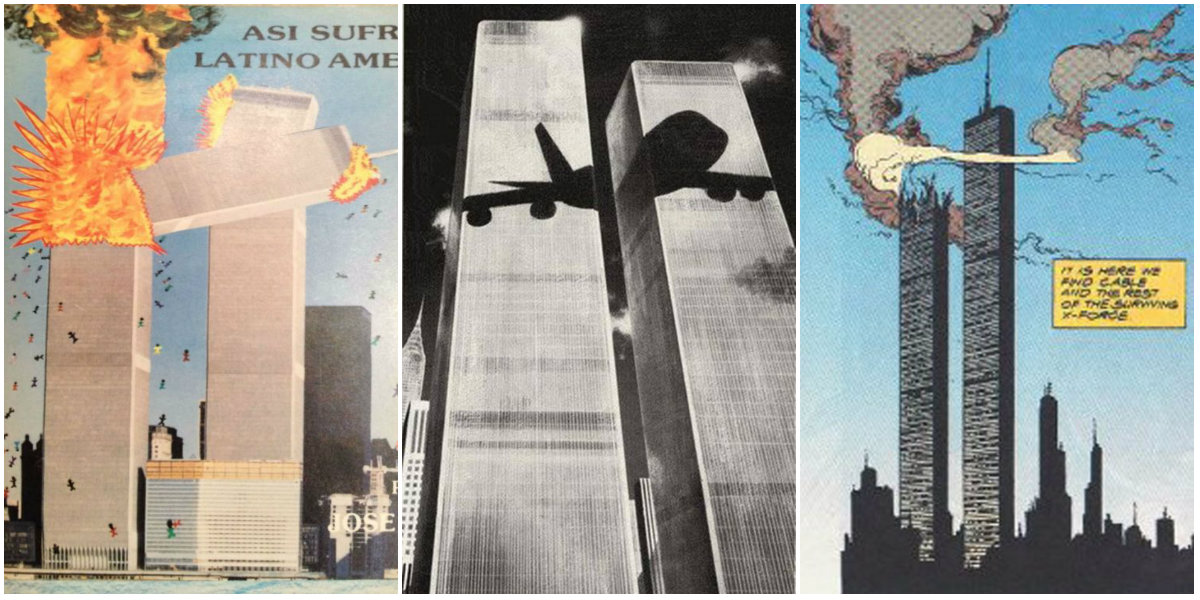
 Before September 11, 2001, popular culture had already imagined many of the images that would later become permanently associated with that date.
Movies, television shows, comic books, advertisements, music videos, magazine covers, and other forms of media occasionally featured the World Trade Center alongside airplanes, explosions, burning buildings, or scenes of destruction.
Some of these examples are remarkably specific, while others are only striking because they are being viewed with the knowledge of what happened years later.
Taken together, they form an unusual collection of cultural moments that now look very different from the way audiences originally experienced them.
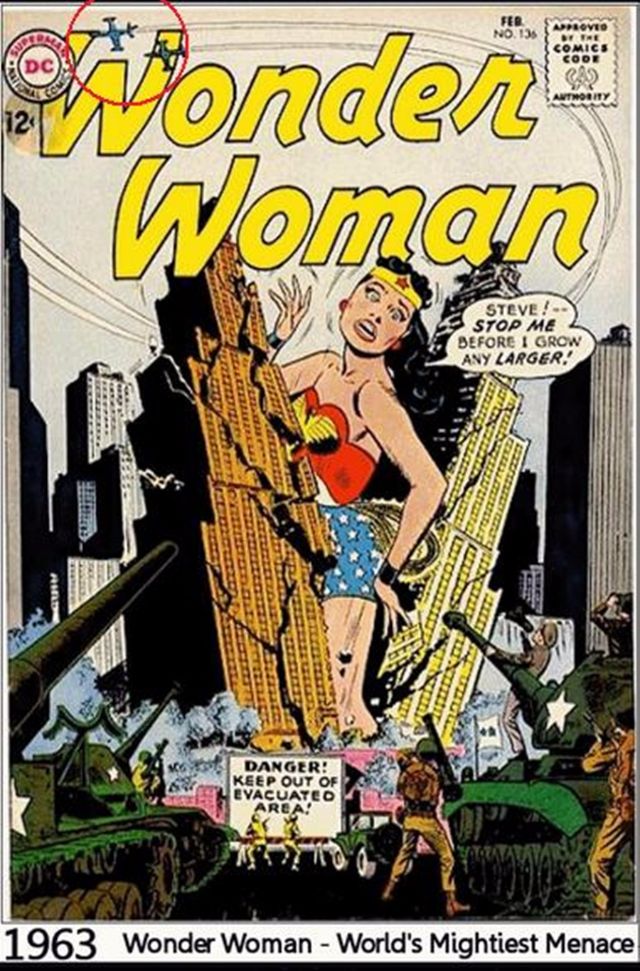
Wonder Woman Cover (1963)
The apparent parallels have attracted renewed attention because they span decades. Some examples appeared only a few years before the attacks, while others date back to the 1970s and 1980s.
In their original context, many were simply fictional depictions of New York, futuristic imagery, disaster scenarios, or ordinary references to one of the world’s most recognizable landmarks.
After 9/11, however, certain scenes acquired an entirely different meaning, particularly when they contained details that closely resembled aspects of the attacks.

Superman Comic (1973)
The World Trade Center was already deeply embedded in American popular culture long before 2001.
Construction of the complex began in 1966 as part of a major redevelopment project intended to establish Lower Manhattan as a center of international trade.
Designed by architect Minoru Yamasaki with the engineering firm Emery Roth & Sons, the complex eventually included seven buildings, with the Twin Towers dominating the site and the surrounding skyline.
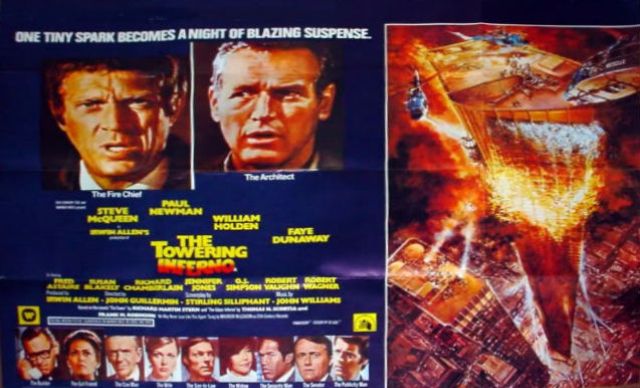
The Towering Inferno (1974)
The North Tower was completed in 1970, followed by the South Tower in 1971, and the World Trade Center was formally dedicated in April 1973.
Each tower stood 1,368 feet tall to the roof, with the North Tower reaching an additional height because of its antenna.
At 110 stories, they were the tallest buildings in the world for a brief period, surpassing New York’s Empire State Building and helping establish the World Trade Center as a symbol of modern architecture and economic power.
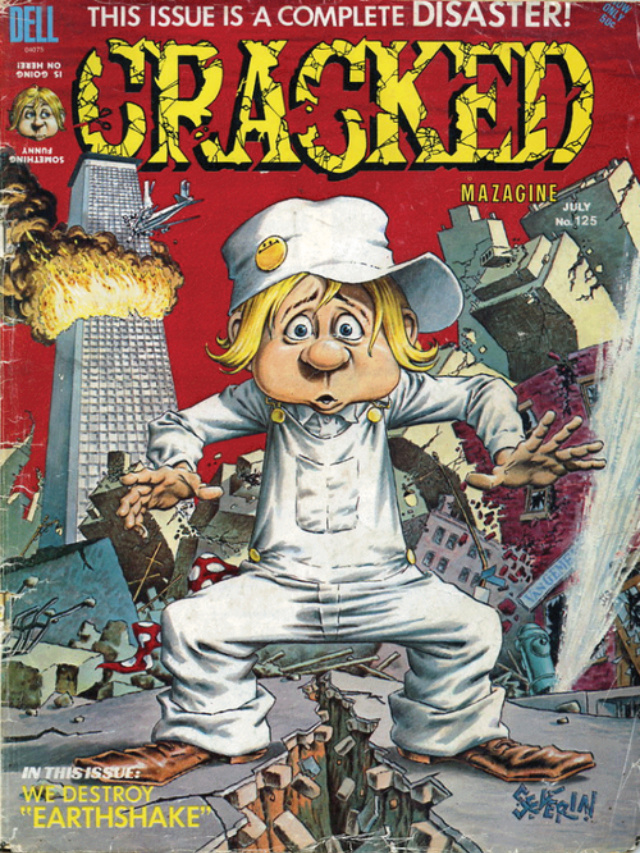
Cracked Magazine (1975)
Their distinctive appearance made them particularly useful to filmmakers and artists. The towers were instantly recognizable from a distance, and their unusual scale provided an unmistakable New York setting.
They appeared in countless movies and television programs, often serving as background scenery rather than being central to the story.
Photographs, postcards, advertisements, magazine illustrations, and promotional material similarly relied on the towers as visual shorthand for New York City.
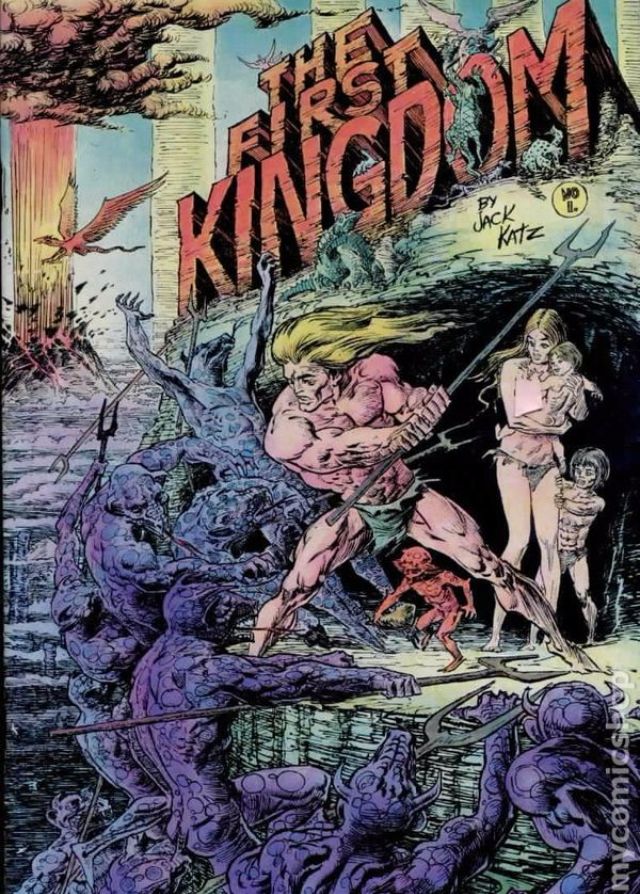
The First Kingdom Comic Cover (1975)
The complex was also a major workplace and tourist destination. Thousands of people worked in offices throughout the World Trade Center, while visitors traveled from around the world to see the city from the observation deck on the South Tower’s 107th floor.
The Windows on the World restaurant occupied the upper floors of the North Tower and became another well-known feature of the complex.
On an ordinary weekday, the site was filled with workers, tourists, shoppers, restaurant customers, and commuters moving through one of the busiest areas of Lower Manhattan.
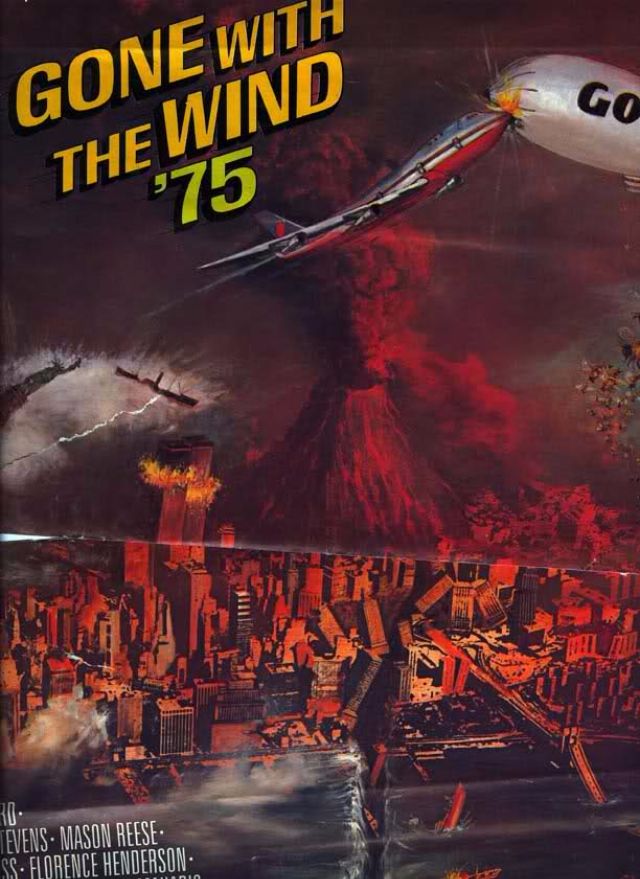
National Lampoon Magazine (1975)
The towers had already experienced a major terrorist attack before the events of 2001. On February 26, 1993, a group of terrorists detonated a truck bomb in the underground parking garage beneath the World Trade Center.
The explosion killed six people and injured more than 1,000 others.
Although the towers survived, the attack demonstrated that the complex could be targeted and foreshadowed the security concerns that would later surround the site.

Sesame Street (1976)
Eight years later, the World Trade Center became the central target of a much larger terrorist operation. On the morning of September 11, 2001, 19 al-Qaeda terrorists hijacked four commercial passenger aircraft.
American Airlines Flight 11 struck the North Tower at 8:46 a.m., followed by United Airlines Flight 175, which hit the South Tower at 9:03 a.m.
Both buildings eventually collapsed, with the South Tower falling at 9:59 a.m. and the North Tower at 10:28 a.m.

Pakistan Airline Ad (1979)
The attacks killed 2,977 people, excluding the 19 hijackers, and changed New York City and the United States permanently.
The Twin Towers, once among the most familiar structures in the world, disappeared from the skyline within hours.
Images of the burning buildings, smoke-filled streets, falling debris, and desperate crowds became some of the most recognizable photographs and television images of the modern era.
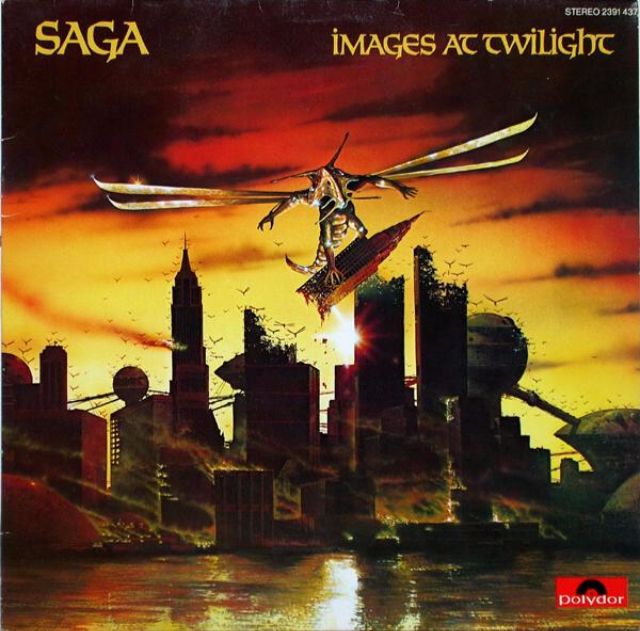
Saga Album Cover (1979)
In the years since, numerous older examples from popular culture have been revisited because of their apparent similarities to the attacks.
A magazine cover may contain an oddly familiar composition, a movie may show an airplane approaching a skyscraper, or a fictional scene may feature the Twin Towers in circumstances that seem remarkably close to what later occurred.
Some examples are genuinely unusual, while others become more striking when isolated from their original context.
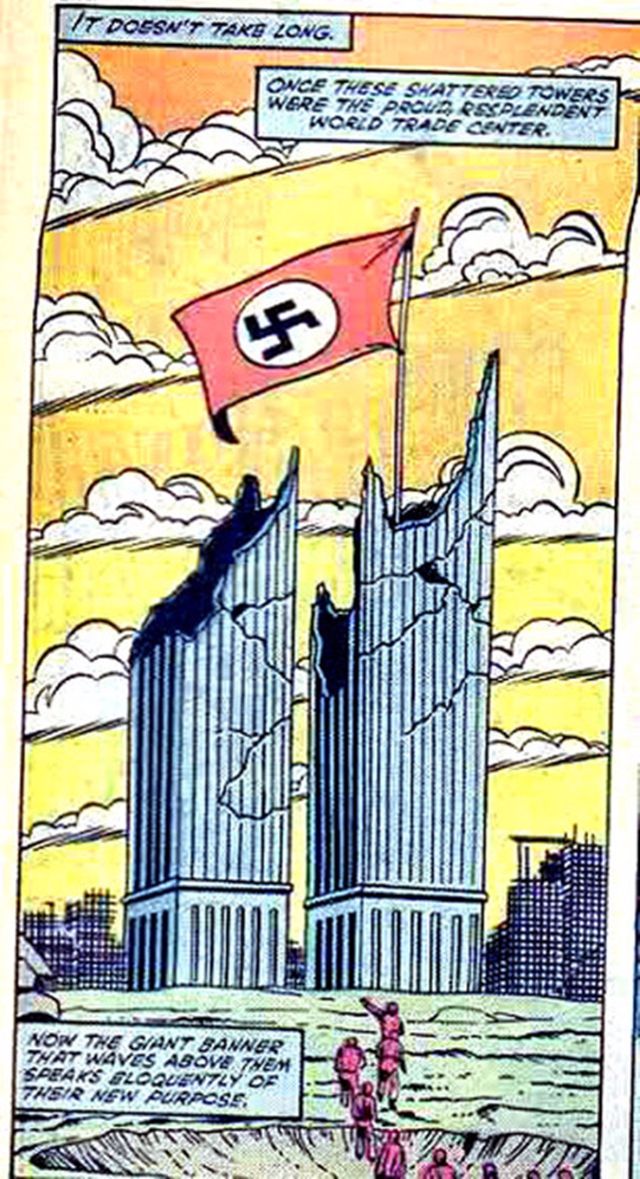
Marvel Comic Book (1983)
It is important to distinguish these coincidences from claims of actual foreknowledge.
Popular culture has long relied on familiar images of airplanes, skyscrapers, explosions, disasters, and New York City, so similarities can sometimes be explained by the subjects that artists and filmmakers routinely used.
Hindsight also changes the way older material is perceived, making previously ordinary details appear significant after an extraordinary event.
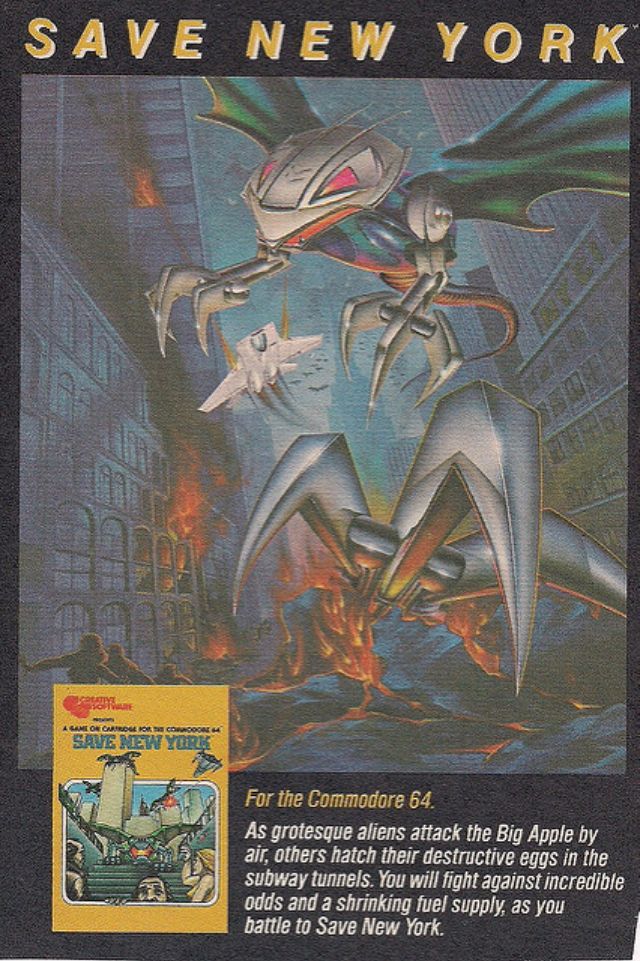
Commodore 64 Game Cover (1983)
Even with that context, some of the examples remain fascinating historical curiosities.
They show how frequently the World Trade Center appeared in the cultural imagination before its destruction and how certain fictional images can acquire an unexpected meaning when history takes a turn that nobody watching them at the time could have anticipated.
The following examples, drawn from popular culture before 2001, illustrate some of the most striking and unusual cases.

Así Sufre Latino America Book Cover (1983)
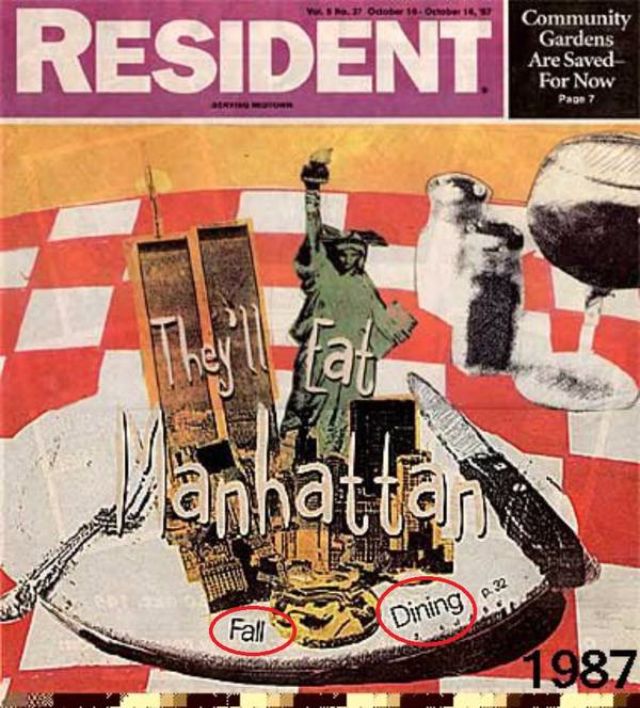
Pamphlet Cover (1987)
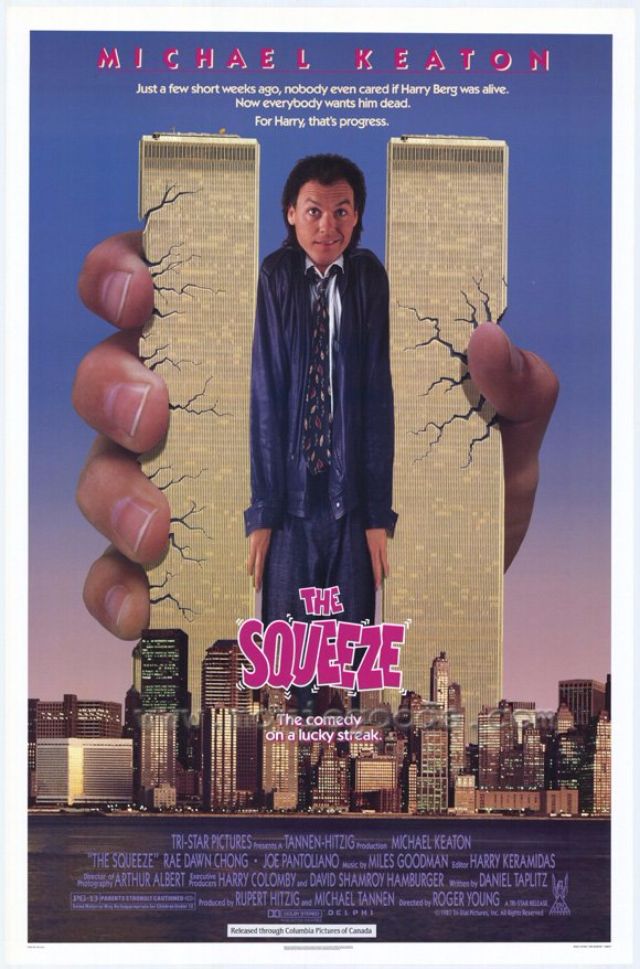
The Squeeze (1987)
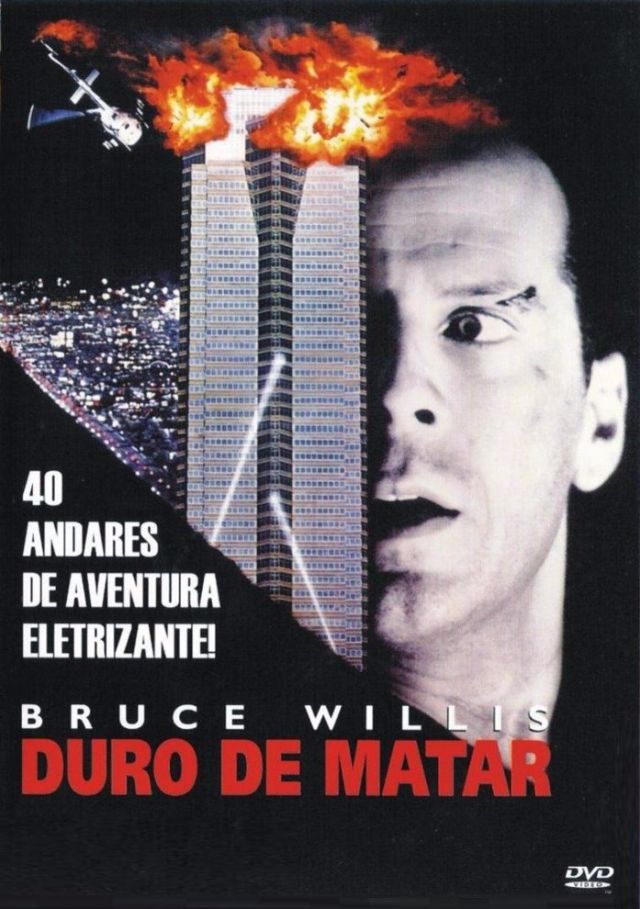
Die Hard (1988)
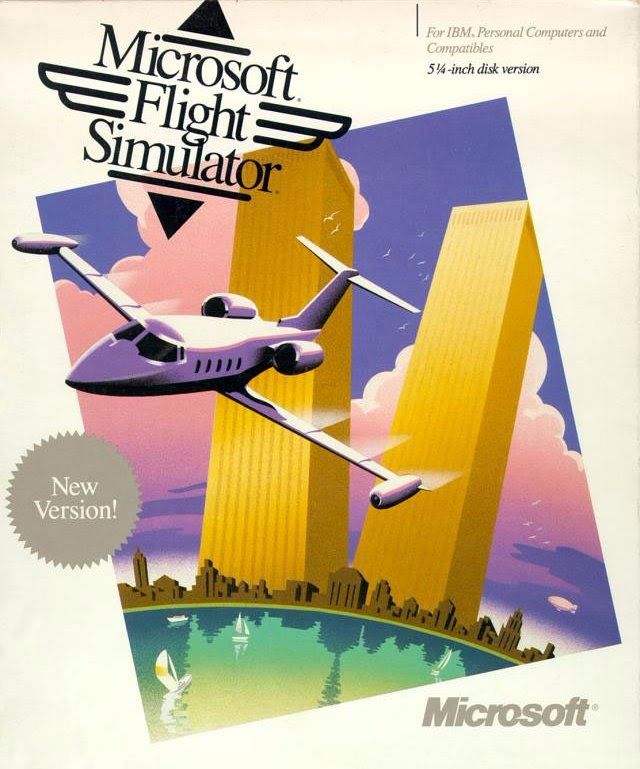
Microsoft Flight Simulator Cover (1988)

The Illuminati Card Game (1990)
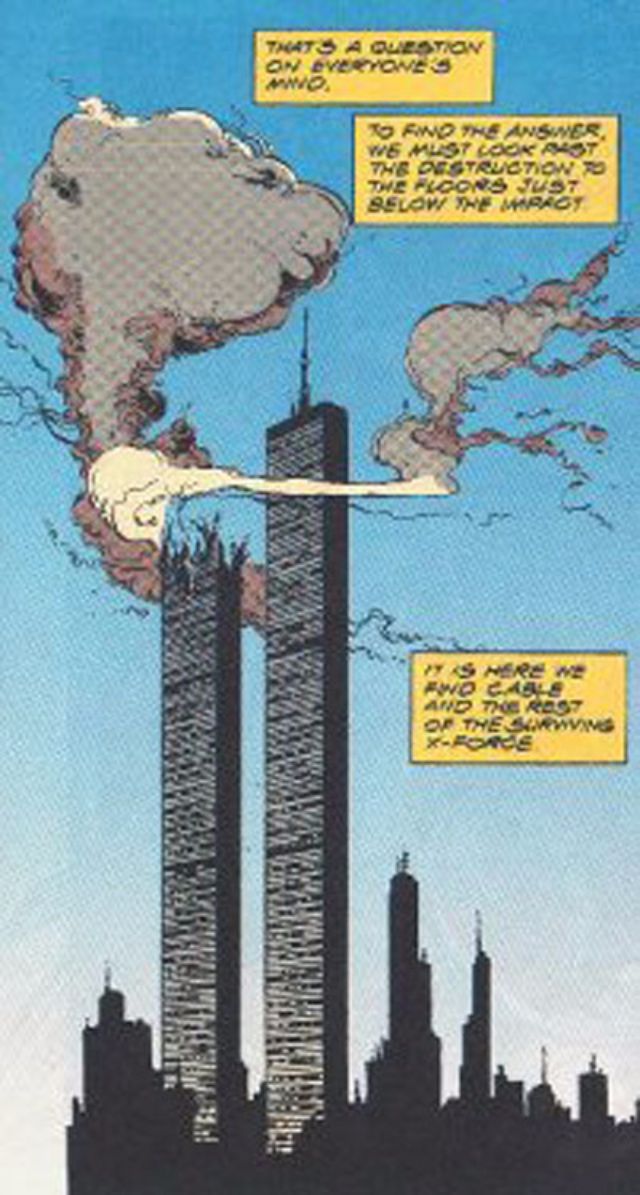
Spider-Man Comic (1991)

Mortadelo (1993)
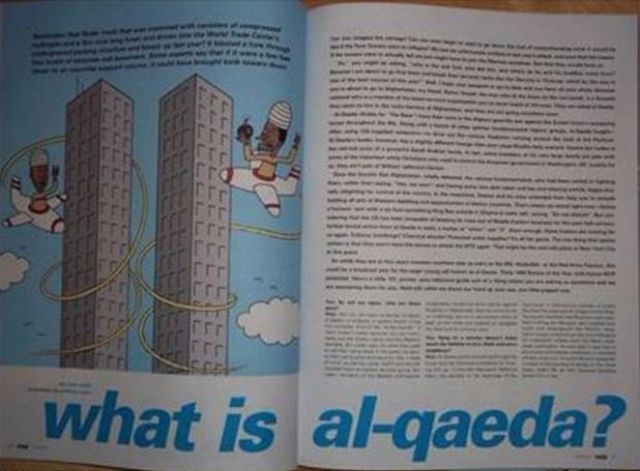
Viceland Magazine Article (1994)
(Photo credit: Flickr / Wikimedia Commons / Pinterest).