 The teenagers of 1950s America helped create a completely new youth culture, one shaped by economic prosperity, growing independence, and a rapidly changing postwar society.
Captured in a memorable series of photographs by photographer Nina Leen, these young Americans appeared confident, stylish, and eager to embrace the opportunities surrounding them.
In June 1954, LIFE magazine published a feature titled “The Luckiest Generation,” focusing on middle-class American teenagers during one of the country’s most prosperous decades.
.jpg)
In aura of fun and well-being, students dance in gym of Carlsbad’s high school at weekly ‘Sock Hop’ to music of a 12-piece student band.
The article painted a picture of young people who enjoyed freedoms and financial opportunities that many earlier generations could hardly imagine.
The photographs showed students driving cars to school, working part-time jobs, attending dances, and spending their earnings on music, fashion, and entertainment.
Viewed today, the feature serves as a remarkable time capsule of postwar America and the optimism that defined much of the decade.
.jpg)
Cars of Carlsbad High students fill own parking lot.
School played a central role in the social lives of teenagers during the 1950s. High schools became more than places of education.
They served as gathering spaces where friendships, trends, and teenage identities were formed.
Students filled crowded hallways between classes, decorated gymnasiums for dances, and spent weekends cheering for football and basketball teams.
.jpg)
Electrician, Jack Harris, 16, still in school, picks up $40 to $50 in part-time repair jobs.
Pep rallies, talent shows, and student clubs gave teenagers opportunities to socialize and develop a strong sense of belonging within their schools.
School spirit became an important part of teenage culture, especially in suburban communities where extracurricular activities shaped much of daily life.
.jpg)
A teenage sales girl holds a blouse up to a customer in a store, 1954.
Outside the classroom, teenagers enjoyed a level of independence that was relatively new for young Americans.
Many held part-time jobs after school or during weekends, often working at grocery stores, gas stations, movie theaters, restaurants, or local shops.
These jobs provided more than extra income. They gave teenagers spending money of their own and allowed them to participate in the growing consumer culture aimed directly at youth.
.jpg)
Young investor, David Lenske, 17, having bought four AT&T shares, talks with banker, 1954.
Records, movie tickets, cosmetics, clothing, and milkshakes became regular purchases for many teenagers during the decade.
Cars also became closely connected to teenage freedom in the 1950s. For many high school students, owning or borrowing a car represented independence and social status.
Parking lots outside schools often filled with used sedans, convertibles, and hot rods driven by students eager to spend evenings cruising through town with friends.
.jpg)
Outtake from “Luckiest Generation” feature in LIFE magazine, 1954.
Drive-in restaurants and movie theaters quickly became popular gathering spots where teenagers could socialize away from adult supervision.
The rise of car culture transformed the teenage experience, giving young people greater mobility and freedom than earlier generations had known.
Music shaped nearly every aspect of teenage life during the decade. Radios and jukeboxes introduced young listeners to rock and roll, rhythm and blues, and popular vocal groups that quickly became the soundtrack of youth culture.
.jpg)
Teenage mechanic, 1954.
Teenagers gathered around record players in living rooms and bedrooms, memorizing lyrics and imitating the styles of their favorite performers.
Artists like Elvis Presley became cultural icons whose influence extended far beyond music. Dancing also became an essential part of teenage social life.
School gyms and community halls regularly hosted dances where students spent hours listening to records, practicing dance steps, and socializing with classmates.
.jpg)
Bookkeeper Rada Alexander, 19, gets $200 a month in auto firm job she got after graduation.
Fashion offered another way for teenagers to express identity and fit into their social circles.
Girls often wore poodle skirts, fitted sweaters, saddle shoes, and rolled bobbie socks, while boys favored white T-shirts, leather jackets, denim jeans, or neatly pressed button-down shirts.
Hairstyles carried their own unwritten rules. Boys carefully styled their hair into “ducktail” cuts using heavy pomades, while girls commonly wore ponytails or curled hairstyles inspired by movie stars and singers.
.jpg)
Sonny Thayer, 19, packs for hunting trip.
Daily life for teenagers in the 1950s was also heavily shaped by family expectations and social norms. Most teenagers still lived under strict household rules despite their growing independence. Parents expected good manners, regular church attendance, academic success, and respect for authority.
Dating followed carefully observed customs, often involving group outings, supervised dances, and curfews enforced by parents.
Many teenagers balanced social activities with household responsibilities, including chores, caring for younger siblings, or helping family businesses.
.jpg)
Utility worker, Jack Krueger, 19, who finished high school in 1952, earns $2.24 an hour.
Television increasingly influenced how teenagers spent their free time as the decade progressed. Families gathered in living rooms to watch variety shows, sitcoms, westerns, and popular game shows during the evening hours.
Teenagers followed Hollywood stars, copied hairstyles seen on television, and discussed the latest programs with friends at school the next day.
Magazines aimed specifically at young readers also became increasingly popular, featuring celebrity interviews, fashion advice, and stories centered on teenage romance and social life.
.jpg)
Prosperous pay-off of after-school jobs brings Mike Sweeney and Harold Riley (right) with Pat Marsh (left), Nita Wheeler, all 17, to Carlsbad’s Red Barn restaurant, a favorite party spot.
At the same time, the famous photo series also reflected the limitations of the era.
The teenagers prominently featured in the article were overwhelmingly white and middle class, offering only a narrow view of American youth during the 1950s.
Even so, the collection remains historically important because it captured how mainstream America wanted to see itself during the postwar years: optimistic, hardworking, modern, and full of promise.
.jpg)
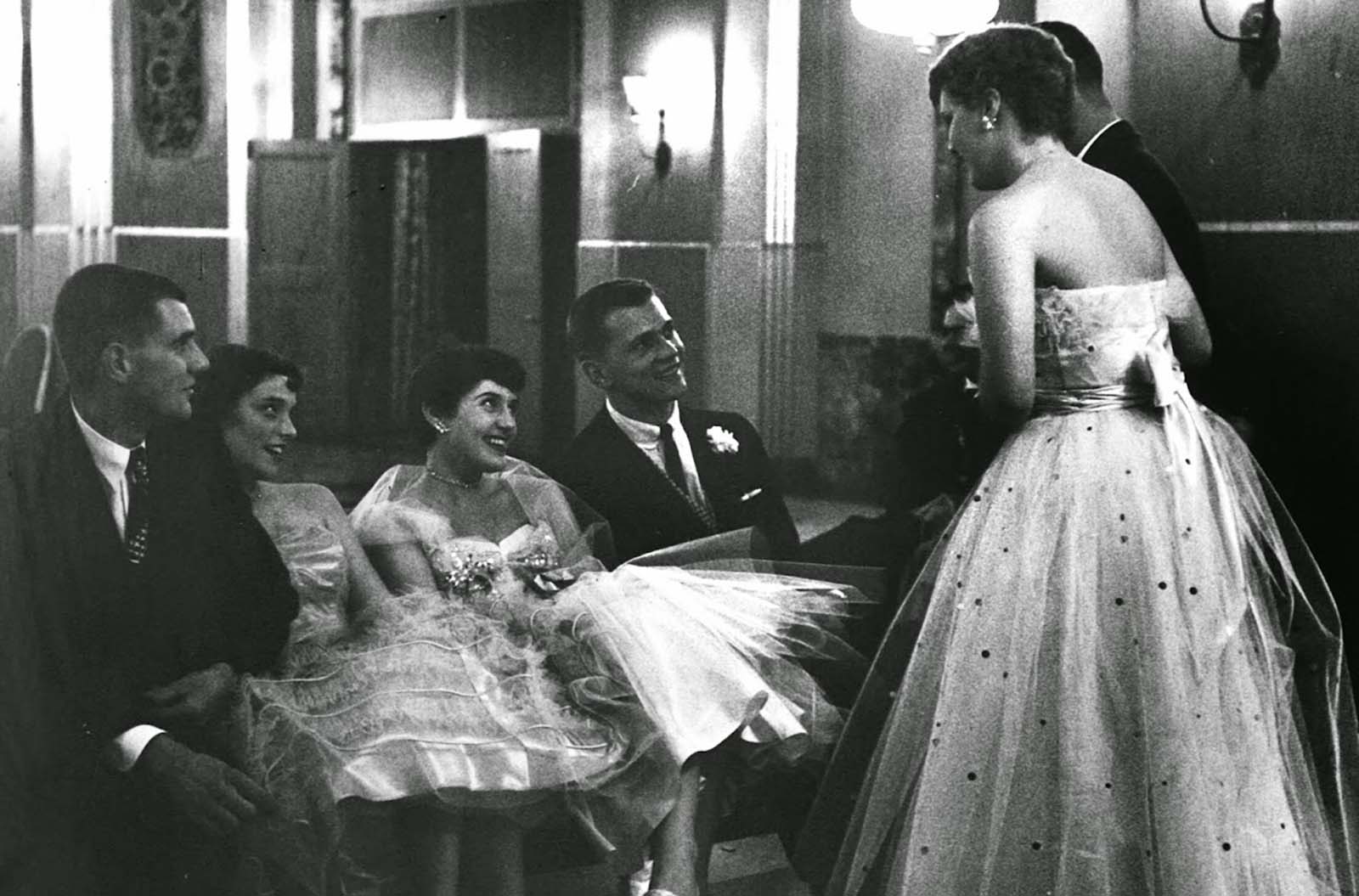
Young couples at formal dance dreamily sway on crowded floor of dim, chandelier-lit ballroom, 1954.
.jpg)
Outtake from “Luckiest Generation” feature in LIFE magazine, 1954.
.jpg)
Outtake from “Luckiest Generation” feature in LIFE magazine, 1954.
.jpg)
Outtake from “Luckiest Generation” feature in LIFE magazine, 1954.
.jpg)
Pay in trade is taken by Margaret High, 17, who works in music store, spends salary on records.
.jpg)
Breeder of chinchillas, Jere Reid Jr., 17, holds $3,000 animal, has paid off note father co-signed.
(Photo credit: Nina Leen / The LIFE Picture Collection).