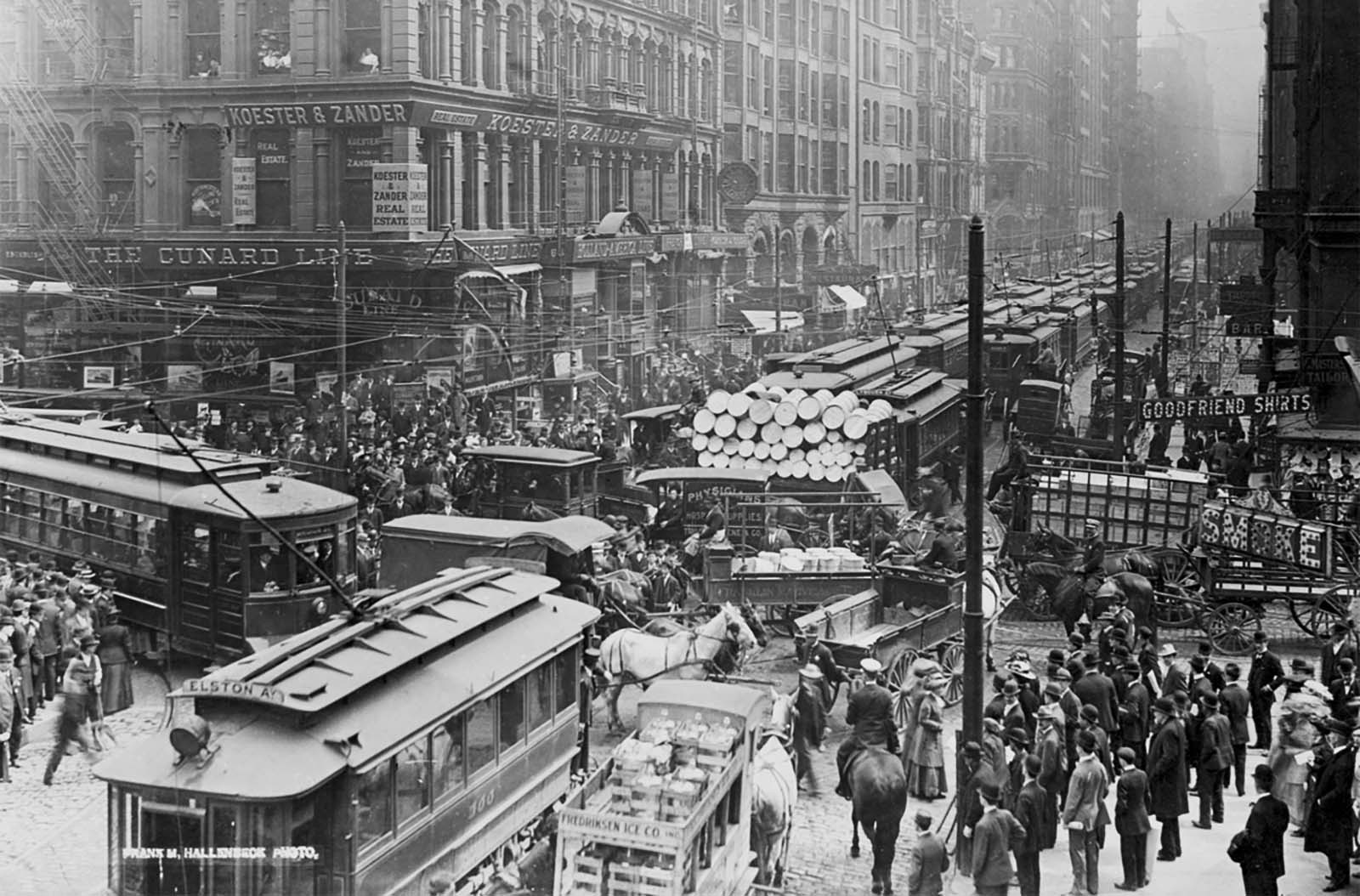
 Before traffic reports, navigation apps, and synchronized traffic lights, congestion was already an unavoidable part of modern life.
As soon as automobiles left the factory floor and rolled onto public roads, they began competing for space that cities and towns were never designed to share.
Early traffic jams may look almost quaint in old photographs, but they tell a deeper story about rapid technological change, urban growth, and the growing pains of a world adjusting to mass mobility.
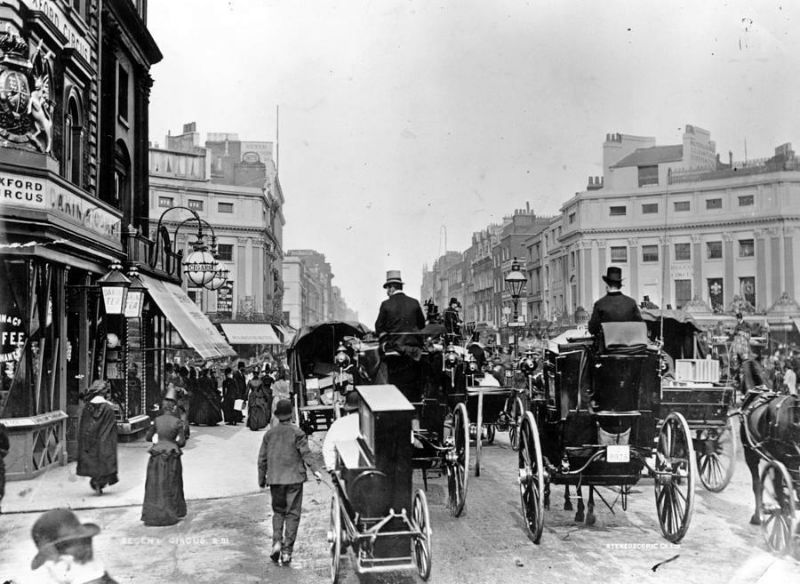
Traffic on Regent Circus, now known as Oxford Circus, 1888.
Automobiles first appeared on American roads in the late nineteenth century, sharing streets with horse-drawn wagons, streetcars, cyclists, and pedestrians.
Roads were narrow, poorly marked, and often unpaved, making even light traffic difficult to manage. As private car ownership expanded, the idea of the “open road” quickly collided with reality.
Cities lacked traffic laws, signals, and standardized rules, leading to frequent gridlock at busy intersections.
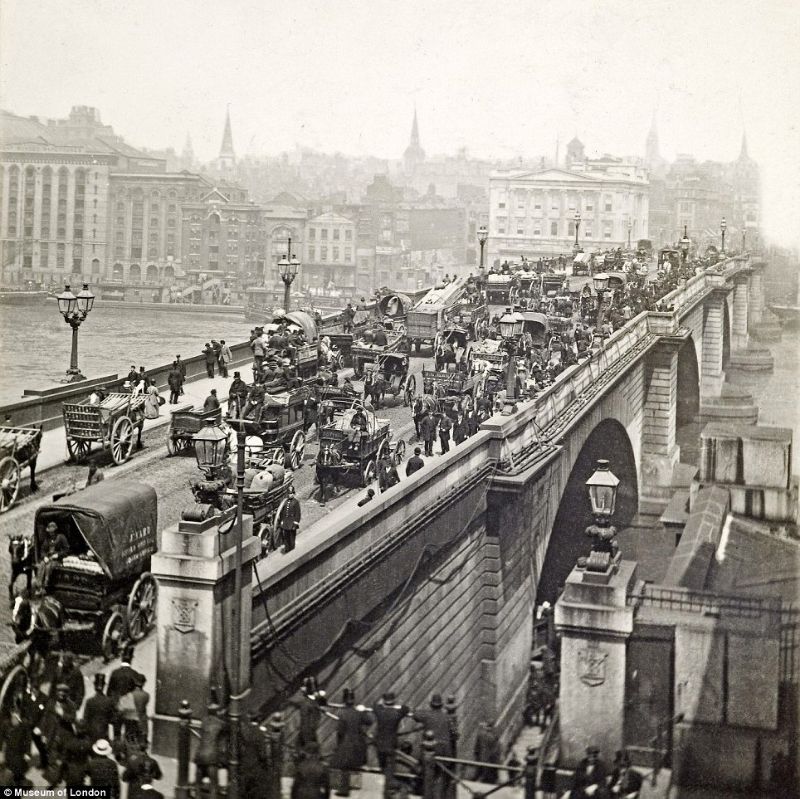
London Bridge, 1900.
Pedestrian safety became a growing concern, and accidents were common as drivers and city planners alike struggled to adapt.
The situation intensified during the 1920s, when car ownership exploded across the United States. Between 1919 and 1929, the number of passenger cars surged from 6.5 million to 23 million.
This sudden influx overwhelmed roads that had been designed for far fewer vehicles. Urban centers such as New York, Chicago, and Detroit experienced chronic congestion, especially during rush hours and major events.
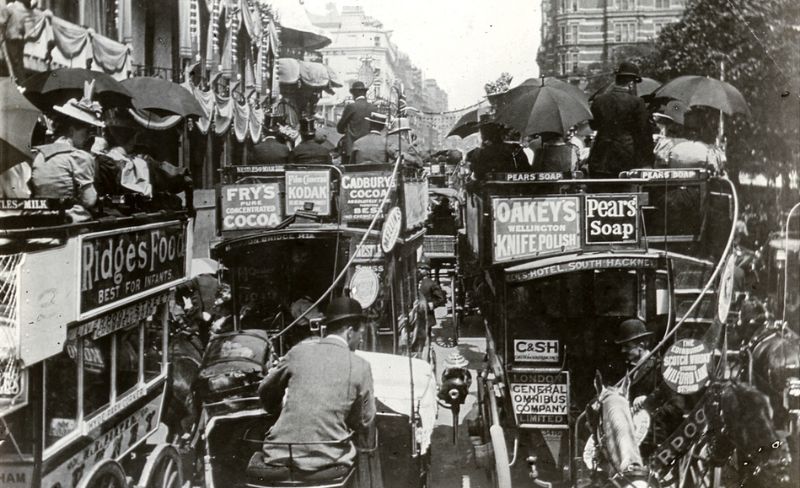
London buses, 1900.
In response, the federal government launched extensive infrastructure projects, completing more than 10,000 miles of roadway improvements in 1922 alone. Still, progress struggled to keep pace with demand.
Some of the earliest famous traffic jams were tied to moments of celebration or crisis.
In 1927, massive crowds traveling by car to witness Charles Lindbergh’s return to New York after his transatlantic flight brought streets to a standstill.
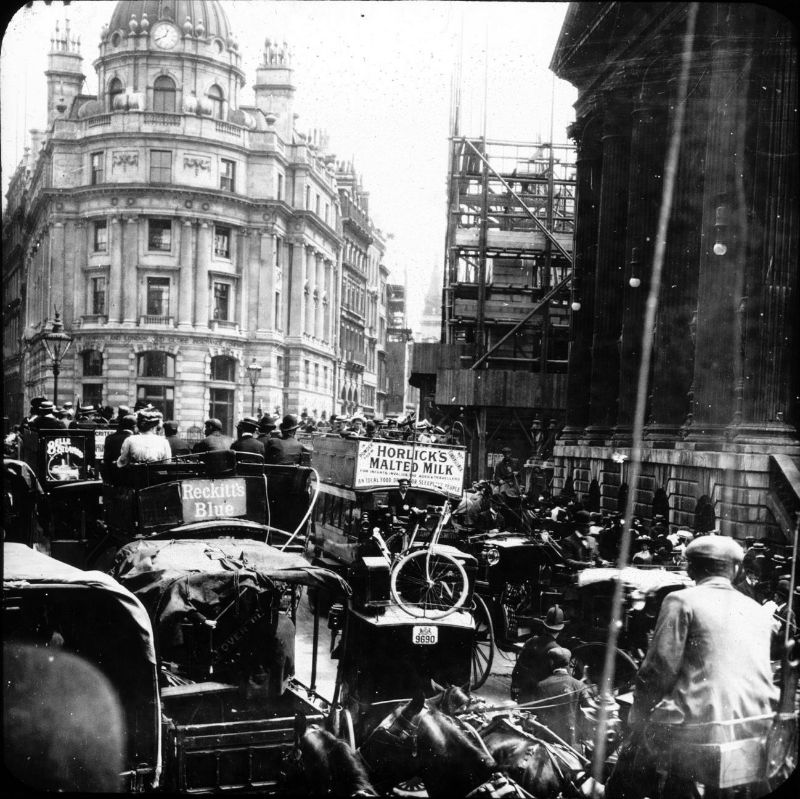
Piccadilly Circus, London, 1901.
Similar scenes unfolded during the 1939 New York World’s Fair, where long lines of vehicles clogged parkways and bridges leading into the city.
These jams highlighted how automobiles had reshaped public gatherings, turning mobility itself into a logistical challenge.

Corner of 7th Street and Broadway, downtown Los Angeles, circa 1920s.
Traffic congestion worsened after World War II, as suburban expansion and economic prosperity fueled even greater reliance on cars.
The rise of commuting created daily bottlenecks on bridges and arterial roads. One of the most iconic images of this era is the 1950 Thanksgiving weekend traffic jam on U.S. Route 40, where cars were reportedly backed up for miles as families traveled for the holiday.
These scenes became increasingly common, especially during weekends and summer travel seasons.
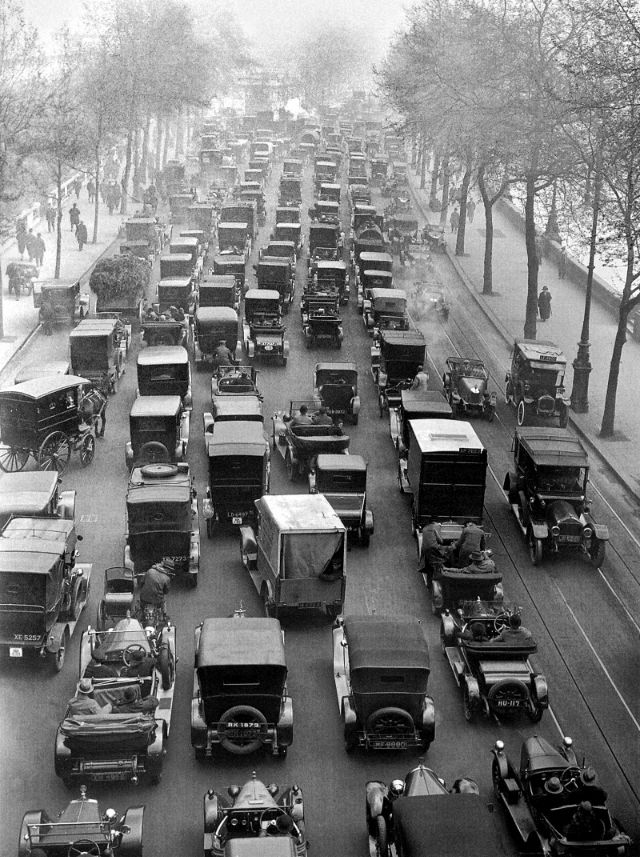
Embankment, London, 1926.
The construction of the Interstate Highway System in the 1950s and 1960s promised relief, but it also encouraged more driving.
Highways filled quickly, particularly near major cities. In 1969, the Woodstock Music Festival produced one of the most legendary traffic jams in American history, with vehicles stalled for more than 20 miles in rural New York.
Similar gridlock occurred during the 1976 U.S. Bicentennial celebrations and large sporting events, proving that even modern roads had limits.
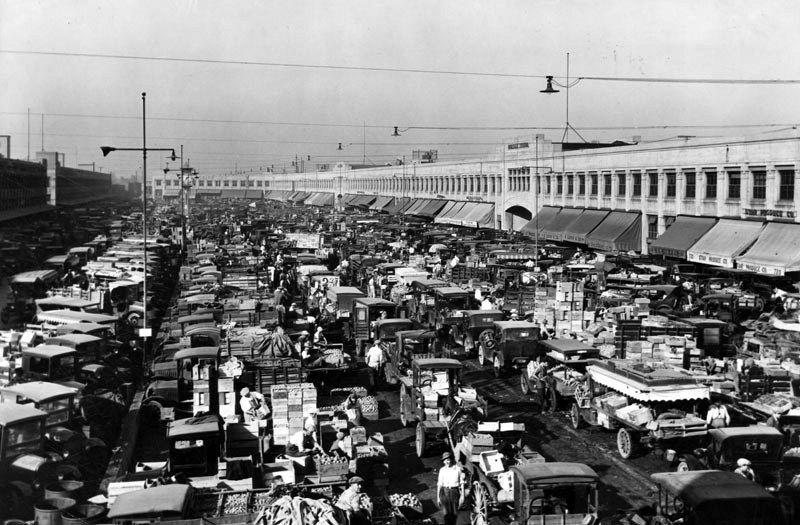
Buyers create a traffic jam at the Los Angeles wholesale produce market, 1927.
By the 1970s and 1980s, traffic jams had become a familiar feature of daily life. Oil crises, road construction, and urban sprawl only added to the problem.
The rare photographs from this period capture moments of frustration, improvisation, and human patience, reminding us that traffic congestion is not a modern invention, but a long-standing consequence of society’s love affair with the automobile.

Traffic jam, Berlin, 1927.
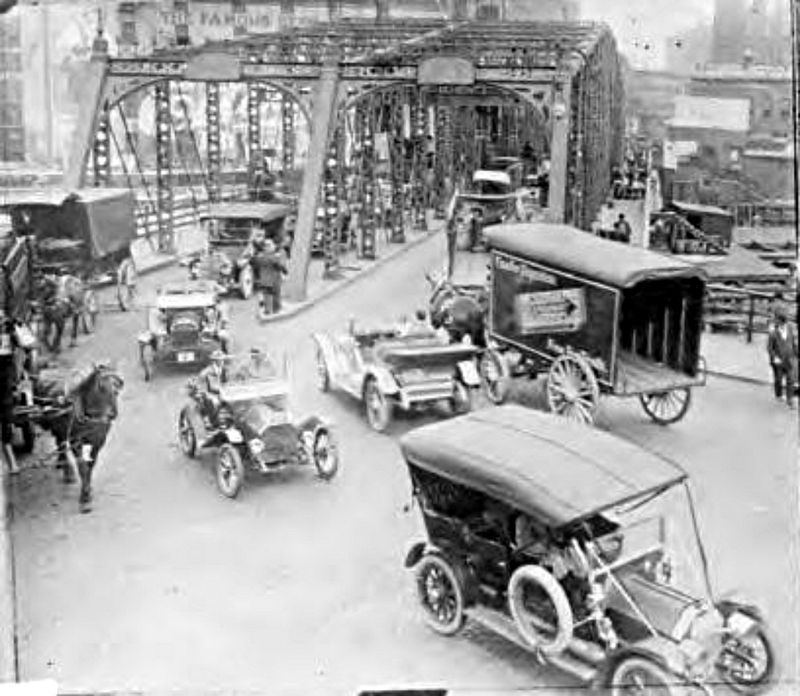
Traffic on a bridge in Chicago, Illinois, 1927.
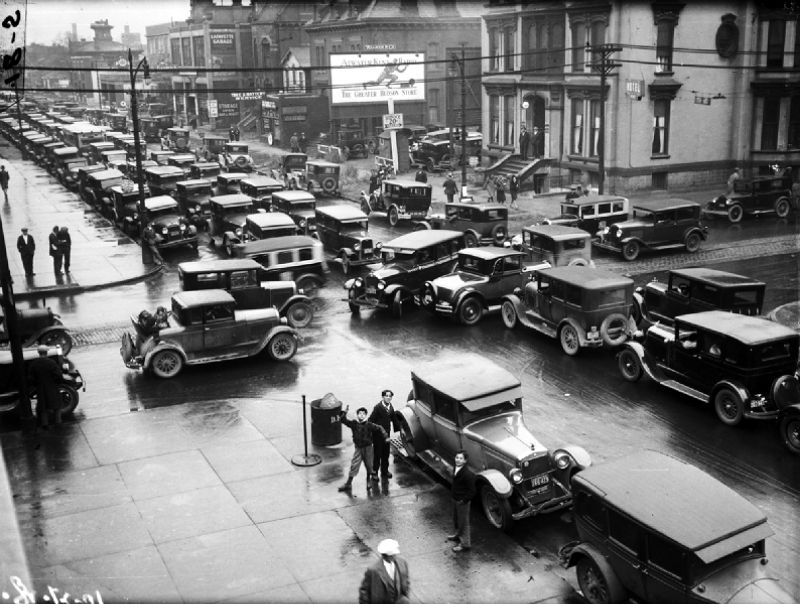
Traffic jam in Detroit, 1928.

Boston, 1929.

Moscow’s traffic jam, 1931.
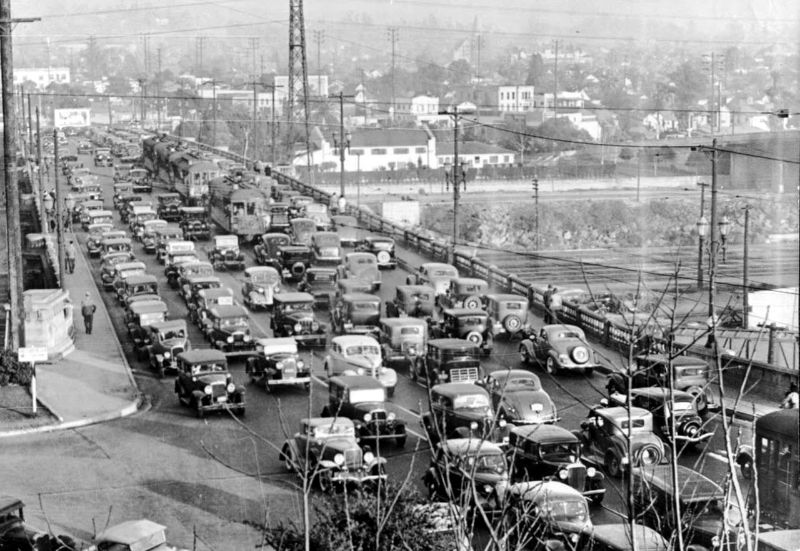
Traffic jam on the Broadway Bridge over the Los Angeles River, 1937.
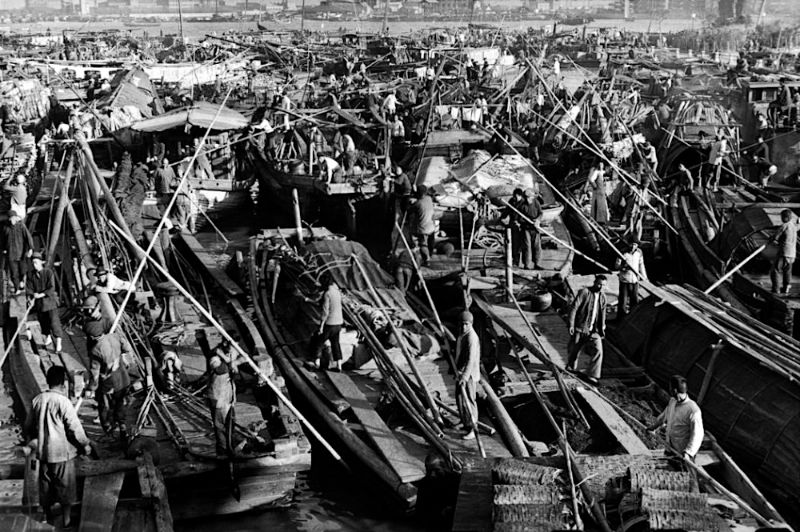
Traffic jam on the Suzhou canal, China, December 1948.
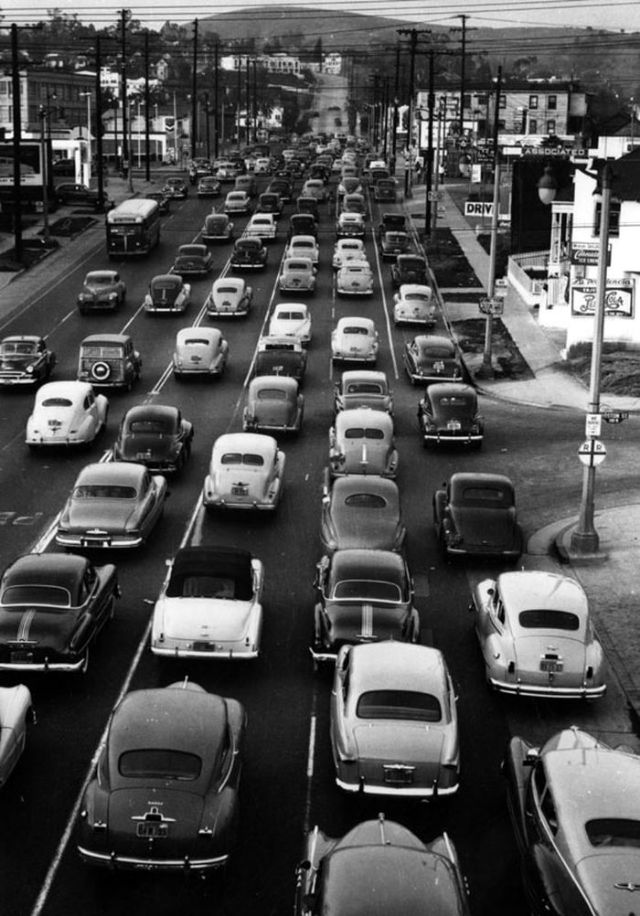
Los Angeles, 1950.
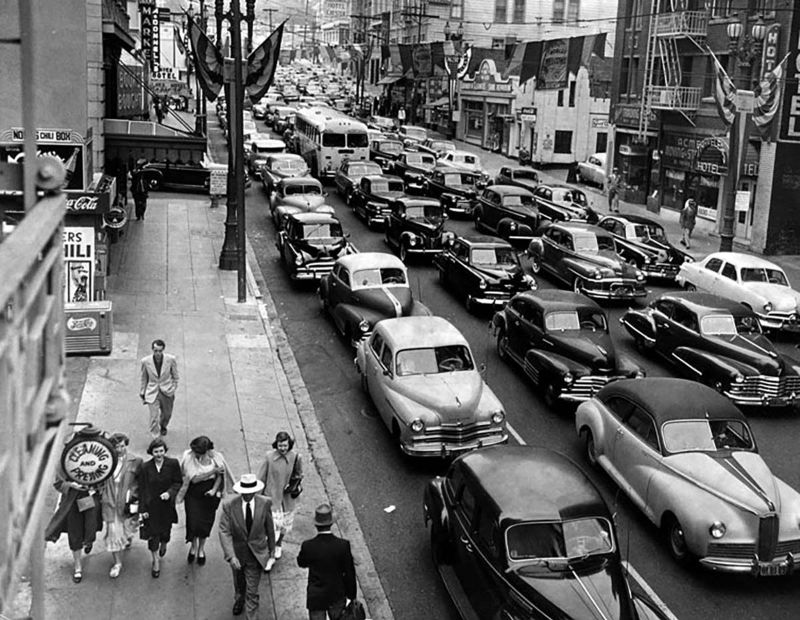
Traffic jam on 6th Street in Downtown Los Angeles during transit strike, 1950.
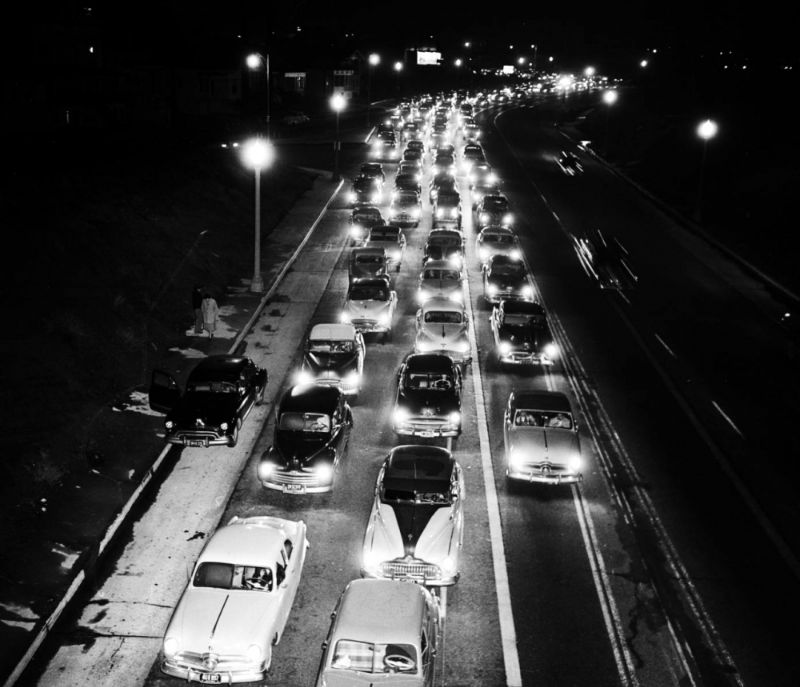
Los Angeles, 1952.

Paris, 1954.
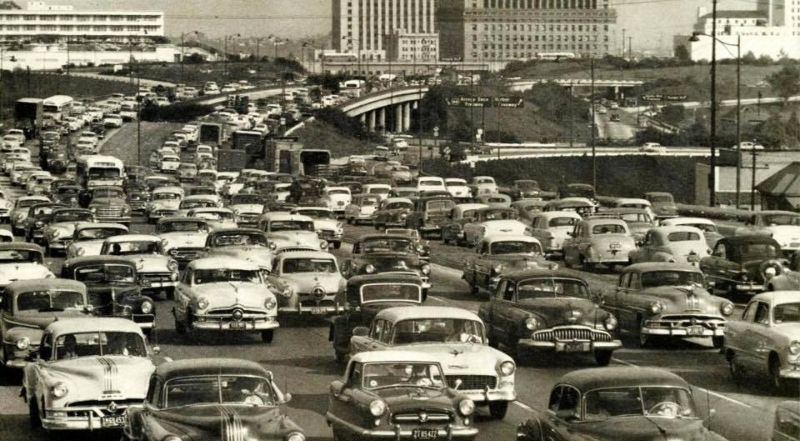
Los Angeles, 1955.

Pont de la Concorde, Paris, 1956.
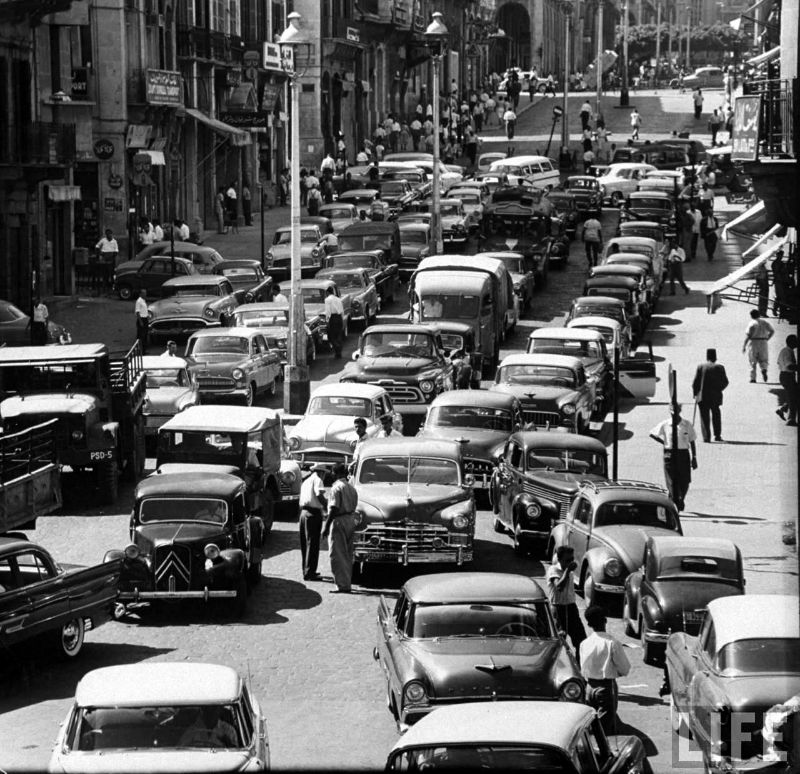
Allenby street, Lebanon, 1958.
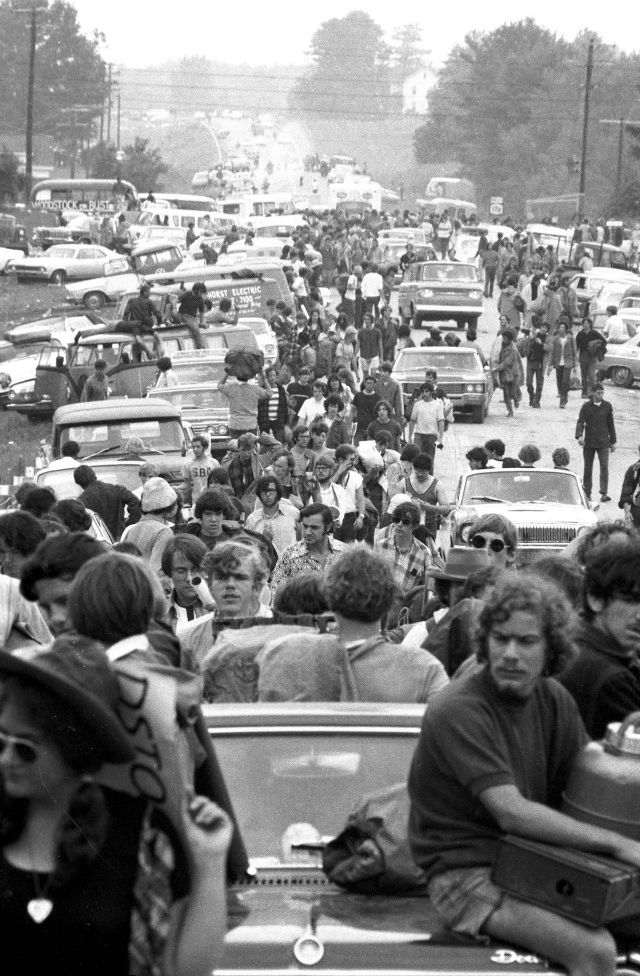
On the way to Woodstock, 1969.
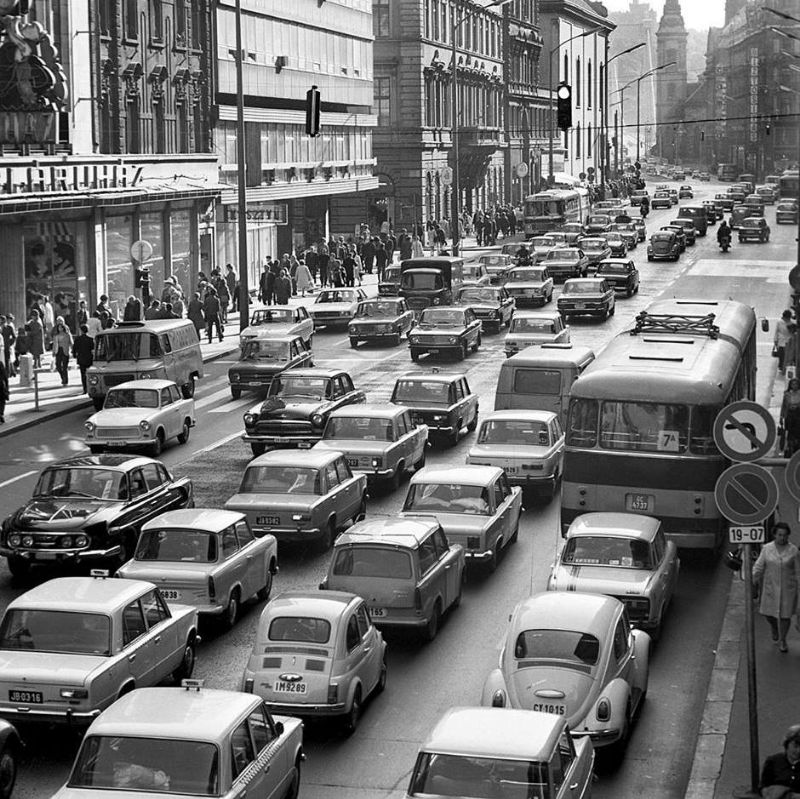
Budapest, Hungary in the early 1970s.
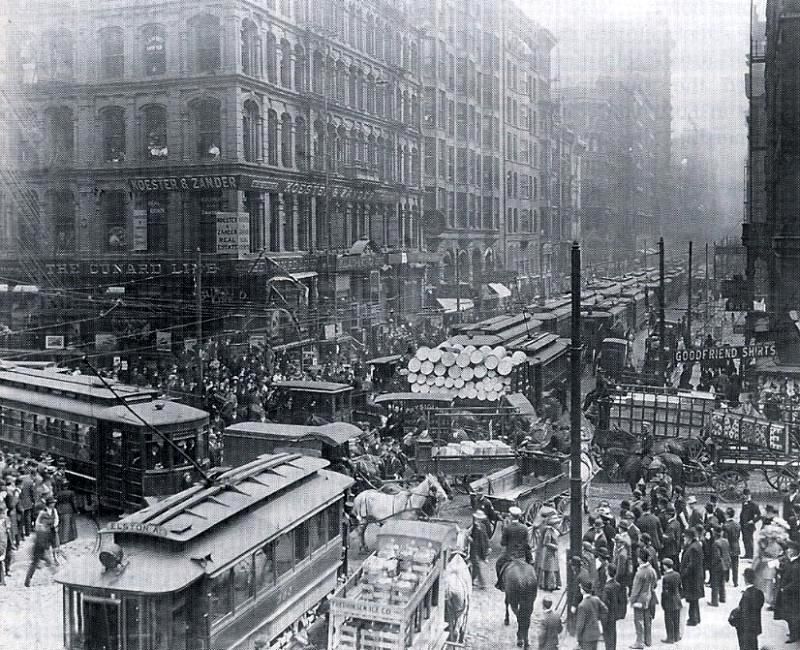
Rush hour in Chicago, 1909.

Budapest, Hungary in the mid-1970s.
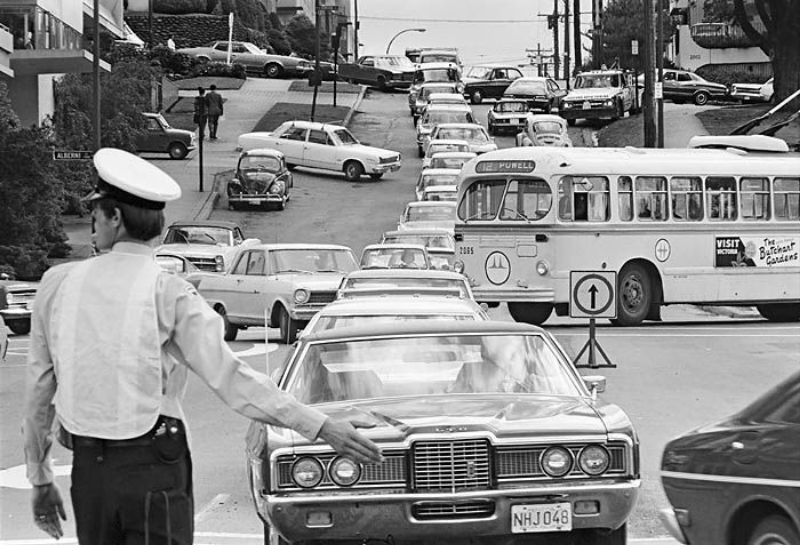
Vancouver, British Columbia, 1973.

The Brandenburg Gates traffic jam between East and West Germany on the first Saturday after the fall of the Berlin Wall, 1989.
(Photo credit: Vintage Life via Flickr / Wikimedia Commons).