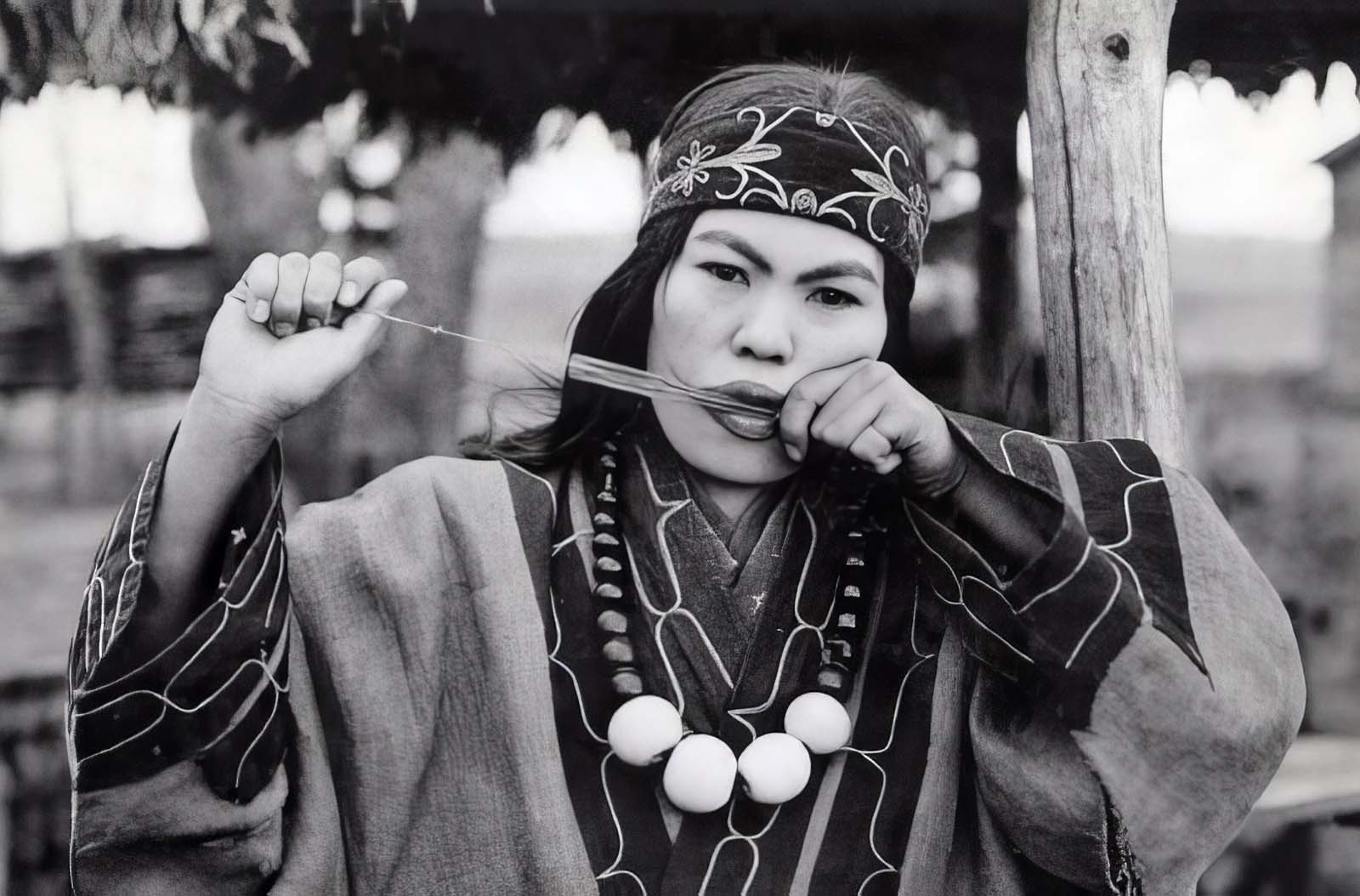
 There is a group of people who have lived in the northern reaches of Japan for thousands of years, predating the nation itself, yet most of the world has never heard their name.
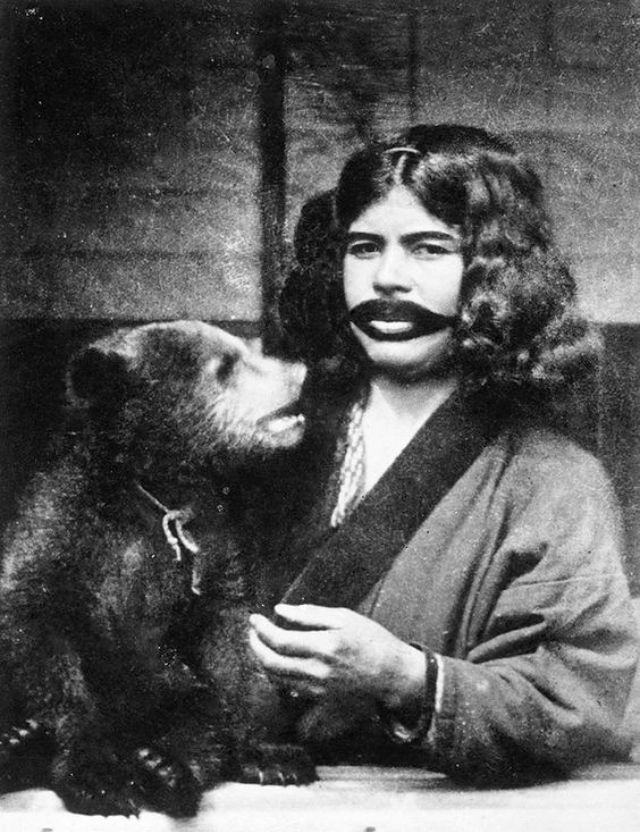
The Ainu are among the oldest indigenous communities in East Asia, and the rare photographs that survive of them offer a window into a world that was systematically dismantled over the course of two centuries.
These images, haunting and dignified in equal measure, document not just faces, but an entire civilization that came startlingly close to disappearing.
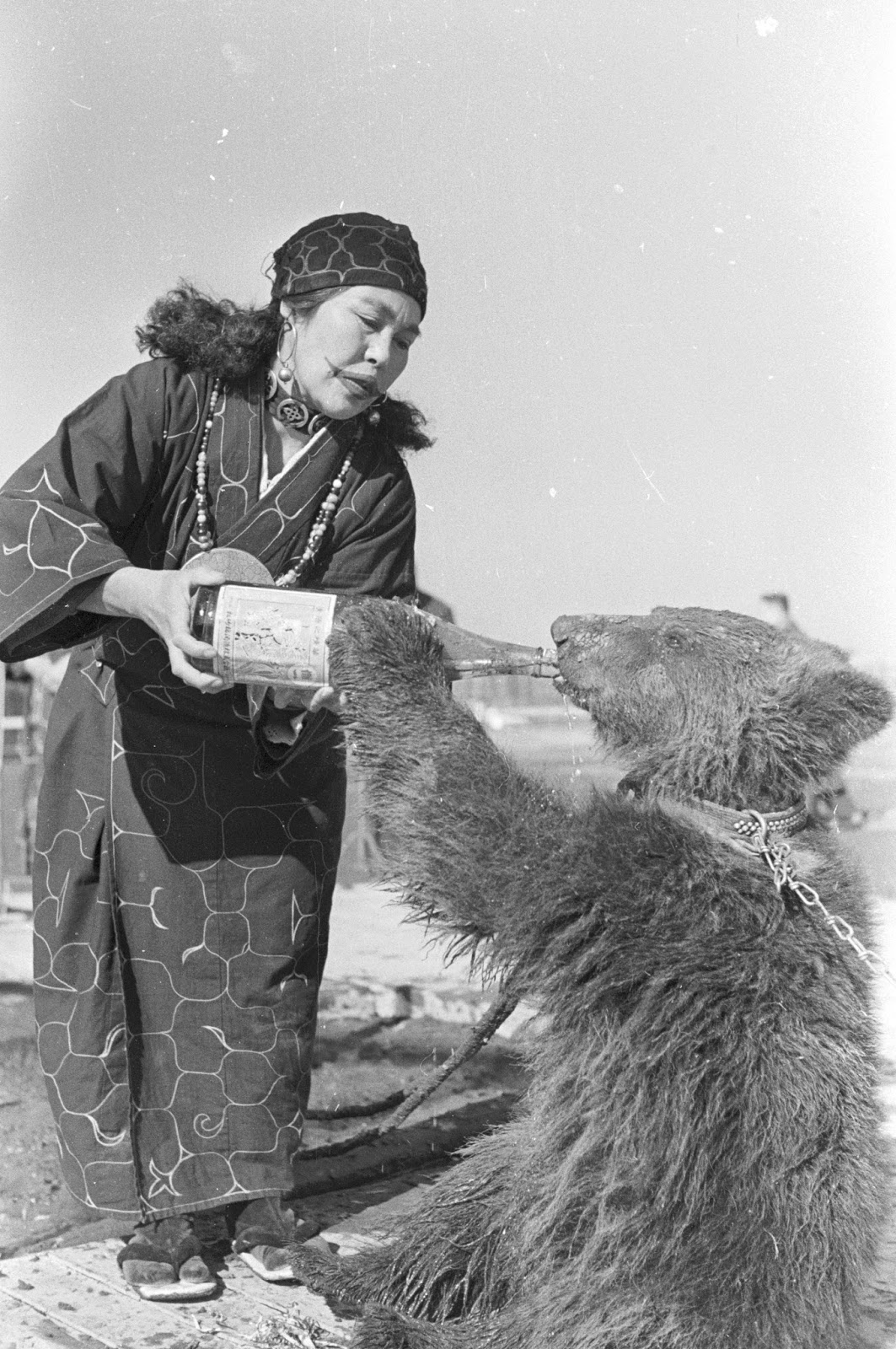
A captive bear drinking from a large bottle held by an Ainu tribeswoman, circa 1955.
The Ainu, also historically referred to as Ezo, are indigenous to Hokkaido, the Kuril Islands, Sakhalin, and parts of northern Honshu.
Their origins trace back to the Jomon people, the prehistoric inhabitants of the Japanese archipelago, making them one of the oldest continuous cultures in the region.
Genetic studies confirm they represent a deeply ancient East Asian lineage, distinct from the Yamato Japanese who came to dominate the islands.
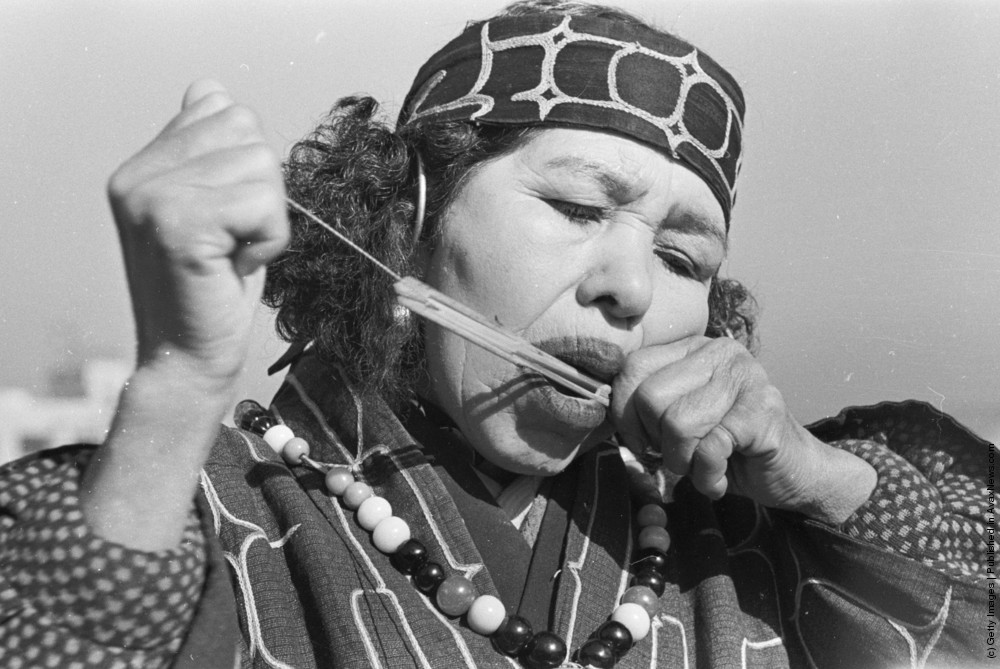
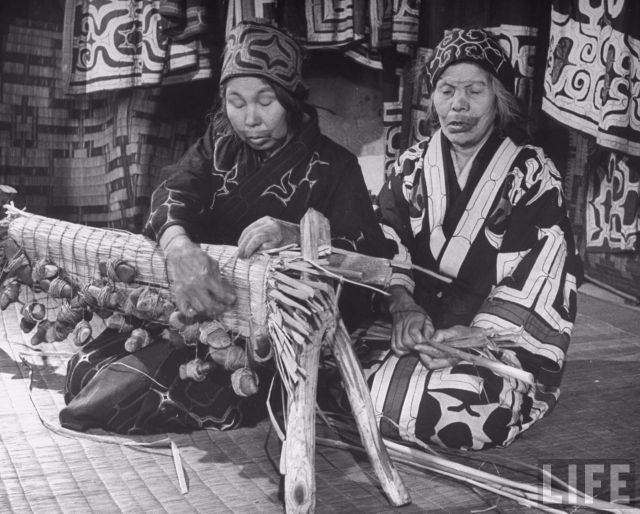
An Ainu tribeswoman holding a group of threads to her mouth, circa 1955.
Today, official estimates place their population at roughly 25,000, though many scholars believe the true number exceeds 200,000, as decades of discrimination drove countless Ainu to conceal their heritage, and intermarriage with the Japanese majority blurred the lines of ancestry across generations.
Physically, the Ainu stood apart from their neighbors in ways that puzzled and fascinated early observers.
Unlike most East Asian populations, Ainu men and women tended to have lighter skin, wavy or even curly hair, and fuller body hair.
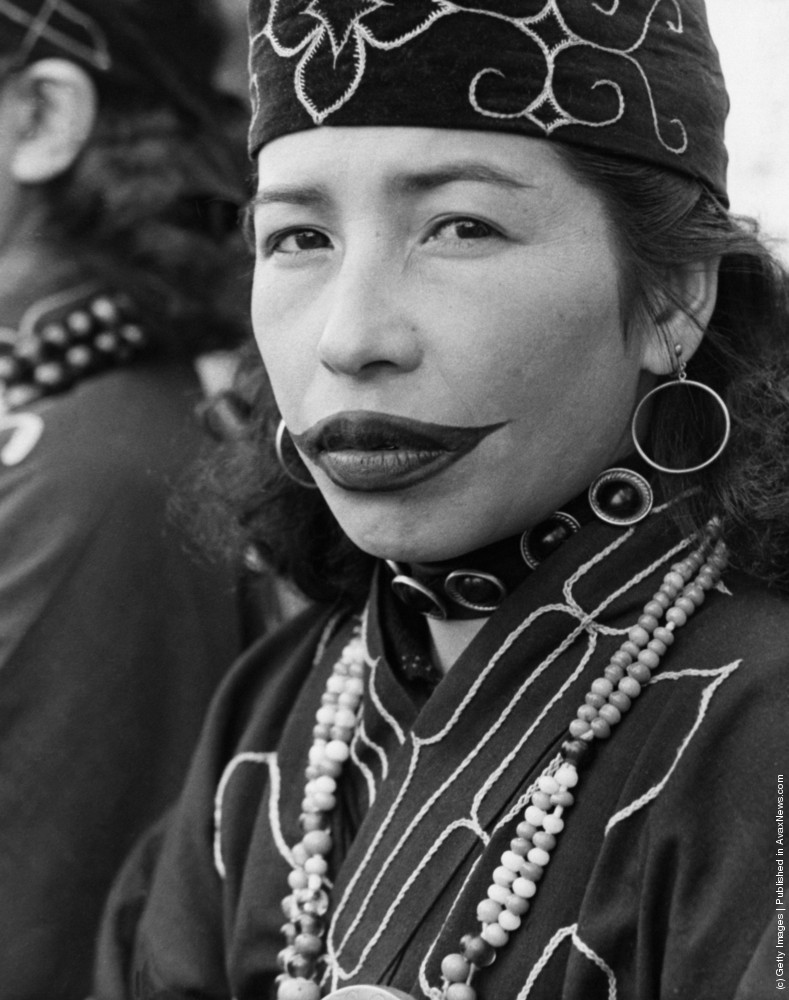
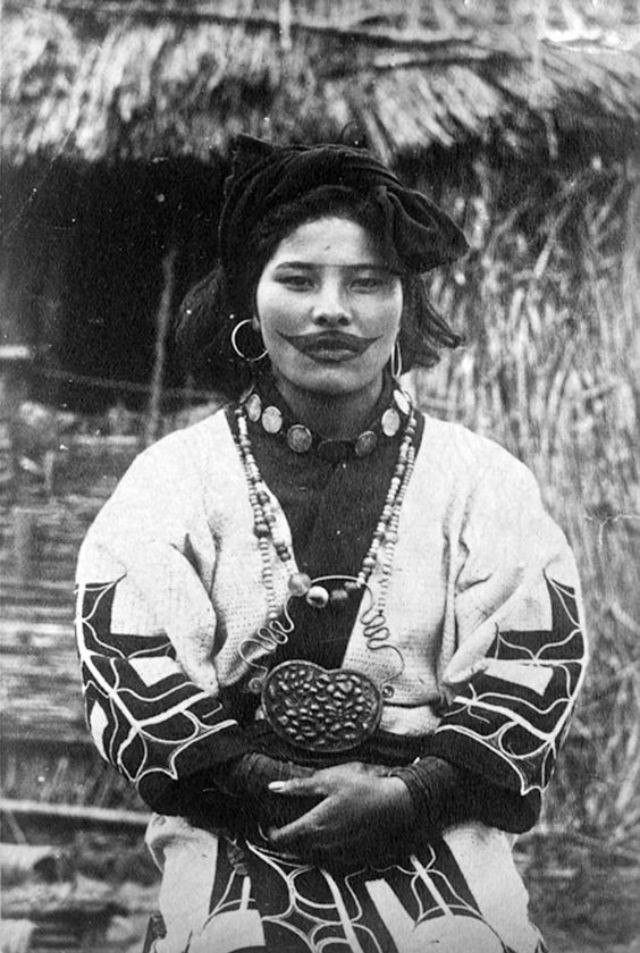
An Ainu woman from northern Japan with tattooed lips. The upper lip is slashed during childhood and ashes are rubbed in to leave a scar, circa 1960.
Men traditionally grew long, thick beards, which were considered a mark of dignity and maturity.
Women, in a tradition that is perhaps the most visually striking aspect of their culture, tattooed their lips and the area around their mouths, creating a pattern that mimicked and honored the beard worn by men.
This practice began in childhood with small marks and grew more elaborate over the years, reaching its full form by the time a woman married.
Far from being merely decorative, these tattoos carried deep spiritual and social meaning, marking a woman’s passage into adulthood and her readiness for marriage.
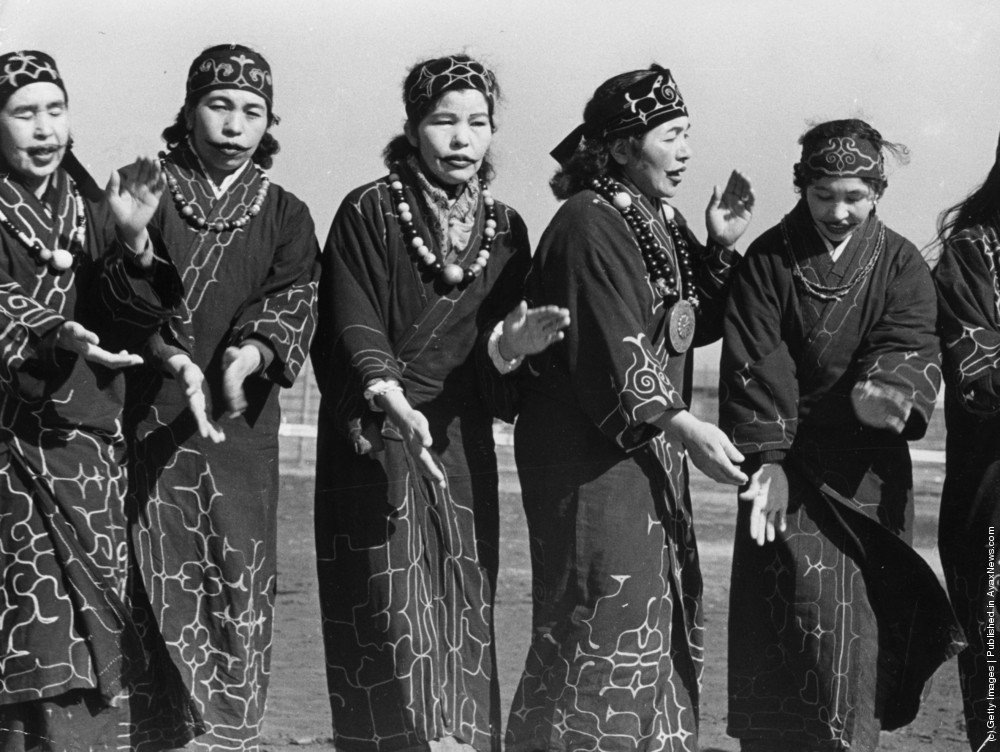
Ainu, aboriginal people of Asia occupying parts of the Japanese island of Hokkaido, Russian Kuril Islands and Sakhalin, circa 1950.
Ainu society was deeply rooted in animism. The natural world, in their understanding, was not a backdrop to human life but an active participant in it.
They called the spirits inhabiting all things kamuy, a word that encompasses gods, forces, and presences found in fire, water, thunder, bears, eagles, salmon, and even the tools people used daily.
The bear held a particularly sacred role. Revered as a divine messenger from the spirit world, it was the subject of an elaborate ritual called iomante, in which a captured bear cub was raised, then ceremonially sent back to the spirit realm.
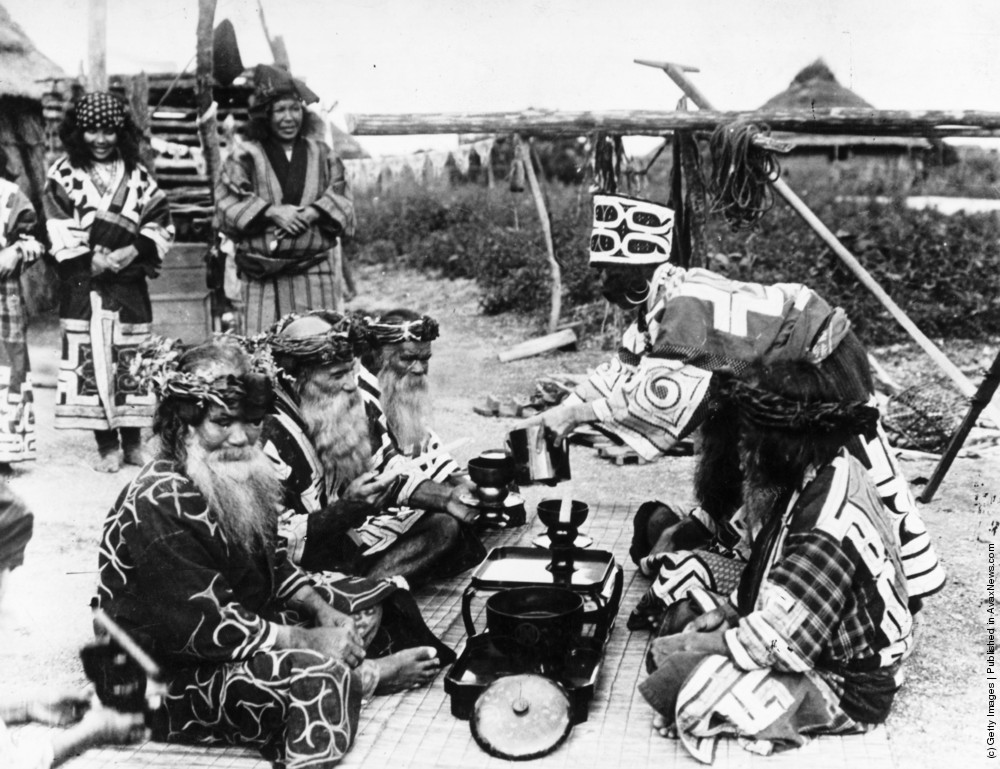
The Ainu people of Japan and eastern Russia, noted for their prolific facial hair, circa 1930.
Prayers and ceremonies called kamui-nomi were woven into daily life, expressing gratitude and maintaining balance between the human world and the unseen one.
The Ainu were not simply forest dwellers but skilled traders and craftspeople. They hunted deer and bear in the mountains, fished for salmon and swordfish along the coasts and rivers, and gathered hundreds of species of wild plants.
They produced intricately embroidered garments, and the geometric patterns stitched onto cuffs and hems were believed to ward off evil spirits.

Ainu goods such as animal furs, dried fish, and raptor feathers were traded across wide networks, reaching as far as the Chinese mainland, and Ainu traders received silk, iron products, and glass beads in exchange.
Their ancient oral literature, known as yukar, preserved history, mythology, and law across generations without a written language, and in 2009 UNESCO recognized Ainu traditional dance as an Intangible Cultural Heritage of Humanity.

Courtship among the Ainu followed its own quiet customs. When a man wished to propose, he would visit a woman’s home and she would offer him a full bowl of rice.
He ate half and returned the remainder. If she finished what was left, the proposal was accepted. If she set it aside, it was not.
Upon engagement, gifts moved in both directions: the man sent a small engraved knife, a workbox, and thread; the woman returned handmade embroidered garments and leggings. These exchanges were not mere formality but a mutual acknowledgment of shared life ahead.

The photographs that survive from the late nineteenth and early twentieth centuries capture people on the edge of a forced transformation.
Japanese colonization of Hokkaido accelerated dramatically after the Meiji Restoration of 1868.
The Ainu were stripped of their land under the 1899 Hokkaido Former Aborigines Protection Act, forbidden from hunting and fishing in their ancestral waters, barred from speaking their language in schools, and pressured to abandon their religion and adopt Japanese names.

The results were devastating. By 1966, only around 300 people still spoke Ainu natively. By the 1980s, that number had fallen to fewer than 100, with only 15 using the language in daily life.
Japan did not officially recognize the Ainu as an indigenous people until 2008, more than a century after policies designed to erase them had been set in motion.
The 2019 Ainu Promotion Act brought further legal protections and helped fund cultural preservation efforts. 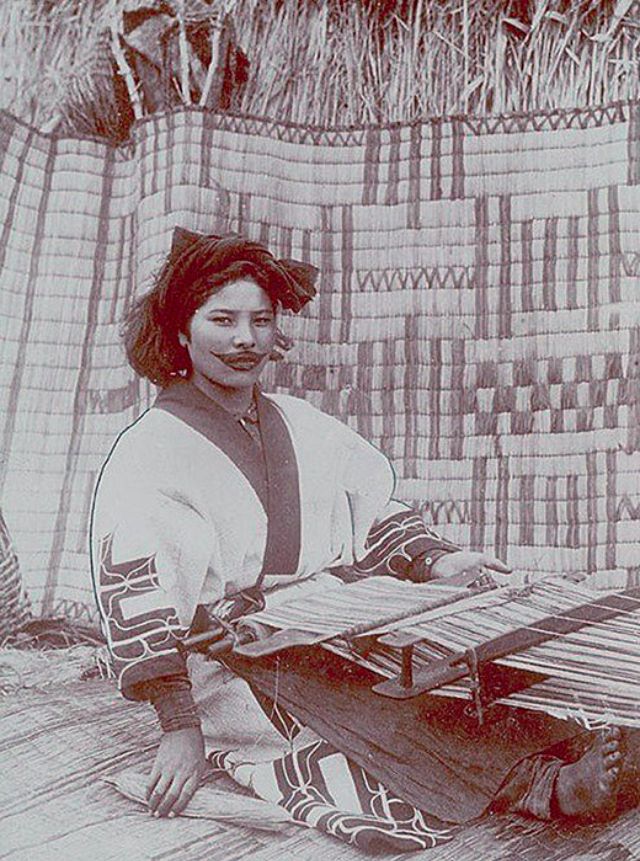
3




(Photo credit: Wikimedia Commons / Flickr).