 Born at the height of America’s fascination with speed, flight, and the future, the Oldsmobile Golden Rocket emerged as one of the most striking expressions of Jet Age optimism.
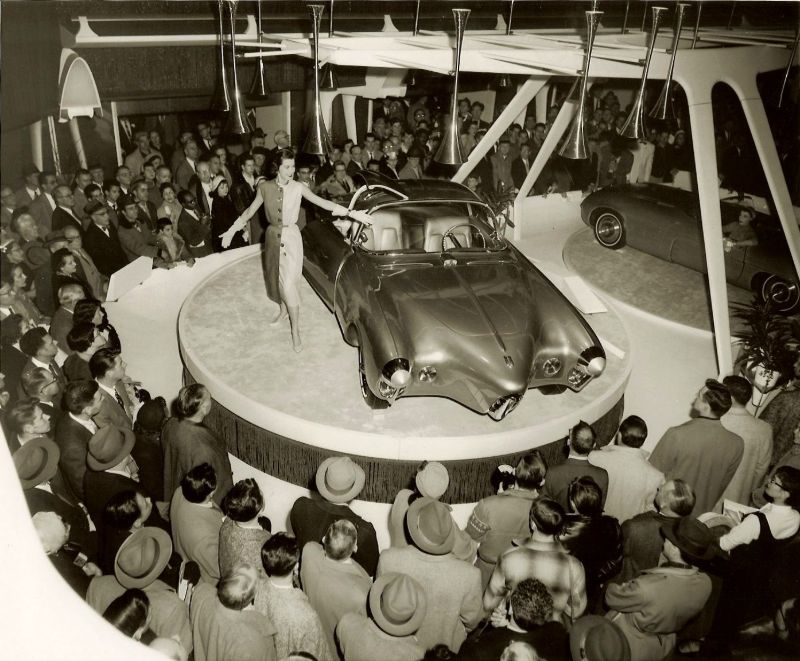
Created as a two-seat show car for the 1956 General Motors Motorama, the Golden Rocket was never intended for production.
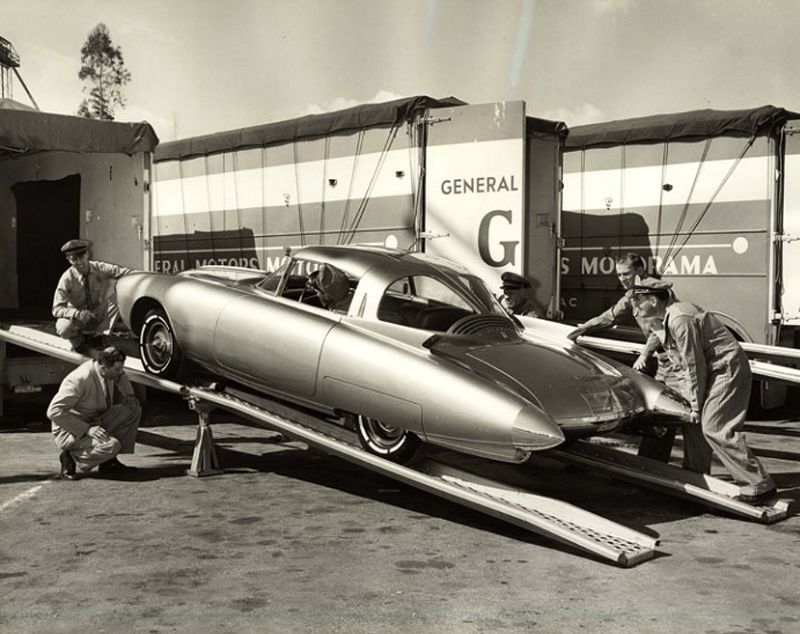
Instead, it served as a bold design statement, pushing Oldsmobile’s styling language into dramatic, space-inspired territory.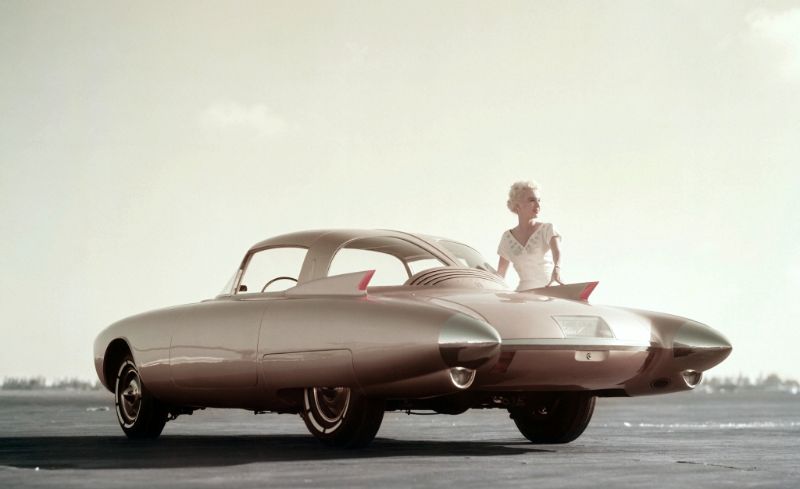 The fiberglass concept underwent several refinements and continued to tour major auto shows after its debut, most notably appearing at the 1957 Paris Motor Show, where it drew significant international attention more than a year after its initial reveal.
It also appeared in General Motors’ promotional short film Design for Dreaming, which showed the company’s forward-looking vision for automotive design.
Like many Space Age concept cars of the era, the Golden Rocket drew heavily from aviation and emerging ideas of space travel.
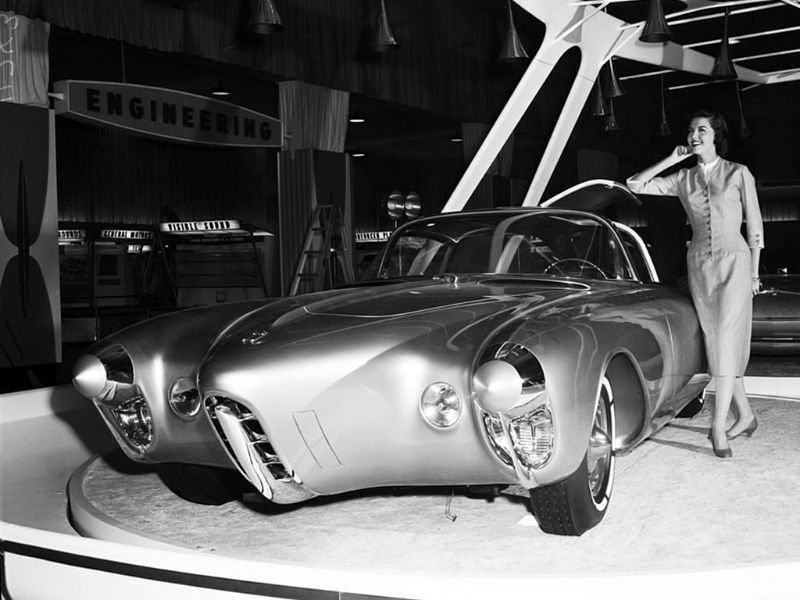
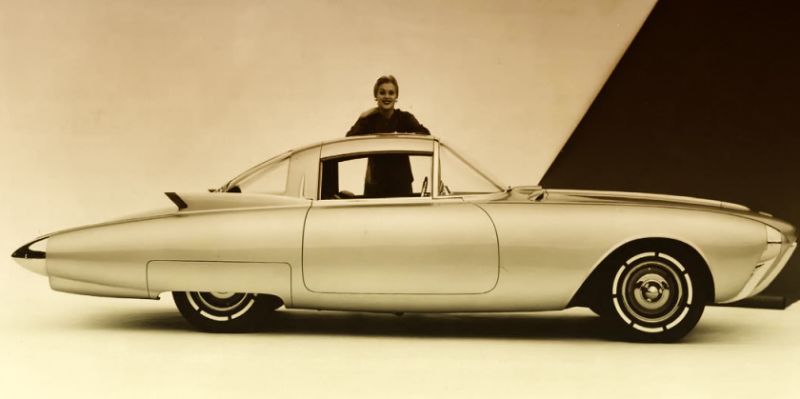
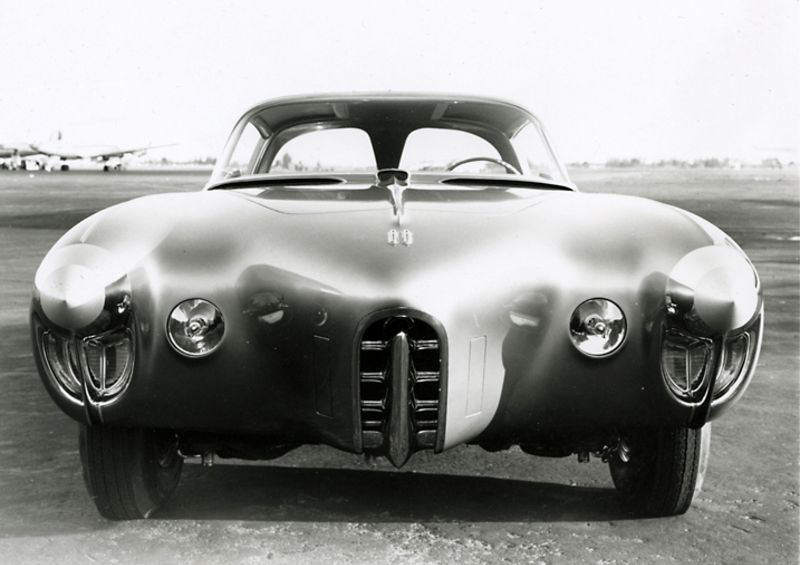
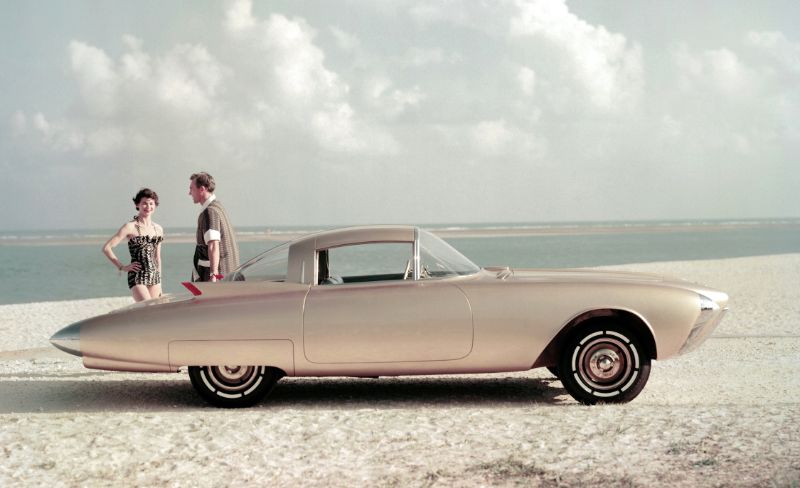
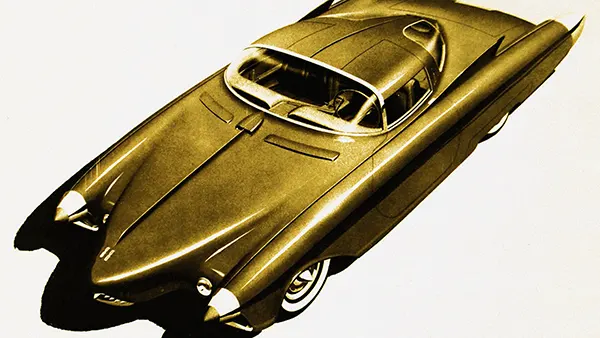
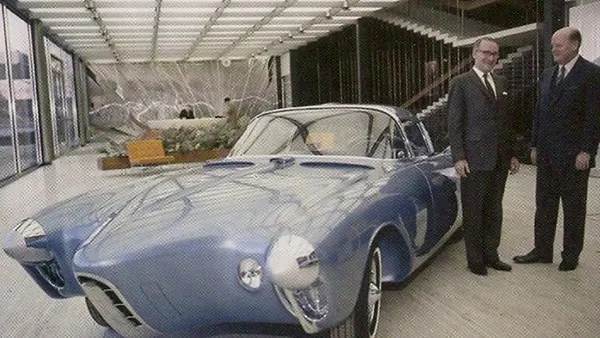
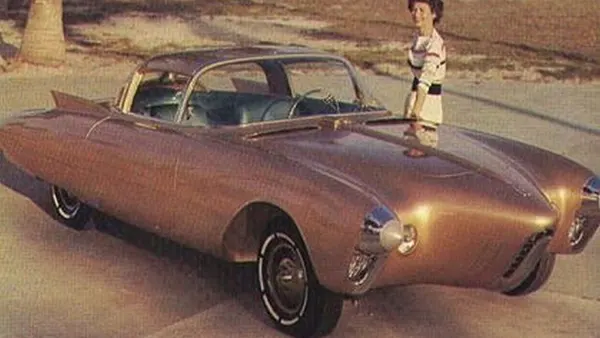
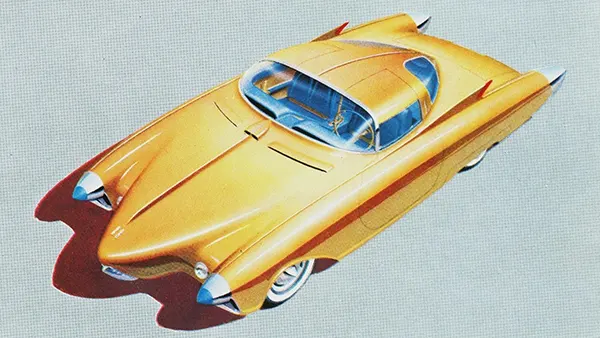
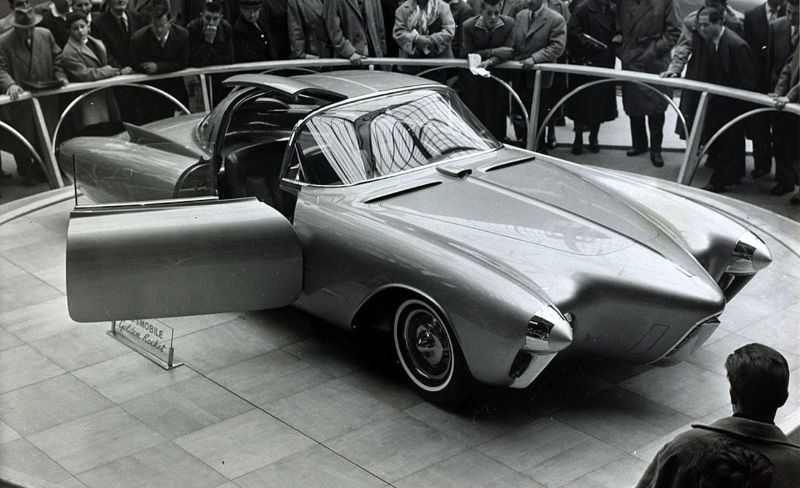 Its lightweight fiberglass body was shaped into a sleek, aerodynamic form and finished in a metallic bronze paint that enhanced its futuristic presence.
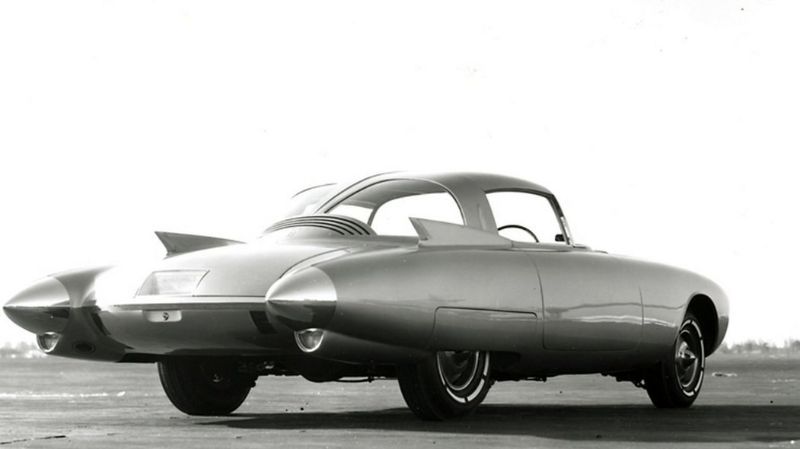
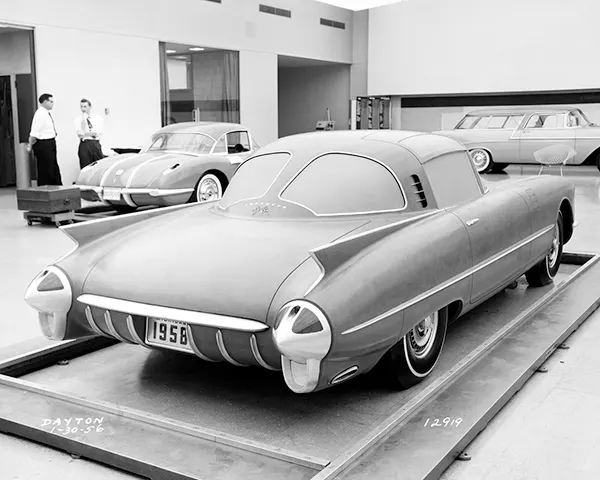
Instead of conventional headlights, bullet-shaped chrome elements reminiscent of Dagmar bumpers were integrated into the front fenders and echoed again at the rear, reinforcing the car’s rocket-like identity.
A wrap-around windshield, already gaining popularity in the mid-1950s, blended smoothly into the body, while restrained tailfins and a split-window fastback roof hinted at design cues that would later appear on the 1963 Chevrolet Corvette Stingray.
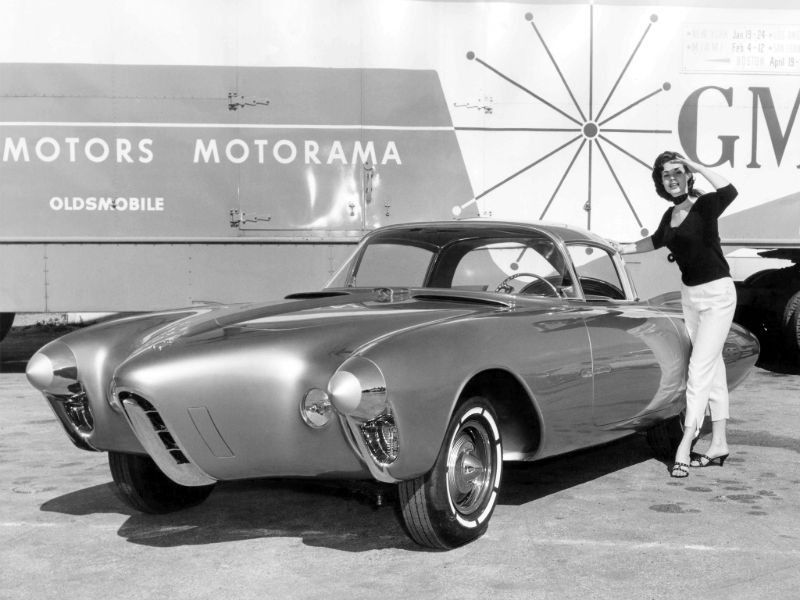 Unique dotted-line whitewall tires completed the car’s unmistakable silhouette.
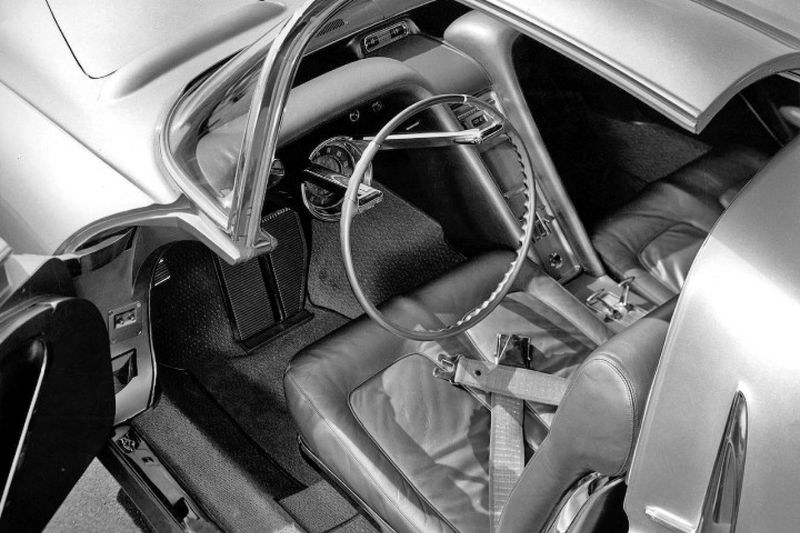
Inside, the Golden Rocket continued its futuristic theme with a blue-and-gold leather interior designed to resemble an aircraft cockpit.
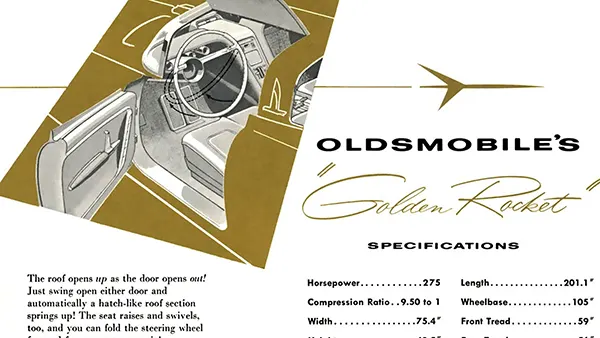
Entry into the cabin was made easier through an innovative system in which the two-piece roof panel rose automatically when the door opened, evoking the dramatic motion of gull-wing doors.
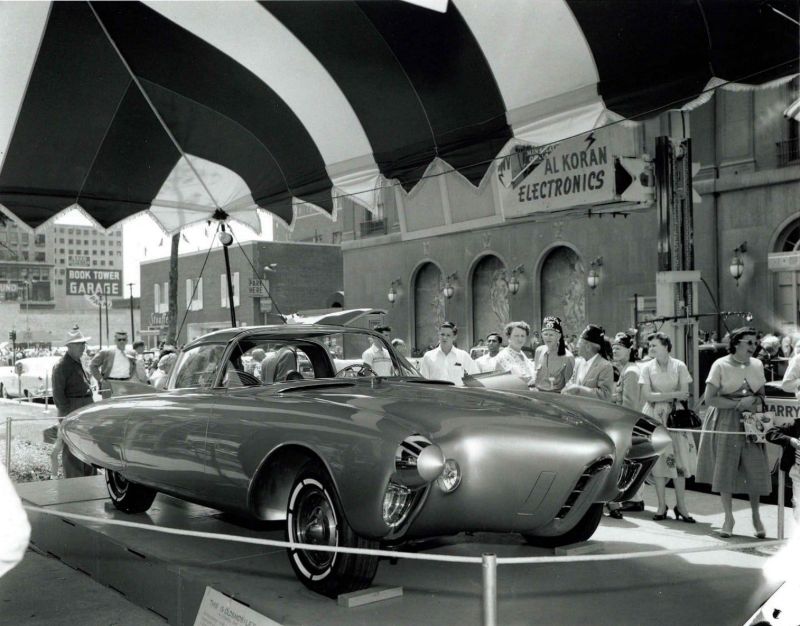 The seats elevated and pivoted outward by 45 degrees, a thoughtful solution that emphasized both spectacle and practicality.
Among its most advanced features was a button-controlled tilt steering wheel, placing the Golden Rocket among the earliest cars to experiment with this technology.
The speedometer was mounted at the center of the folding two-spoke steering wheel, while the center console and control levers further reinforced the aircraft-inspired layout.
 Power came from an upgraded 324-cubic-inch Rocket V8 engine, tuned to deliver an impressive 275 horsepower. Despite its fame, the Golden Rocket’s ultimate fate remains uncertain.
General Motors often dismantled show cars in the 1950s to avoid liability issues, and many concepts met that end by the end of the decade.
While the Golden Rocket was photographed as late as 1962, no definitive records confirm whether it was destroyed or preserved, leaving its disappearance one of the more intriguing mysteries of the Motorama era.
(Photo credit: Wikimedia Commons / Pinterest / RHP via Flickr)